
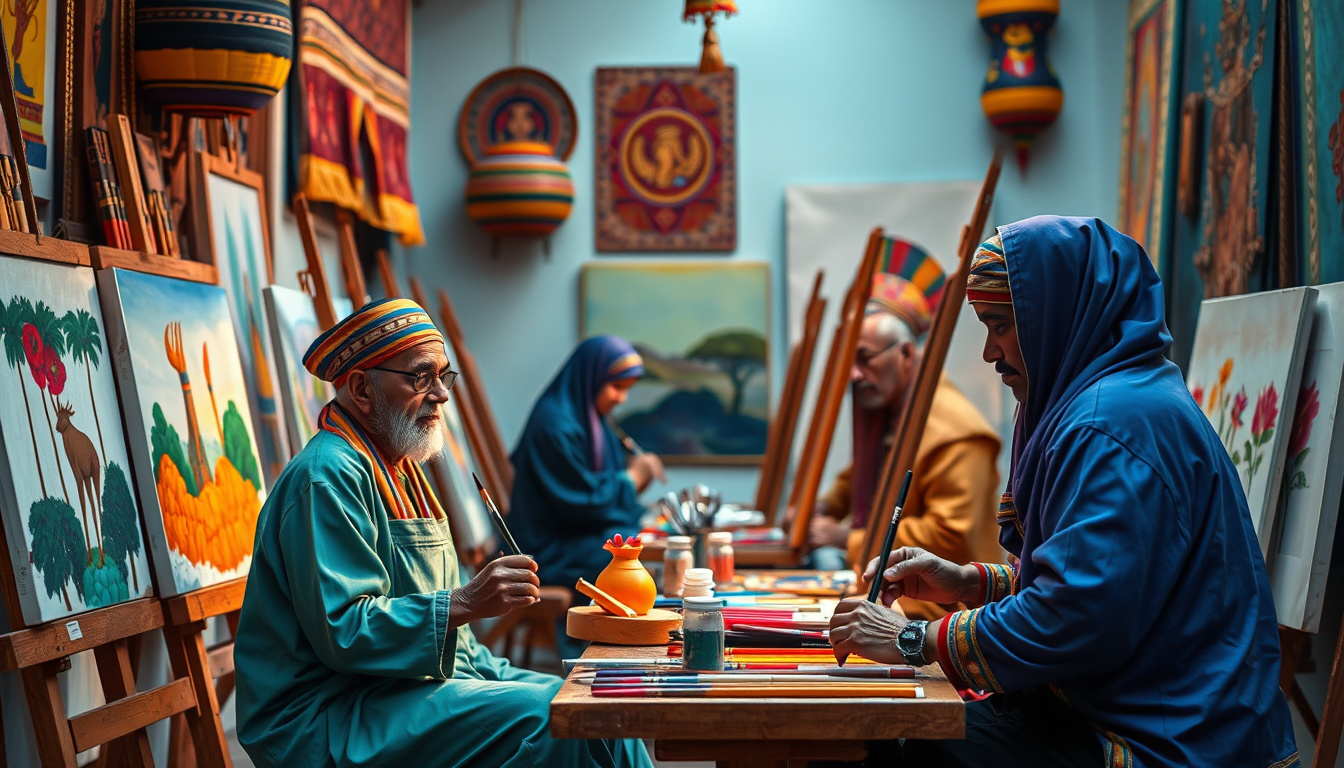
Exploring the Vibrant World of Egyptian Painters: Masters of Color and Culture

Egypt has long been a cradle of civilization, a land steeped in rich history and vibrant culture.

Among its many artistic achievements, the realm of painting stands out, reflecting the complex tapestry of Egyptian heritage.

Egyptian painters have played a pivotal role in expressing the nation’s identity, emotions, and historical narratives through their masterful use of color and symbolism.

This article delves into the importance of Egyptian painters within the context of art history, highlights notable figures and their contributions, explores various techniques and styles, and examines the lasting influence of Egyptian art on contemporary practices.

Whether you’re an art enthusiast, a traveler seeking to discover more about Egypt’s cultural landscape, or simply curious about this fascinating subject, join us as we explore the vibrant world of Egyptian painters.

Exploring the Vibrant World of <b>Egyptian Painters</b>: Masters of Color and Culture’ style=’display: block; margin: auto; max-width: 100%; height: auto;’></p><h2><span class="ez-toc-section" id="Key_Takeaways"></span>Key Takeaways<span class="ez-toc-section-end"></span></h2><ul><li><b>Egyptian painters</b> play a crucial role in preserving and showcasing the rich cultural heritage of Egypt.</li><li>The evolution of Egyptian art reflects the historical changes and societal values throughout the ages.</li><li>Notable <b>Egyptian painters</b> have made significant contributions to both national and international art scenes.</li><li>Unique techniques and styles in Egyptian painting reveal the innovative spirit of its artists.</li><li>Egyptian art continues to influence modern creative practices, bridging traditional and contemporary expressions.</li></ul><h3><span class="ez-toc-section" id="Introduction_to_Egyptian_Painters_and_Their_Importance"></span>Introduction to <b>Egyptian Painters</b> and Their Importance<span class="ez-toc-section-end"></span></h3><p><b>Egyptian painters</b>, renowned for their vibrant artistry and profound symbolism, have played a pivotal role in the evolution of art throughout history.</p><p>From ancient times to the contemporary scene, these artists have skillfully captured the essence of Egyptian culture, landscapes, and narratives.</p><p>Introducing <b>Egyptian painters</b> offers a glimpse into their remarkable contributions, showcasing how they have influenced both regional and global art movements.</p><p>Their work encapsulates the rich tapestry of Egypt’s past and present, making it a vital subject for art enthusiasts and historians alike.</p><p>Through exploring famous artists, their techniques, and the historical context surrounding their creations, we can appreciate the significant impact of <b>Egyptian painters</b> on the world of art.</p><h3><span class="ez-toc-section" id="Historical_Context_The_Evolution_of_Egyptian_Art"></span>Historical Context: The Evolution of Egyptian Art<span class="ez-toc-section-end"></span></h3><p>## Historical Context: The Evolution of Egyptian Art</p><p>From the cradle of civilization along the fertile banks of the Nile, Egyptian art has evolved through millennia, reflecting the intricate tapestry of culture, spirituality, and society within ancient Egypt.</p><p>The artistic endeavors of ancient societies laid the groundwork for what we now recognize as classic Egyptian art, with a rich tradition that included the works of numerous talented <b>Egyptian painters</b>.</p><p>The origins of Egyptian art can be traced back to the prehistoric periods, where early depictions in pottery and stone suggested a burgeoning need for expression.</p><p>However, it was during the First Dynasty around 3000 BC that <b>Egyptian painters</b> truly began to flourish, adapting their skills to serve religious and political purposes.</p><p>The art was intricately tied to their beliefs in the afterlife, leading to the creation of elaborate tomb paintings and sculptures intended to ensure the afterlife for the deceased.</p><p>As time progressed, a distinctive style emerged that combined both functional and decorative elements, characterized by the use of vibrant colors and meticulous attention to detail.</p><p>The iconic hieroglyphs that often accompanied these artworks transcended mere imagery, serving as a profound language of communication that merged art with literary tradition.</p><p>Through various dynasties, <b>Egyptian painters</b> showcased their mastery in portraying not only deities and pharaohs but also everyday life, including farming, hunting, and music, which provided a window into the daily lives of ancient Egyptians.</p><p>This thematic diversity set them apart from contemporary civilizations, as their artworks acted not only as religious items but also as historical documents that chronicled their society’s evolution.</p><p>Interestingly, the role of <b>Egyptian painters</b> was often more communal than individual; art was not regarded as the pursuit of an individual genius, but rather as the work of many artisans collaborating to reinforce society’s values and beliefs.</p><p>This cultural ethos is visible in the stunning reliefs found within temples and tombs, illustrating a collective identity rather than that of a single artist.</p><p>As you explore Egypt today, from the grandeur of the Great <a href=Pyramids to the stunning frescoes in the Valley of the Kings, you will find this remarkable historical context deeply embedded in the country’s artistic legacy.

Whether through guided tours, museum visits, or local art scenes, understanding the evolution of Egyptian art and the vital role of Egyptian painters will enrich your experience in this captivating destination.

‘Art is the most beautiful of all lies; it is a way of seeing and communicating truth, particularly in the colors and forms that shape our world.’ – Pablo Picasso

Notable <b>Egyptian Painters</b> and Their Contributions’ style=’display: block; margin: auto; max-width: 100%; height: auto;’></p><h3><span class="ez-toc-section" id="Notable_Egyptian_Painters_and_Their_Contributions"></span>Notable <b>Egyptian Painters</b> and Their Contributions<span class="ez-toc-section-end"></span></h3><p>When exploring the realm of art in Egypt, it’s impossible to overlook the remarkable contributions of notable <b>Egyptian painters</b> who have shaped the cultural landscape over the years.</p><p>Among them, Mahmoud Said stands out as a pioneer, celebrated for his expressive landscapes and portraits that capture the essence of Egyptian life in the early 20th century.</p><p>His works often showcase the vibrant hues of the Nile and the stark contrasts of light and shadow, making him a central figure in modern Egyptian art.</p><p>Another key artist is Inji Aflatoun, known for her passionate reflections on women’s experiences and social issues.</p><p>As both a painter and an activist, Aflatoun’s work has left a lasting impact, breaking traditional boundaries and empowering a new generation of artists.</p><p>Her distinct style combines elements of surrealism and expressionism, resonating with audiences far beyond Egypt’s borders.</p><p>More contemporary figures such as Adam Henein have also made significant strides in redefining Egyptian painting.</p><p>Henein is renowned for his sculptures as well as his paintings that incorporate elements of ancient Egyptian heritage, blending modern techniques with historical influences.</p><p>His work fosters a dialogue between the past and present, a theme prevalent among many <b>Egyptian painters</b> today.</p><p>As you dive deeper into the world of Egyptian art, you’ll discover that these painters not only reflect the beauty and struggle of their homeland but also contribute to a global conversation about identity, culture, and the human experience.</p><h3><span class="ez-toc-section" id="Techniques_and_Styles_of_Egyptian_Painting"></span>Techniques and Styles of Egyptian Painting<span class="ez-toc-section-end"></span></h3><p><b>Egyptian painters</b> have captivated audiences for centuries with their unique techniques and styles, dramatically shaping the art landscape of ancient civilizations.</p><p>One of the most notable features of Egyptian painting is its symbolic use of color and form.</p><p>Artists employed specific hues to convey meanings; for instance, blue symbolized the divine and the Nile, while red often represented chaos or danger.</p><p>This deliberate color choice reflected the cultural beliefs of ancient Egyptians.</p><p>Moreover, these painters adhered to strict conventions of proportion, known as grid systems, allowing them to maintain consistent scale in their depictions of human figures.</p><p><b>Egyptian painters</b> often illustrated scenes of daily life, religious ceremonies, and the afterlife, with an emphasis on clarity and order.</p><p>Characters were often portrayed in a composite view—heads and legs were shown in profile, but torsos faced forward.</p><p>This approach not only highlighted the subject’s characteristics but also adhered to the artistic traditions of the time, balancing realism with spiritual symbolism.</p><p>Iconography played a crucial role in their works, showcasing deities, pharaohs, and mythological motifs that were fundamental to their understanding of the world.</p><p>As we explore the techniques and styles of <b>Egyptian painters</b>, it becomes evident that their work was not only about aesthetic appeal but also served as a means of communication, preserving their cultural heritage for future generations.</p><p><img data-lazyloaded="1" src="data:image/gif;base64,R0lGODdhAQABAPAAAMPDwwAAACwAAAAAAQABAAACAkQBADs=" data-src=

The Influence of Egyptian Art on Modern Practices

### The Influence of Egyptian Art on Modern Practices
Egyptian art, with its rich history and striking symbolism, has left an indelible mark on countless modern artistic practices.

From the bold colors and geometric patterns of ancient murals to the intricate details found in sculptures, the legacy of Egyptian artists continues to inspire contemporary creators across various mediums.

Notably, many Egyptian painters adopt a palette reminiscent of the earth tones and vibrant hues typical of ancient artworks, infusing their pieces with both historical significance and modern relevance.

In contemporary galleries, we often see elements such as hieroglyphics and mythological themes reimagined through the lens of modern techniques.

Emerging Egyptian painters, influenced by their cultural heritage, blend traditional motifs with modern aesthetics, resulting in a dynamic dialogue between past and present.

This fusion not only honors the profound history of Egypt but also challenges the viewer to contemplate the continuity of artistic expression.

As contemporary art continues to evolve, the echoes of ancient Egyptian art are firmly entrenched, inviting new generations to explore and interpret this timeless inspiration.

Frequently Asked Questions

Who are some notable Egyptian painters to know about?

Notable Egyptian painters include Mahmoud Saïd, known for his landscapes and portraits, and Ahmed Morsi, who is recognized for his abstract works.

Additionally, artists like Hossam Kamel and Jaber El Mahjoub have made significant contributions to modern Egyptian art.

How has historical context influenced Egyptian painting?

Egyptian painting has evolved significantly from ancient times, where art was closely tied to religion and daily life, to contemporary practices that reflect modern societal themes.

This evolution showcases how cultural shifts, historical events, and globalization have impacted artistic expression.

What techniques are commonly used in Egyptian painting?

Egyptian painters often employ a variety of techniques including traditional oil painting, watercolor, and mixed media.

Techniques can range from realistic portrayals to abstract interpretations, often incorporating vibrant colors and dynamic compositions that reflect the rich cultural heritage.

How does Egyptian art influence modern painting practices?

Egyptian art has influenced modern painting through its rich use of color, symbolism, and themes related to identity and culture.

Contemporary artists often draw inspiration from ancient motifs, blending them with modern techniques to create works that resonate in today’s art world.

Why is studying Egyptian painters important?

Studying Egyptian painters is important as it provides insight into the cultural and historical narratives of Egypt.

It helps understand the evolution of artistic practices and the impact of Egyptian art on both regional and global art movements.