
For an Egyptian breakfast, ful and taameya are two useful names to learn first. Ful is a cooked fava-bean dish; taameya is a fava-bean fritter. They offer different textures and can be ordered with bread and other accompaniments. Start with a manageable order, ask what is included, and build a breakfast that suits your appetite.
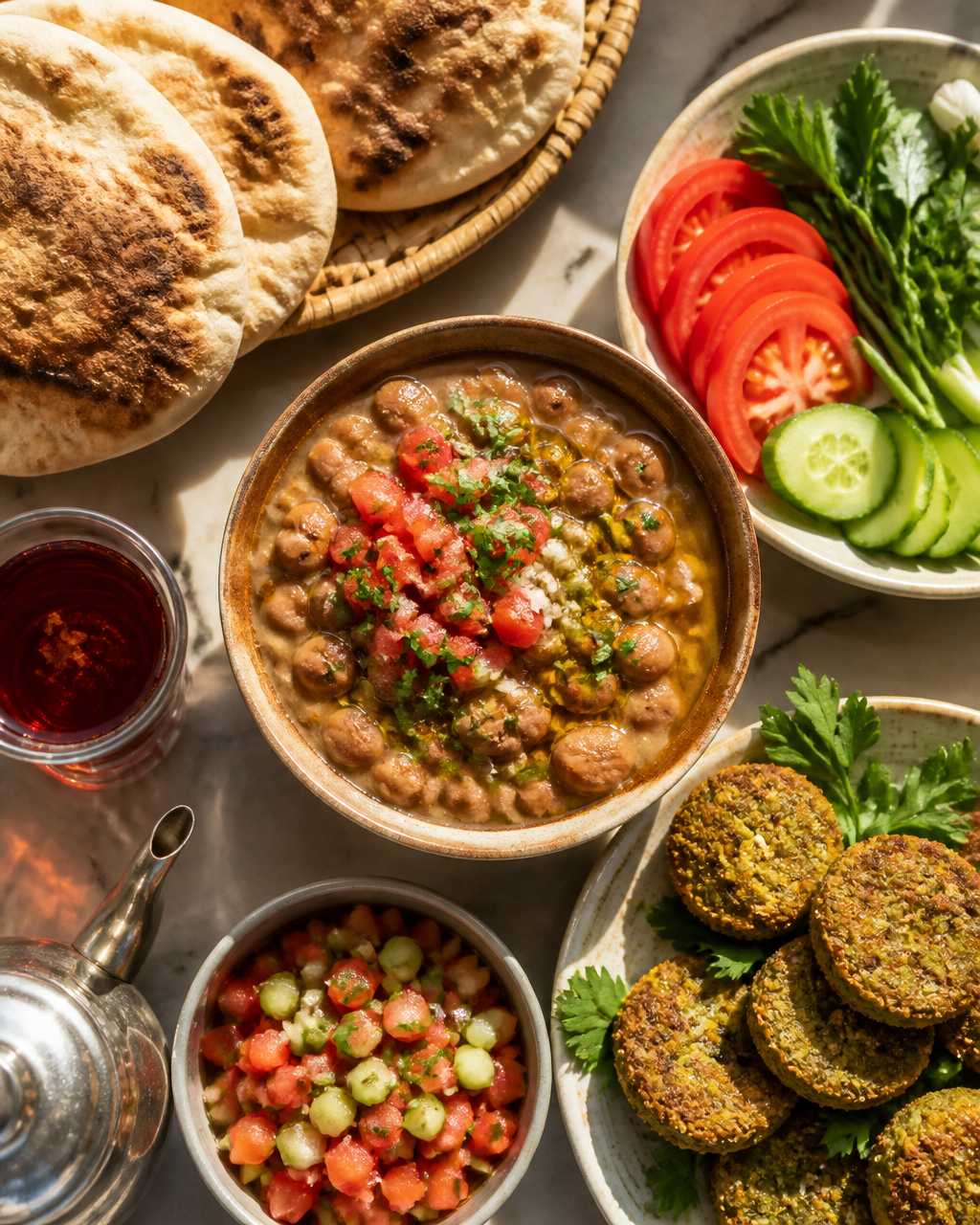
What is Ful?
Ful, or ful medames, is a dish made from cooked fava beans. It is often considered the quintessential Egyptian breakfast, providing a hearty start to the day. Traditionally prepared in a communal pot, ful is slow-cooked to achieve a creamy consistency, often seasoned with a mix of spices, garlic, and lemon juice.
Preparation and Serving
Ful can be prepared in various styles, depending on regional preferences. In some areas, it may include toppings such as diced tomatoes, onions, or chilli peppers, providing a burst of flavour and colour. The dish is typically served warm, accompanied by baladi bread, a traditional Egyptian flatbread that is perfect for scooping up the beans.
When ordering ful at a local eatery, you might encounter variations that include additional ingredients such as boiled eggs or a drizzle of olive oil. It’s common to share a pot of ful among friends or family, making it a communal meal that encourages conversation and camaraderie.
Ordering Ful
When you’re ready to order ful at a local eatery, you can simply ask, "Can I have ful, please?" If you want to specify any toppings or additional ingredients, you can say, "Can I have ful with eggs and some olive oil?" Most vendors are accustomed to accommodating requests, so don’t hesitate to ask for what you prefer.
What is Taameya?
Taameya, often referred to as Egyptian falafel, is another beloved breakfast staple made from fava beans rather than chickpeas, which are used in many other cultures. The beans are mashed and mixed with herbs like parsley and dill, then formed into patties and deep-fried until golden brown and crispy.
Preparation and Serving
The contrast in texture between the crispy exterior and the soft, fragrant interior makes taameya a delightful dish to enjoy in the morning. It is usually served with fresh salad components such as tomatoes, cucumbers, and pickles, alongside baladi bread. Ask which sauces or accompaniments the restaurant offers, and whether they are included or charged separately.
Ordering Taameya
To order taameya, you can say, "I’d like taameya, please," and if you want to specify your preferred accompaniments, you might add, "Can I have it with salad and tahini?" As with ful, sharing is common, and many people enjoy ordering a few pieces of taameya to pass around the table.
Differences Between Ful and Taameya
While both ful and taameya are made from fava beans, they offer distinctly different taste profiles and textures. Here are some key differences:
- Texture: Ful is creamy and rich, while taameya has a crispy outer layer with a soft interior.
- Preparation: Ful is typically slow-cooked and served warm, while taameya is fried and served hot and fresh.
- Accompaniments: Ful is often enjoyed with a variety of toppings, while taameya is frequently served with fresh salads and sauces.
The Local Morning Routine
In Egypt, breakfast is more than just a meal; it’s a daily ritual that reflects the local culture. The morning routine often begins early, with families gathering to share food and stories before heading off to work or school.
Many Egyptians enjoy their breakfast while seated at a café or on the street, where vendors set up stalls serving ful and taameya. The bustling atmosphere adds to the experience, as the sound of sizzling oil and the aroma of freshly cooked food fill the air.
Takeaway vs Sit-Down
Whether you choose to eat at a local café or take your breakfast to go, both options have their advantages. Eating at a café allows you to soak in the atmosphere, interact with locals, and enjoy your meal at a leisurely pace. On the other hand, grabbing a takeaway is a quick and convenient option for those on the move.
If you decide to take your breakfast home, you might ask, "Can I have it to go, please?" This makes it easy to enjoy your meal in the comfort of your own space.
Typical Breakfast Portions
Portion sizes can vary depending on where you order your breakfast. Do not assume a bowl serves two people or that taameya is sold in a fixed number of pieces. Ask the restaurant how its portions work. If you’re unsure about portion sizes, you can always ask, "How many pieces come with the taameya?" This will help you gauge how much to order based on your appetite and whether or not you’ll be sharing.
Cultural Significance of Egyptian Breakfast
Breakfast holds a special place in Egyptian culture, often serving as a time to connect with family and friends. It’s not just about the food; it's about the experience of gathering together to share a meal.
A Time for Connection
In many households, breakfast is one of the few times during the day when family members can sit together and discuss their lives. The communal nature of sharing dishes like ful and taameya fosters a sense of belonging and strengthens family bonds.
Breakfast as a Ritual
For some, the act of preparing and enjoying breakfast is a cherished ritual. Many families have their own unique recipes or ways of preparing these dishes, passed down through generations. This adds a personal touch to the meal, making it even more special.
Practical Checklist for Ordering Breakfast
When ordering breakfast in Egypt, it can be helpful to keep the following checklist in mind:
- Know what you want: Familiarise yourself with the menu items, especially ful and taameya.
- Specify your preferences: If you have dietary preferences or would like to add toppings, don’t hesitate to ask.
- Portion sizes: Be mindful of how much food you might need, especially if you’re sharing.
- Ask for takeaway if necessary: If you’re on the move, remember to ask for your meal to go.
- Enjoy the atmosphere: If dining in, take a moment to soak in the local culture and enjoy the experience.
FAQs
What is the best time to have breakfast in Egypt?
Check the hours of the place you want to visit and when it serves the dishes you want. There is no single breakfast timetable that applies to every café, takeaway or household.
Can I find vegetarian options for breakfast?
Yes, both ful and taameya are vegetarian-friendly. Ful is made from fava beans, and taameya is made with fava beans and herbs, making them suitable for vegetarians.
Are there any common allergies to be aware of?
Ask the restaurant about the actual ingredients, sauces and preparation of your order. A dish name alone cannot establish whether it meets a dietary requirement, and recipes differ between kitchens.
Choose a breakfast you will enjoy rather than trying to order everything at once. You can return for a different combination another morning.