
Wondering what to eat in Egypt beyond the hotel buffet? Start with a simple breakfast of ful and taameya, try koshari for lunch, then make room for a dish you have never ordered before. You do not need an ambitious restaurant itinerary to begin enjoying Egyptian food. A few well-chosen meals can make a holiday, or your first weeks living here, much more interesting.
This guide is a starting point for visitors and residents, whether you are spending a weekend in Cairo or settling into life in Hurghada. It pairs an independently written introduction with Mark Wiens’ Egyptian street-food video, credited below. The video is a companion to the guide, not a promise that its restaurant prices, opening hours or menus remain unchanged.
Start with breakfast, rather than a long shopping list
The Egyptian Tourism Authority’s food guide describes ful medames as cooked fava beans and taameya as Egyptian fritters made with fava beans. These are useful names to recognise when you meet an unfamiliar breakfast menu. Egyptian flatbread, often written as eish baladi or aish baladi, is another name worth remembering.
For a first breakfast, keep your order manageable: choose one main dish, add bread, and ask what comes with it before adding extras. That makes it easier to discover what you actually enjoy. Ordering every unfamiliar item at once can leave you with a crowded table and very little sense of which dish you would choose again.
If you are eating with someone else, agree whether you want separate meals or dishes to share. A shared breakfast is a particularly easy way to compare preferences: one person may enjoy something crisp, while another prefers a softer bean dish. Neither needs to turn breakfast into a competition over who can order the most adventurous plate.
Make koshari your first lunch experiment
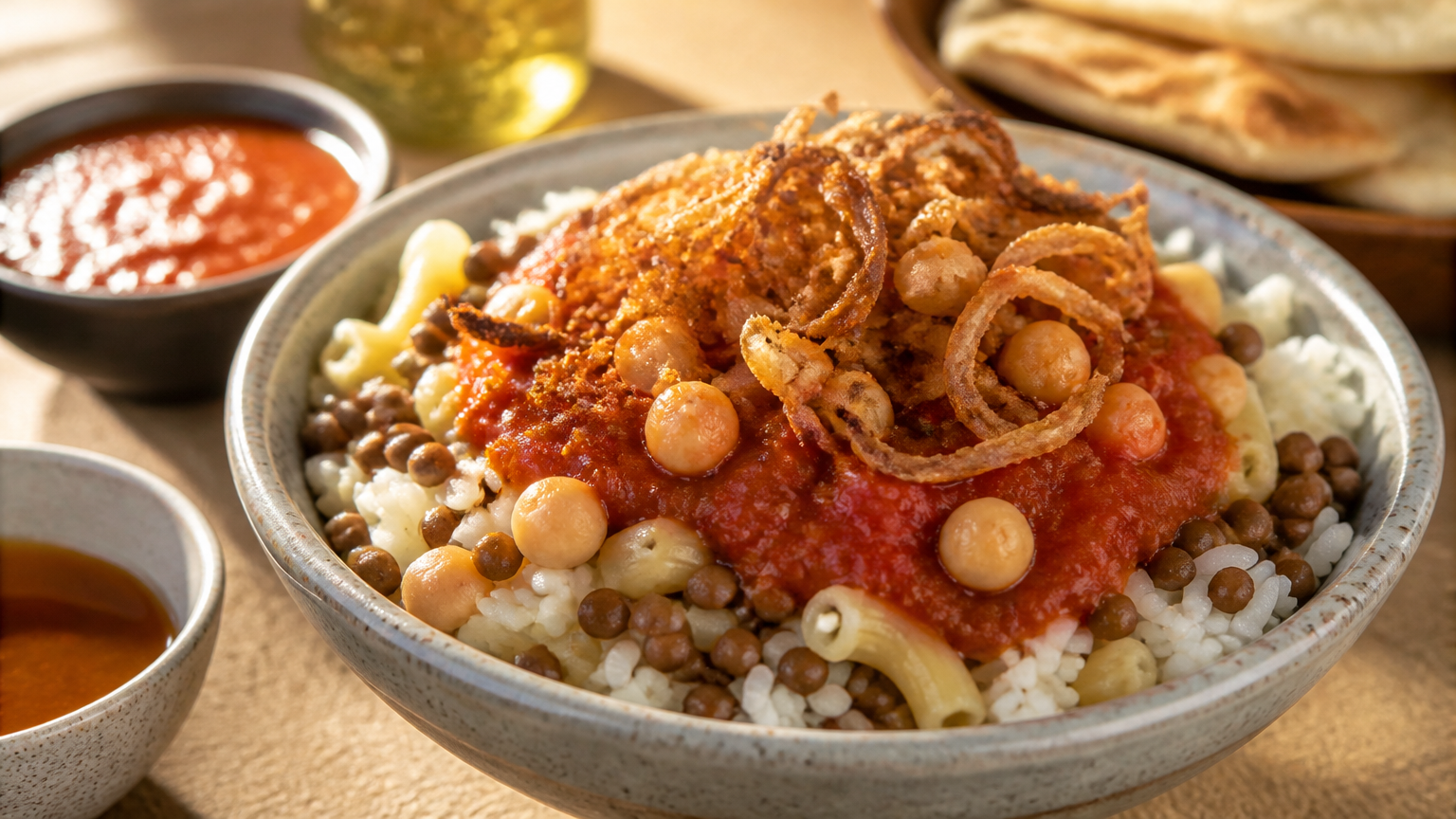
Koshari, also spelled koshary, combines rice, pasta, lentils and chickpeas with tomato sauce and fried onions. The appeal is in the contrast between the soft base, the sauce and the crunchy topping. The Egyptian Tourism Authority includes it in its introduction to local cuisine, while UNESCO lists “Koshary, daily life dish and practices associated with it” among Egypt’s intangible cultural heritage elements.
When ordering, ask which portion size suits one person and whether sauces are included. If extra chilli or garlic sauce is offered, try a little first rather than pouring everything into the bowl. You can add more; taking it back out is less practical.
There is no need to treat an online recommendation as a rule. A famous restaurant can be an enjoyable destination, but a convenient place near your accommodation may suit an ordinary lunch better. Look at the menu, decide what you want to spend and order accordingly. The best first experience is one you can enjoy without rushing to the next attraction.
Watch: a Cairo street-food journey with Mark Wiens
Mark Wiens’ video, “Ultimate EGYPTIAN Street Food Tour!! They WARNED Me About Cairo!!”, offers a visual companion to this guide. Its published chapter list includes breakfast at Foul Wehid, koshari at Koshary Abou Tarek, stuffed pigeon at Farahat Grill and a later grilled-meat stop.
The koshari chapter begins at 9:31, according to the creator’s chapter list. You can watch the complete tour in the embedded player, or open the original video on Mark Wiens’ YouTube channel. All video credit belongs to the creator. This article does not reproduce his footage or transcript.
Use the tour for ideas about dishes and atmosphere. Before making a special journey, confirm the restaurant’s current location, menu and opening arrangements independently. A travel video records a particular visit, rather than a permanent directory of what will be available on yours.
Choose dinner by what you feel like eating
Once you have tried breakfast and koshari, choose a different style of meal. The tourism authority’s guide introduces molokhiya, a green dish associated with garlic and coriander; mahshi, or stuffed vegetables; and grilled options such as kofta and kebab. You do not have to try them all in one evening.
A useful approach is to ask what the restaurant specialises in, then narrow your choice. If you want a lighter evening, ask about the portion and accompaniments. If you want a meal to share, ask how many people a platter is intended to serve. A dish name alone rarely tells you the size of the complete order.
For unfamiliar meat dishes, ask what cut or filling is used rather than guessing from an English translation. If you avoid particular ingredients, name them clearly. A menu description can be brief, and a familiar-looking dish is not enough to establish its recipe or preparation.
Leave room for something sweet
Two names in the tourism authority’s introduction are roz bil laban, a rice pudding, and Umm Ali, a baked dessert made with bread or pastry and milk, often accompanied by nuts or other toppings. They offer a different ending from automatically ordering the same dessert you would choose at home.
Ask what is available that day and whether a portion is suitable for sharing. If you have a food allergy, check the actual ingredients and how the dish is prepared with the restaurant; this guide cannot establish what is in an individual serving.
A dessert stop can also be its own small outing. You might prefer a simple dinner followed by somewhere comfortable to sit, rather than trying to fit every course into one restaurant booking. Leave space in your plans for that choice.
Build a food day that fits your trip
For a first food-focused day, choose three occasions rather than six destinations: breakfast, lunch and dinner. Add a dessert only if you want it. This gives you a structure without letting a checklist dictate your appetite.
In Cairo, you might use the video to shortlist a restaurant, then check how it fits around the area you are already visiting. In Hurghada or elsewhere on the Red Sea, use the same dish names to explore local menus instead of assuming a Cairo itinerary transfers directly to your neighbourhood.
For a longer stay, keep a short note on your phone: the dish, where you ordered it, what you liked and anything you would change next time. That is more useful than collecting dozens of restaurant names you cannot remember. You will gradually build a personal list rather than relying on somebody else’s ranking.
Before ordering, check:
- The current menu price and portion size.
- What is included, and which accompaniments cost extra.
- Ingredients that matter to your diet or allergies.
- Whether the bill includes any stated service charge or taxes.
- How the restaurant accepts payment.
There are deliberately no restaurant prices in this guide. Use a current menu for a current decision, rather than building your food budget around an older video.
Questions visitors often ask
What is a sensible first Egyptian meal?
Koshari is a straightforward starting point because you can recognise its main components. For breakfast, try ful or taameya with bread. Choose something that appeals to you, ask questions, and begin with a manageable portion.
Can vegetarians find Egyptian dishes to try?
Yes. The tourism authority highlights several plant-based dishes, including ful, taameya and koshari. However, check the recipe, cooking ingredients and accompaniments at the place where you order. A dish’s usual description does not guarantee every restaurant prepares it identically.
Should I follow every stop in a YouTube food tour?
No. Pick one or two ideas that fit your location, appetite and time. Treat the video as inspiration, confirm practical details separately and leave room to discover places near you. You will probably remember a relaxed meal more fondly than a day spent chasing an itinerary.