
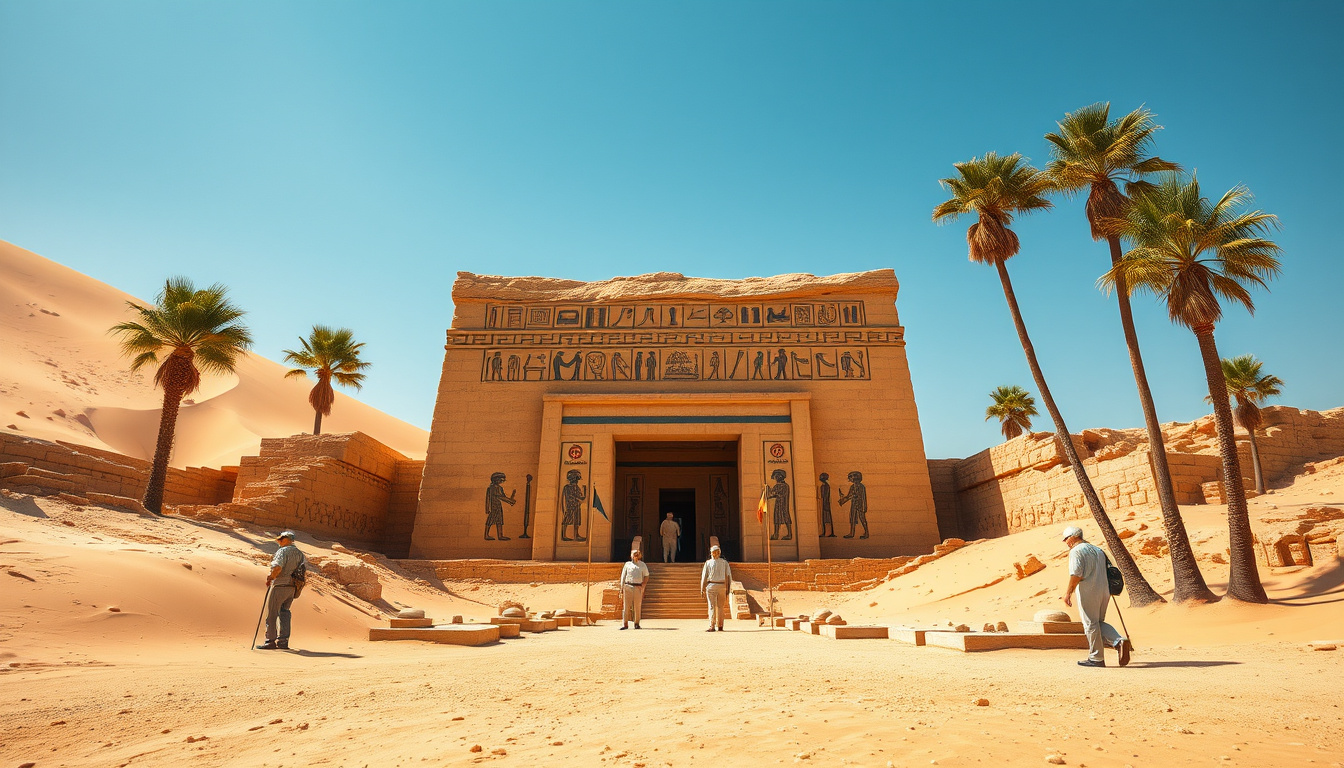
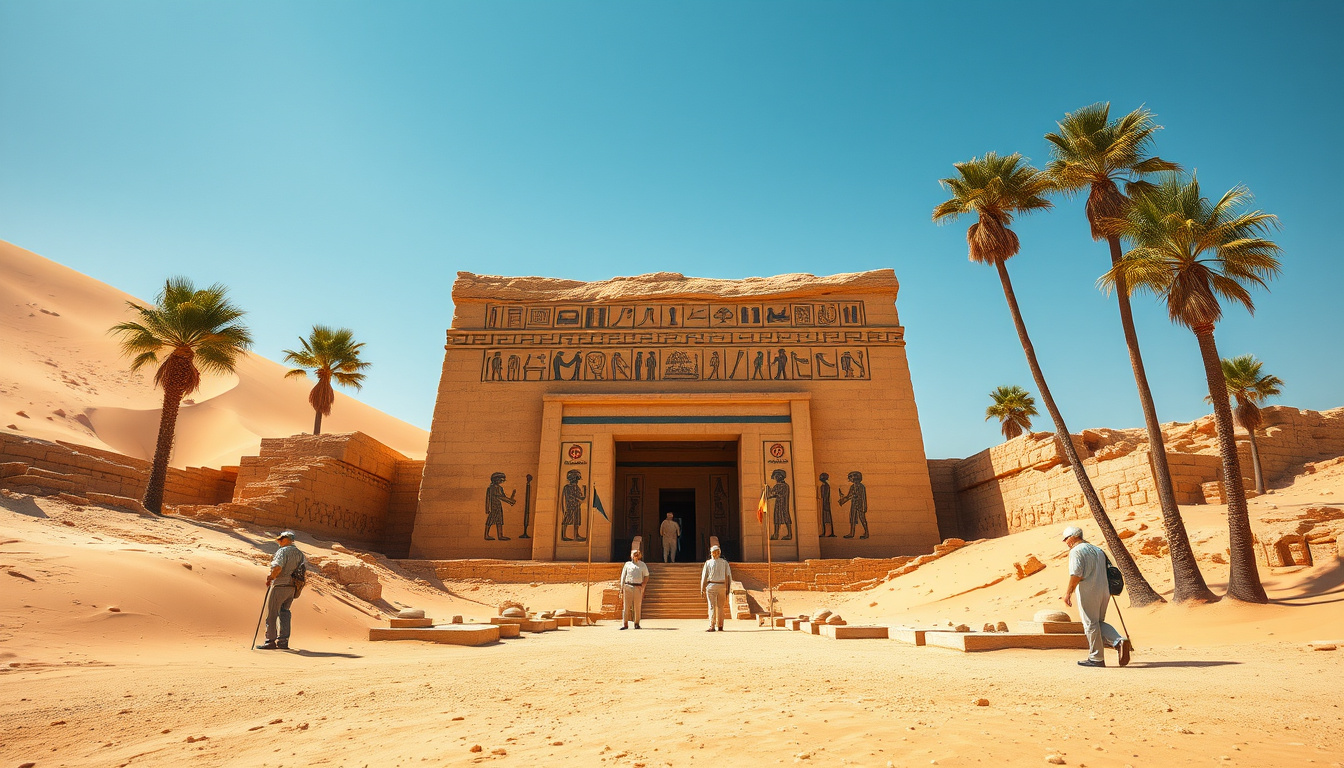
The recent archaeological discovery at Panehsy’s Tomb in Egypt marks a monumental step forward in our understanding of ancient Egyptian funerary practices and the cultural evolution of the region.
Announced by the Egyptian Ministry of Tourism and Antiquities on May 31, this discovery was made by a dedicated team from the Supreme Council of Antiquities during excavations in Matariya, Ain Shams.
This area, renowned for its rich history, has unveiled rare artifacts that not only deepen our knowledge of Egyptian burial customs but also shed light on the religious and social dynamics of ancient civilizations.
In this article, we will explore the significance of the Panehsy discovery, highlighting its contributions to archaeology and our understanding of funerary practices throughout history.
Key Takeaways
- The discovery at Panehsy’s tomb is the first of its kind in the Matariya area, unveiling an extensive funerary furniture set.
- Key artifacts include a copper mirror, alabaster containers with eyeliner traces, and intricately inscribed scarabs, highlighting ancient cosmetic practices.
- The necropolis provides essential insights into burial customs and the evolution of religious beliefs from the Late Period to the Christian era.
Significance of the Panehsy Discovery in Archaeology
The recent discovery at the tomb of Panehsy in Matariya, Ain Shams, as announced by the Egyptian Ministry of Tourism and Antiquities on May 31, marks a watershed moment in the field of archaeology.
Unearthed by an Egyptian archaeological team associated with the Supreme Council of Antiquities (SCA), this find unveils a nearly intact set of funerary furniture—a first for the region—offering critical insights into the burial customs of ancient Egyptians.
The initial excavations revealed a mudbrick burial containing human remains, leading to further investigations which unearthed a hidden cachette filled with a remarkable array of cosmetic tools and funerary items integral to ancient rituals.
Key artifacts from this discovery included an exquisite copper mirror, alabaster containers with remnants of eyeliner, a unique black obsidian container, and light-blue faience vessels, one of which impressively contained six inscribed scarabs, with two possibly adorned in gold.
These findings not only enhance previous discoveries of mudbrick and limestone funerary structures but also indicate a link to a notable military figure, especially with the presence of fragmented coffins and Roman period coins found on-site.
The limestone blocks inscribed with hieroglyphs further underscore the site’s archaeological significance, providing a window into the historical and cultural evolution of the area.
The Panehsy necropolis is more than just a burial site; it serves as a crucial record of burial practices spanning from the Late Period to the Christian era, nestled within the ancient necropolis of Heliopolis, a center revered for worship of the sun god Re.
This context not only amplifies the importance of the Panehsy discovery but also aids in comprehending the development of religious beliefs and social hierarchies throughout Egyptian history.
Exploration of Funerary Practices in Ancient Egypt
The funerary practices of ancient Egyptians offer a captivating glimpse into their beliefs surrounding death and the afterlife, pivotal elements of their civilization.
Central to these practices was the concept of preserving the body, evidenced in their meticulous mummification rituals, which were essential in ensuring a safe passage to the afterlife.
The tombs themselves were designed as grand eternal homes filled with items that the deceased might need, reflecting social status and personal tastes.
Funerary furniture such as beds, chairs, and tables, alongside grave goods like pottery, jewelry, and cosmetics, were routinely included in burial sites.
The recent findings from the Panehsy tomb illustrate this tradition, revealing not only the essential cosmetic tools that highlight the importance of physical appearance in the afterlife but also a range of luxury items that signify the deceased’s status.
Additionally, burial structures varied over time, showcasing intricate designs and inscriptions that linked the individual to divine protection, underscoring the importance of the gods in their afterlife journey.
The integration of artifacts associated with daily life into these graves indicates that ancient Egyptians viewed the afterlife as a continuation of earthly existence, one that required preparation and reverence.