
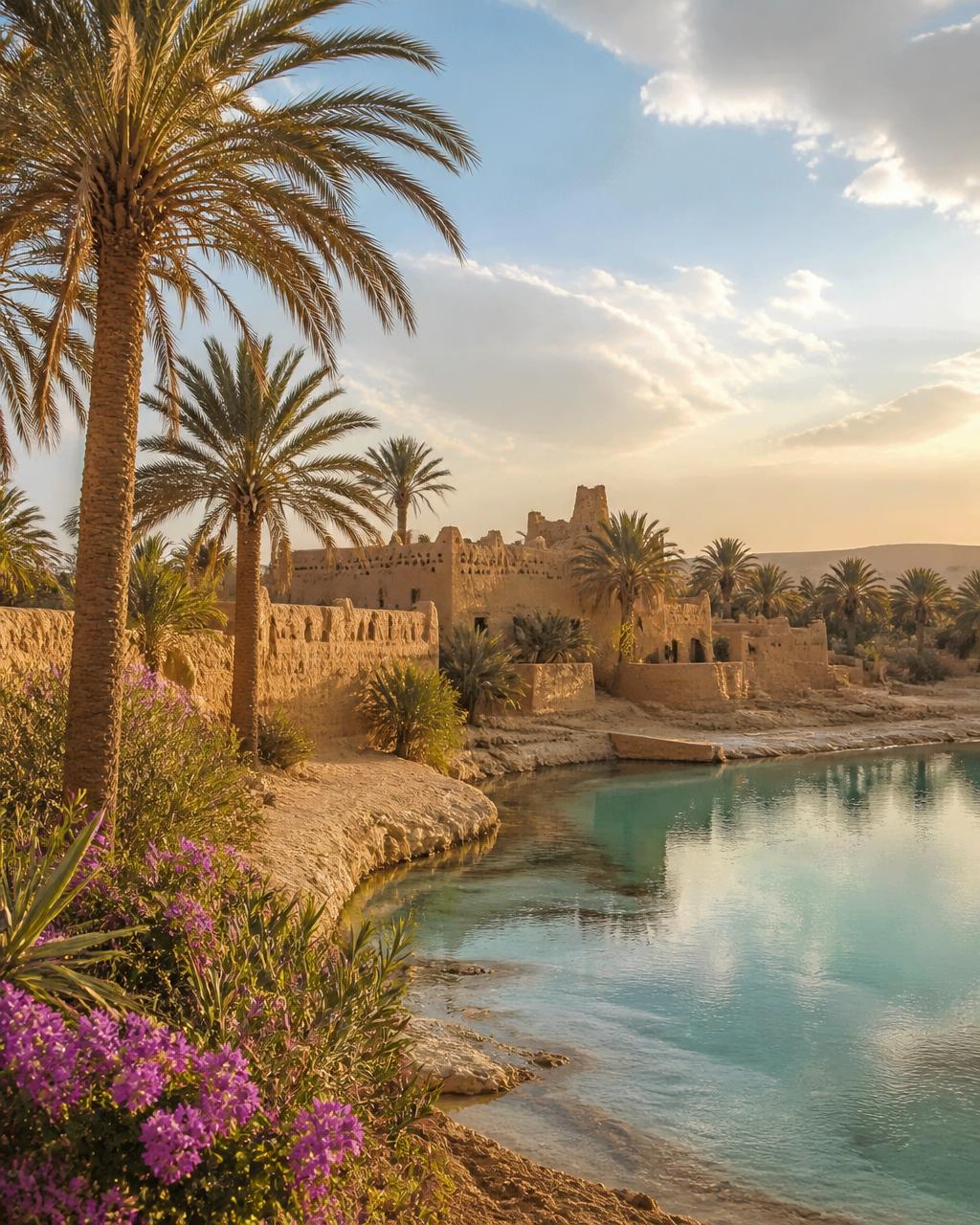
Siwa Oasis, a remote gem nestled in the Egyptian desert, offers a unique blend of tranquillity and natural beauty, characterised by its village streets, salt lakes, palm trees, and olive groves. With its serene atmosphere, Siwa may appeal to travellers seeking to escape the hustle and bustle of modern life and immerse themselves in the simplicity of nature. This article aims to help you plan your first trip to Siwa by providing insights on choosing the right accommodation, understanding the local culture, and embracing a more leisurely pace.
Settle the arrival plan first
Siwa is a remote desert oasis, so start by checking the actual journey you intend to book. Ask a transport provider about the departure point, arrival point, baggage arrangements and the current service on your chosen date. This guide does not quote journey times or confirm a timetable. A route described in an old travel post may not be the arrangement available when you travel.
Ask where the transfer ends
A booking that gets you to the oasis is not necessarily a booking that gets you to your accommodation door. Give the property the proposed arrival details and ask how the final connection works. Confirm who is responsible for arranging it, whether it is included in the agreed price and how a delay will be handled. Save a written contact plan before leaving.
If you are considering a private transfer, discuss luggage, planned breaks and the meeting point in advance. If you are considering scheduled transport, check the provider's current instructions rather than relying on an assumed service. There is no need to choose a particular form of transport simply because another traveller used it.
Leave space around arrival day
Avoid making your first evening depend on an exact arrival minute. Let your host know if you need a meal and ask what happens if you arrive later than expected. A simple arrival plan can remove more uncertainty than a long list of attractions. Give yourself time to settle in before deciding what to do next.
Choosing Your Accommodation
With your transport plans in place, the next step is to select your accommodation. Siwa offers a range of options, from luxury hotels to traditional guesthouses. Here are some factors to consider:
1. Types of Accommodation
- Hotels and Resorts: If you prefer more comfort and amenities, several hotels in Siwa offer modern facilities, but the facilities differ. Confirm any pool, spa service or guided activity before booking. Look for places that highlight their commitment to responsible tourism and support local communities.
- Eco-Lodges: For a more immersive experience, consider staying at an eco-lodge. Ask what the property means by this description, how it manages resources and what facilities it actually provides. A label alone does not verify environmental performance.
- Guesthouses: For a more intimate experience, guesthouses offer a chance to connect with local families. Ask whether meals are available and what interaction with hosts is offered; neither should be assumed from the label.
2. Location
When selecting accommodation, consider its proximity to key attractions such as the Shali Fortress, Cleopatra’s Spring, and the salt lakes. Staying closer to the village centre can give you easier access to local shops and restaurants, while more remote options may offer peace and quiet.
3. Amenities
Ensure the accommodation provides necessary amenities, including:
- Shade: Outdoor spaces can get very hot, especially during the summer months. Look for properties with shaded areas for relaxation.
- Bathrooms: Confirm that your accommodation has adequate bathroom facilities, particularly if you have specific preferences regarding privacy or accessibility.
- Meals: Inquire about meal options available at your accommodation, as local cuisine can be a highlight of your stay. Some places may offer traditional meals made from locally sourced ingredients.
Embracing the Local Culture
Siwa is rich in culture and history, and your visit should be about more than just relaxation. Engaging with the local community can enhance your experience.
1. Local Guides
Consider hiring a local guide who can provide insights into Siwa’s history, culture, and environment. Responsible guides will ensure you engage positively with the community and learn about the significance of various sites.
2. Cultural Experiences
Participate in local traditions or festivals if your visit coincides with any. This could include music, dance, and culinary events. Such experiences can deepen your appreciation for Siwa’s unique heritage.
3. Respecting Local Customs
Be mindful of local customs and traditions, especially regarding dress and behaviour. Siwa is a conservative area, so it’s advisable to dress modestly and be respectful of cultural norms.
Leaving Room to Slow Down
One of the most rewarding aspects of visiting Siwa is the opportunity to slow down and truly relax. The oasis environment encourages a more laid-back approach to travel.
1. Exploring at Your Own Pace
While it can be tempting to create a packed itinerary, Siwa’s charm lies in its unhurried atmosphere. Allow yourself time to wander the village streets, observe daily life, and take in the stunning natural surroundings.
2. Mindfulness and Reflection
Consider incorporating mindfulness practices during your stay. Whether it’s meditation by the salt lakes or journaling in a quiet spot, these activities can enhance your experience and create lasting memories.
3. Disconnecting from Technology
Siwa is a place where you can disconnect from the digital world. If you need internet or phone access, ask the property about the connection available there and how to contact them if it does not work for you. Engage with your surroundings and the people around you.
Practical Considerations
Before embarking on your trip, it’s essential to prepare adequately for your stay in Siwa. Here are some practical tips:
1. Health and Safety
- Swimming Safety: If you plan to swim in the local springs or lakes, always adhere to guidelines provided by your accommodation or local guides regarding water safety and current conditions.
- Medical Facilities: Be aware of the distance to the nearest medical facilities and ensure you have any necessary medications with you, particularly for chronic conditions.
2. Packing Essentials
- Clothing: Bring lightweight, breathable clothing suitable for desert conditions, along with a hat and sunglasses for sun protection.
- Footwear: Comfortable walking shoes are essential for exploring the village and surrounding landscapes.
- Hydration: Carry a reusable water bottle, as staying hydrated is crucial in the desert heat.
3. Financial Considerations
- Currency: The local currency is the Egyptian pound. Ensure you have enough cash, as not all establishments may accept card payments.
- Budgeting: Plan your budget ahead of time, factoring in accommodation, meals, activities, and any shopping you might want to do.
Conclusion
Your first trip to Siwa can be a slower-paced holiday, providing you with a unique opportunity to connect with nature and local culture. By choosing the right accommodation, engaging with the community, and allowing yourself the space to slow down, you can create lasting memories in this serene oasis. Choose the arrangements that suit your group, and leave room to enjoy the place without promising yourself a particular emotional outcome.
FAQs
1. How do I get to Siwa from Cairo?
There are several options to reach Siwa from Cairo, including private car rentals, bus services, or organised transfers from hotels. The journey typically takes several hours, so plan accordingly.
2. What type of accommodation is best for first-time visitors?
Consider your preferences for comfort and local experience. Eco-lodges and guesthouses can provide a more authentic experience, while hotels offer more amenities. Choose what aligns with your travel style.
3. Is it safe to swim in Siwa’s lakes?
This guide cannot assess water conditions or confirm that a location is suitable for swimming. Seek current local guidance, follow qualified operator instructions and do not enter the water if suitability is uncertain.