
Dendera Temple, dedicated to the goddess Hathor, is one of Egypt's best-preserved temples and a key cult centre of ancient Egyptian religion. The main temple, which dates back to the Ptolemaic period, showcases remarkable architecture and intricate reliefs that provide a glimpse into the rich history of the site. Evidence of earlier worship at Dendera can be traced back to the Old Kingdom, making it a place of continuous religious significance for centuries.
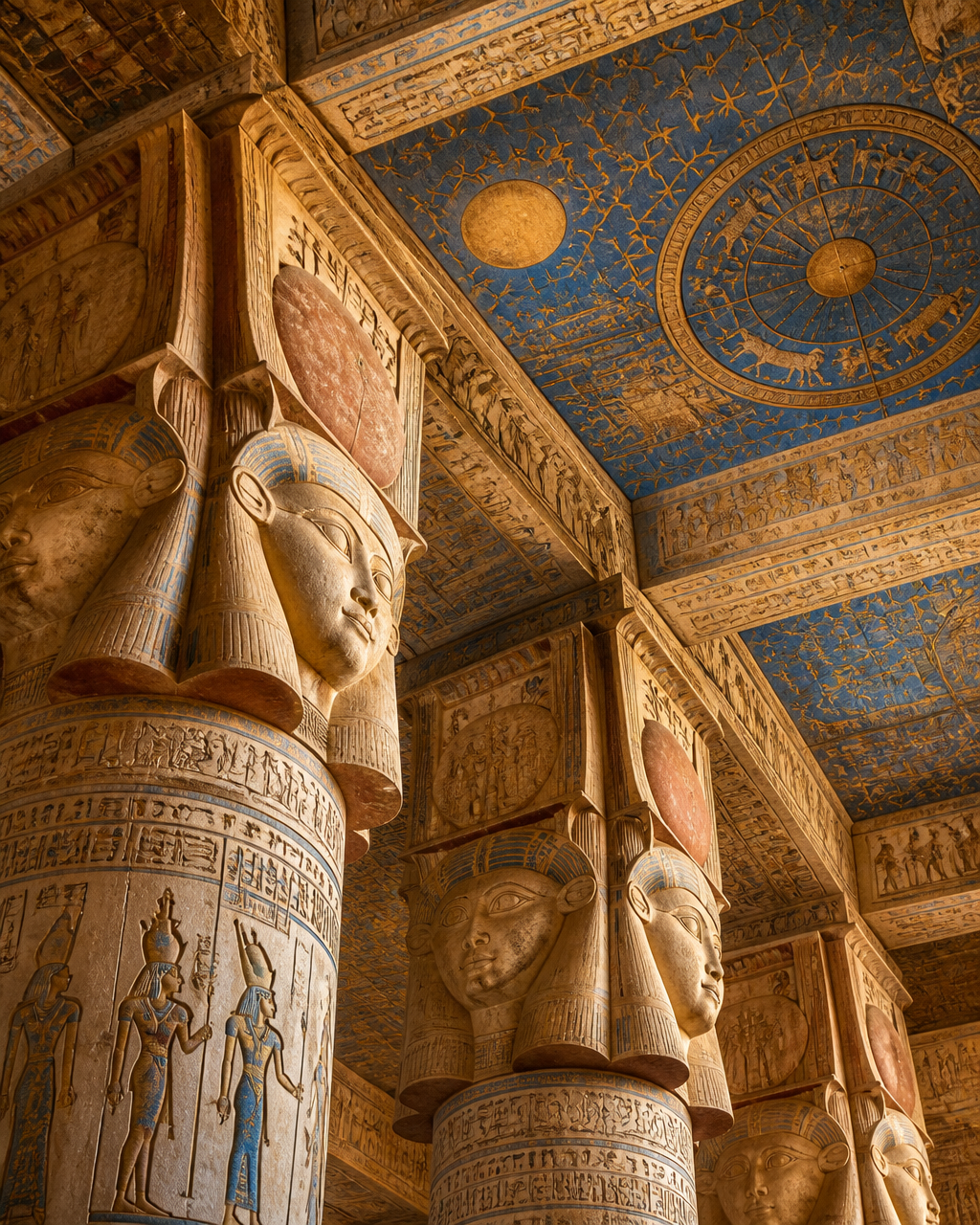
What to notice at the Temple of Hathor
Dendera's main temple is associated with Hathor and dates to the Ptolemaic period, with evidence of older activity at the site. The Ministry of Tourism and Antiquities describes it as one of Egypt's best-preserved temples. Rather than trying to memorise every name before arriving, use that broad context to frame a few useful questions for a guide.
Start with the columns and the relationship between the carved surfaces and the rooms they surround. Ask your guide to identify what you are actually looking at and to distinguish an interpretation from an established identification. A short explanation linked to one visible detail is often easier to remember than a long list of rulers.
Look carefully, then ask
Choose a few details that interest you: a face on a column, a repeated figure, a ceiling design or a change in the light between spaces. Ask what each element represents and which period it belongs to. If a guide mentions a famous object, ask whether the original is on site or whether you are seeing a reproduction. Do not assume that a widely shared photograph shows the present arrangement.
There is no need to follow someone else's photographic checklist. Pause where you can do so without blocking a route, look at the whole surface and then move closer only where visitors are permitted. The purpose is to leave with a clearer understanding of a few details, rather than a camera full of pictures you cannot identify.
Planning Your Visit to Dendera Temple
When planning your visit to Dendera Temple, consider the following practical tips to ensure an enjoyable experience.
1. Confirm Site Access
Before you travel, check for the latest information regarding site access. The official website of Egyptian monuments can provide updates on visitation hours, any ongoing restoration work, or changes in access protocols.
2. A Flexible Day Itinerary
While it’s important to have a plan, flexibility can enhance your experience. Here’s a suggested itinerary:
- Morning Arrival: Aim to arrive early to avoid crowds. This allows for a quieter exploration of the temple and better opportunities for photography.
- Guided Tour: Consider hiring a local guide who can provide insights into the temple’s history and significance. A knowledgeable guide can help you appreciate the intricate details that may go unnoticed without context.
- Explore the Grounds: After touring the main temple, take time to explore the surrounding structures, where access is permitted. Each area holds unique artistic features and historical significance.
- Lunch Break: Plan to have lunch at a nearby establishment or bring a packed meal. Enjoying a meal in the vicinity of the temple can offer a pleasant break during your exploration.
- Afternoon Reflection: Use the afternoon to revisit areas of interest or discuss a detail you would like your guide to explain more fully.
3. What to Bring
Here are some recommendations on what to bring:
- Comfortable Footwear: The temple complex involves a fair amount of walking, so ensure you wear comfortable shoes.
- Water and Snacks: Hydration is crucial, especially during warmer months. Carry water and light snacks, as amenities may be limited.
- Camera: Capture the beauty of the temple, but be mindful of any photography restrictions in certain areas.
- Sun Protection: A hat, sunglasses, and sunscreen can help protect you from the sun, particularly during midday.
4. Briefing Your Guide
If you choose to hire a guide, consider preparing a list of questions or topics you want to learn about. This can include:
- The history of Dendera Temple and its significance in ancient Egyptian culture.
- Insights into the mythology surrounding Hathor and other deities depicted in the temple.
- Details about the architectural features and construction techniques used in the temple's design.
5. Respecting the Site
As a visitor, it is vital to respect the site and its rules. This includes avoiding touching the ancient carvings, refraining from climbing on the structures, and following any guidelines provided by your guide or the authorities on site.
Agree the day before paying for the trip
A day described as a Dendera visit may include very different arrangements. Ask where the pickup happens, whether the driver stays, whether guiding is included and how your return is organised. Do not rely on a headline price to explain any of these details. Ask for the proposed stops in writing and make sure everyone in your group has seen the same plan.
A useful planning scenario
Imagine that two visitors want to take photographs while another wants a detailed historical explanation. A rushed group visit may leave all three dissatisfied. Discuss those priorities before choosing a guide or joining a tour. You can ask whether there is a chance to pause for photographs after an explanation, without assuming the operator can provide exclusive access or unrestricted time.
Keep the return journey separate from the time you expect to spend inside. Ask the operator what can affect the day's timing and who will contact you if pickup changes. Avoid arranging an important onward departure so tightly that a change to the day becomes a problem. This is a planning principle, not an estimate of the journey time.
Keep the paperwork simple
Save the operator's agreed contact details, booking confirmation and pickup instructions somewhere accessible. Note what you have paid and what remains payable. If your group changes its mind about an extra stop, confirm the change before setting off rather than leaving different assumptions with the driver, guide and passengers.
A useful visit does not need a complicated schedule. It needs an agreed route, realistic space for the experience and clear arrangements for getting back.
Key Takeaways
- Dendera Temple is a remarkable site that provides insights into ancient Egyptian religion and culture, particularly the worship of Hathor.
- Planning your visit with flexibility allows you to fully appreciate the site's beauty and significance.
- Hiring a knowledgeable guide can enhance your experience by providing context and depth to your exploration.
FAQs
What are the main highlights of Dendera Temple?
Start with the temple as a whole, then ask your guide about the columns, carved figures and ceiling details visible on your route. Check which areas are open during your visit.
How can I ensure a respectful visit to the temple?
To ensure a respectful visit, avoid touching the ancient carvings, follow site rules, and listen to your guide’s instructions.
What is the best time to visit Dendera Temple?
Check the current official opening arrangements and discuss timing with your operator. Choose a plan that leaves enough time inside without assuming that any particular hour guarantees fewer visitors.
Planning your visit to Dendera Temple can lead to an enriching experience steeped in history and culture. With the right preparations, you will appreciate the beauty of this ancient site and its significance in Egypt's rich heritage.