
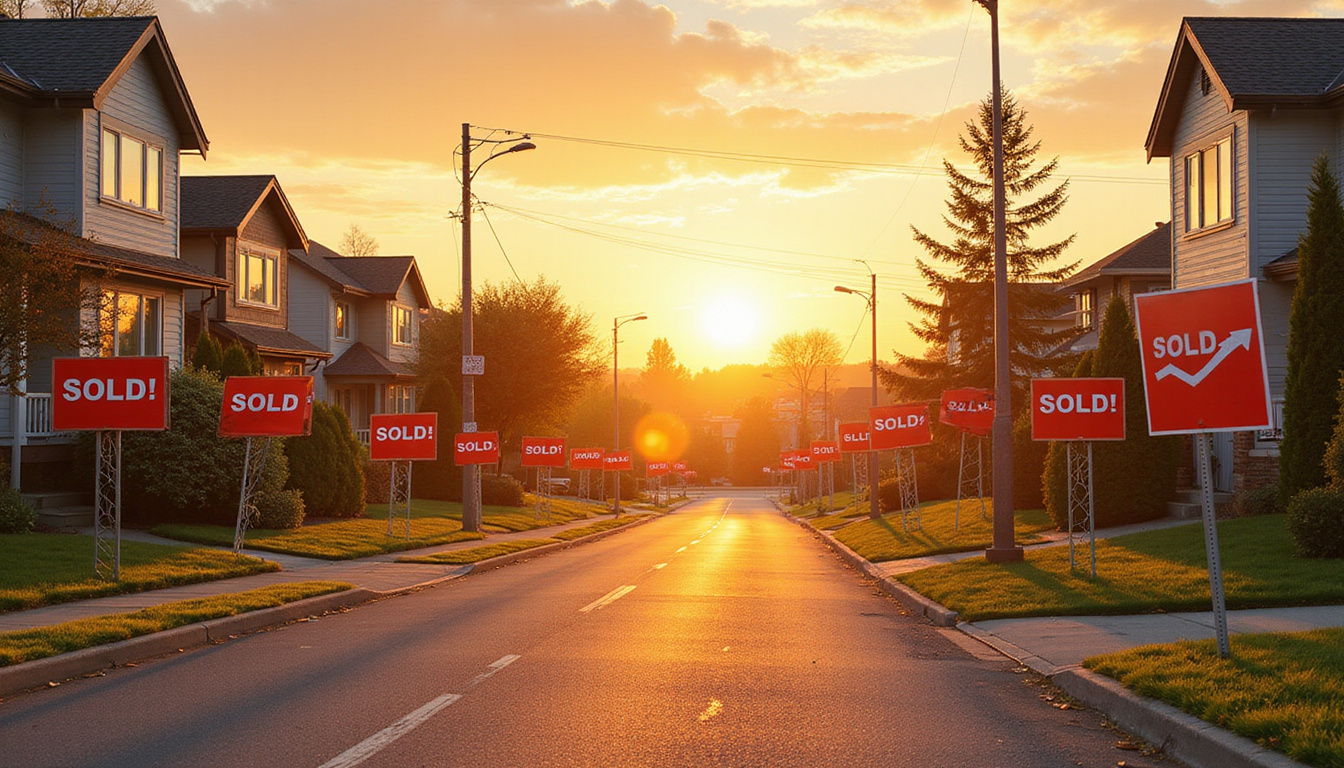
Recently Sold Homes Reveal Top Neighborhood Trends and Prices
If you’re serious about buying or selling in today’s market, ignoring recently sold homes is like driving blind. Closed sales—not listing prices—tell you what buyers are actually willing to pay, which neighborhoods are heating up, and where you can still find value. By studying recently sold data, you can spot trends early, price strategically, and negotiate from a position of strength.
Below, we’ll break down exactly how to read those numbers, what they reveal about neighborhood trends and prices, and how to use this insight whether you’re a buyer, seller, or investor.
Why “Recently Sold” Data Matters More Than Asking Prices
Asking prices are opinions; recently sold prices are facts.
Every closed sale reflects a meeting point between a willing buyer and seller under real market conditions. When you analyze enough of them, patterns start to emerge:
- Which neighborhoods are appreciating fastest
- What upgrades buyers actually pay more for
- How far homes sell above or below asking
- Whether the market is favoring buyers or sellers
Real estate professionals, appraisers, and lenders all rely heavily on recently sold properties—often called “comparables” or “comps”—to estimate a home’s current market value (source: FHFA). If you’re not looking at the same data, you’re already at a disadvantage.
How to Read “Recently Sold” Listings Like a Pro
When you pull up a list of recently sold homes in any neighborhood, don’t just skim the final prices. Look at the full picture.
Here are the key data points to focus on:
Sale price vs. list price
- Over asking = strong demand, potential multiple offers
- At or near asking = stable, balanced market
- Below asking = softer demand, room to negotiate
Days on market (DOM)
- Very low DOM (e.g., under 10 days) suggests a hot area or underpriced listings
- Rising DOM often signals a shift in power toward buyers
Price per square foot
- Normalizes prices across different home sizes
- Great for seeing which micro-areas or property types command a premium
Property type and condition
- Renovated vs. fixers, condos vs. single-family, new builds vs. older stock
- Helps you avoid overpaying for a property that needs heavy work
Concessions and contingencies (when visible)
- Seller credits, paid closing costs, or repairs can indicate a cooling market
- Fewer concessions and appraisal or inspection waivers point to a red‑hot one
By comparing these details across a cluster of recently sold homes, you start to see where demand is strongest and what today’s buyers truly value.
What Recently Sold Homes Reveal About Neighborhood Trends
Zooming out from individual properties, a pattern of recently sold transactions can tell you a lot about the direction a neighborhood is heading.
1. Rising or Peaking Home Values
If you notice:
- Steadily increasing sale prices
- Higher price per square foot quarter over quarter
- More frequent sales over list price
…it suggests a neighborhood in growth mode. This could be due to new infrastructure, better schools, a growing restaurant or retail scene, or spillover from a nearby high-demand area.
However, if prices are high but:
- Days on market are starting to climb
- More listings are seeing price cuts before selling
- Fewer homes are going over asking
…the area might be hitting a plateau. Recently sold data can help you distinguish between true momentum and a market that may be flattening.
2. Gentrification and Transition Zones
Look closely at recently sold prices around:
- Newly opened transit stops
- Revitalized downtown cores
- University expansions or corporate campuses
Early in a gentrification cycle, sale prices may look like “deals” compared to neighboring districts—but you’ll often see a noticeable upward trend within a short timeframe. Fixer-uppers start selling at higher base prices, and renovated homes set new benchmarks for the street.

Spotting this pattern early can be a powerful strategy for both homebuyers seeking future appreciation and investors looking for value-add opportunities.
3. Shifts in Buyer Preferences
By comparing older sales to more recent ones, you can often spot changes in what buyers care about:
- Post-pandemic trends: more value placed on home offices, outdoor space, and proximity to parks rather than just commute times.
- Lifestyle shifts: growing demand for walkable, mixed-use neighborhoods versus car-dependent suburbs.
- Property features: premiums for energy efficiency, solar panels, modern kitchens, or flexible floor plans.
If homes with certain upgrades are consistently selling faster or above asking, those features are likely high on local buyers’ wish lists.
The Link Between Recently Sold Prices and Cost of Living
Understanding recently sold prices is only half the equation. What you can comfortably afford also depends on the broader cost of living in that area—taxes, utilities, everyday expenses, and lifestyle costs.
For a deeper, on-the-ground perspective, this video is a useful example of how locals break down what it really costs to live in a specific location:
- The Real Cost of Living In Egypt 2025 –
While that video focuses on Egypt, the principle is universal: always pair recently sold home prices with a thorough look at ongoing living expenses. A neighborhood with lower purchase prices can sometimes be more expensive over time if property taxes, HOA fees, or daily costs are high.
Using Recently Sold Homes to Set the Right Asking Price
If you’re selling, “testing the market” with an inflated price is one of the fastest ways to lose momentum. Instead, use recently sold comps to anchor your strategy.
Steps to Price Your Home Strategically
Select truly comparable properties
- Same neighborhood or very close proximity
- Similar square footage, lot size, and bed/bath count
- Comparable age and condition
Focus on the last 3–6 months
- Markets shift quickly; older sales may not reflect current demand
- In rapidly changing markets, even 60–90 days can matter
Adjust for differences
- Add value for extra bathrooms, finished basements, or major upgrades
- Subtract value for outdated finishes, needed repairs, or a less desirable lot
Study list-to-sale price ratios
- If most comparable homes sold 3–5% over list, you might price slightly below your target to attract multiple offers
- If many sold below list, you’ll want to price closer to where they actually closed
Watch micro-trends
- Corner of the neighborhood with better views, quieter streets, or closer amenities may command higher prices
- Even within the same zip code, pockets can behave differently
When your asking price is aligned with what the recently sold market data supports, buyers will recognize it as fair—and that’s when you draw the strongest interest.
How Buyers Can Use Recently Sold Data to Avoid Overpaying
As a buyer, you may be looking at emotionally charged listing descriptions and polished photos. Recently sold homes cut through that noise.
Here’s how to use them:
Set a realistic budget for each neighborhood
Instead of just relying on listed inventory, base your expectations on what actually closed in the last few months.Validate (or challenge) asking prices
If a home is listed significantly above comparable recently sold properties without clear justification (better condition, bigger lot, superior location), you have a solid basis to negotiate—or walk away.Time your offers
In a market where similar homes sold in days and over asking, a strong early offer might be necessary. Where homes sit for weeks and close below list, patience can pay off.Spot value plays
A property priced at or below recent comps that’s been sitting longer than average may indicate seller motivation rather than a hidden problem. That can mean leverage for you.
By walking into negotiations with specific recently sold examples, you position yourself as an informed buyer, not an easy target.
A Simple Checklist for Evaluating Recently Sold Homes
Use this quick list any time you’re assessing a neighborhood or a specific property:
- [ ] Are the recently sold homes truly comparable in size, age, and condition?
- [ ] What’s the average price per square foot for these comps?
- [ ] Are sale prices trending up, down, or sideways over the last 3–6 months?
- [ ] How often are homes selling above vs. below asking?
- [ ] What’s the median days on market, and is it changing?
- [ ] Do homes with certain features (garage, outdoor space, modern kitchen) sell faster or for more?
- [ ] Are there signs of a shift—more price cuts, longer DOM, or more concessions?
This framework can guide your decisions whether you’re comparing cities, narrowing down neighborhoods, or zeroing in on a single street.
Reading Between the Lines: Subtler Signals in Recently Sold Data
Beyond the obvious metrics, experienced buyers and sellers also pick up on smaller clues:
Clustered high-end sales
A group of above-average sales in one pocket can indicate a new “luxury row” or an area drawing higher-income buyers.Investor activity
Multiple all-cash, quick-close, or corporate buyer transactions among the recently sold can be a sign of investor interest. That can tighten inventory and push prices up, especially for smaller starter homes.Seasonal patterns
If prices or days on market move predictably with the seasons in your area, you may be able to time your sale or purchase for a better outcome.
Learning to “read” these patterns is less about complex math and more about consistent observation over time.
FAQ: Understanding Recently Sold Homes and Prices
1. How far back should I look at recently sold homes when pricing a property?
In most markets, focus on recently sold homes from the last 3–6 months in the closest possible radius. In rapidly changing or highly competitive markets, prioritize the most recent 60–90 days, as older sales may no longer reflect current buyer behavior.
2. Why are recently sold properties more important than active listings?
Active listings show what sellers hope to get; recently sold properties show what buyers actually paid. Appraisers, lenders, and serious buyers rely on closed sales to determine market value, so they’re a more reliable benchmark than asking prices alone.
3. Can I trust online recently sold price estimates for my neighborhood?
Automated estimates based on recently sold data are a useful starting point, but they may miss nuances like condition, upgrades, or micro-location differences. Use them as a guide, then refine with on-the-ground knowledge, detailed comps, and, ideally, a professional opinion.
Turn Recently Sold Data Into Real-World Advantage
Every day, homes close in your target neighborhoods, leaving behind a trail of clues: what buyers value, how fast properties move, and where prices are headed next. When you learn to read those recently sold signals, you stop guessing and start making decisions based on real evidence.
Whether you’re buying your first home, selling a long-held property, or building a portfolio, don’t navigate the market alone or rely on listing prices and hearsay. Start by pulling recently sold data in your area, then work with a knowledgeable local expert who can interpret those numbers in context and help you act on them.
If you’re ready to turn neighborhood trends and real sale prices into your competitive edge, now is the time to dig into the data—and use it to move confidently toward your next property decision.