
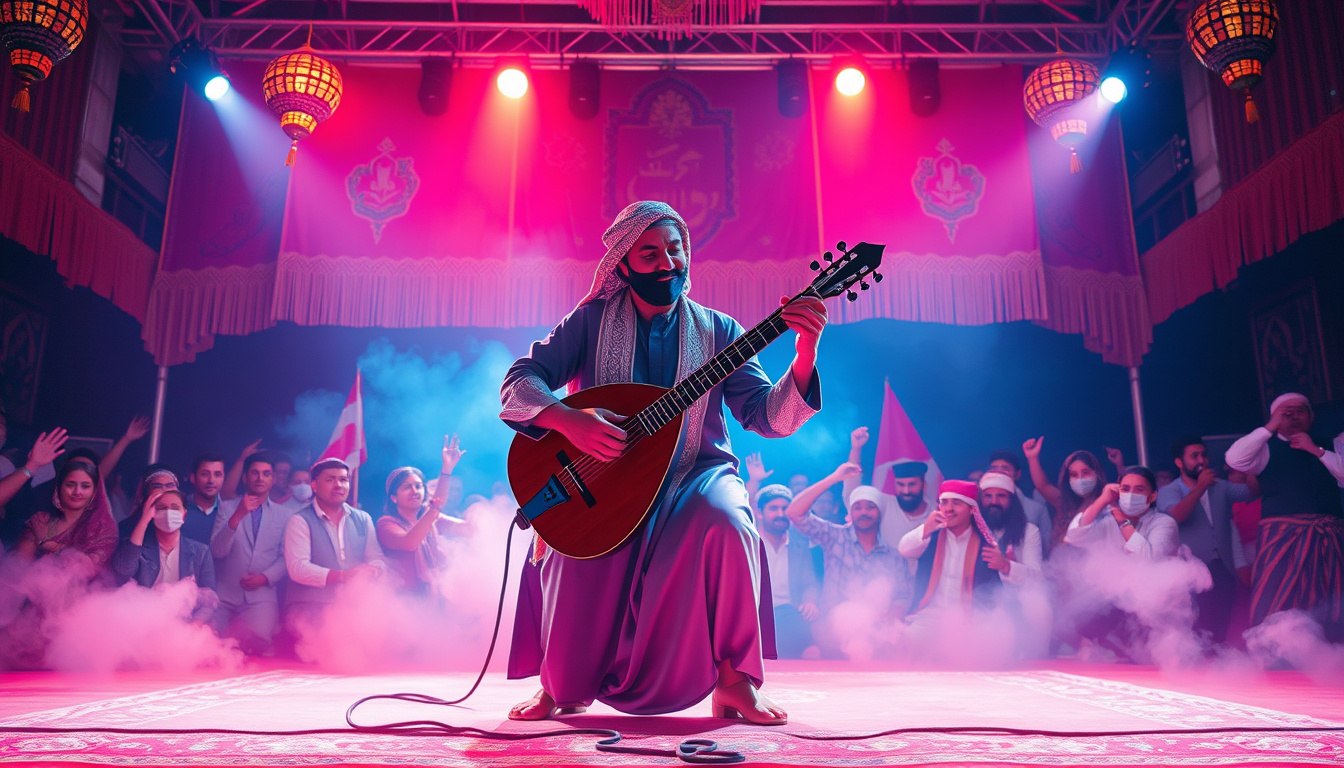
In the pantheon of Arab music, few voices resonate as profoundly as that of Ahmad Kaabour.
Born in Beirut on July 9, 1955, during a time when Lebanon faced profound socio-political upheaval, Kaabour etched his name in history not merely as a musician but as a beacon of resistance through art.
His seminal work, ‘Ounadikom’ (I Call on You), crafted at the tender age of 19, captured the collective anguish and hopes of his generation amidst the backdrop of the Lebanese Civil War.
Drawing inspiration from the poignant poetry of Palestinian writer Tawfiq Ziad, this song transcended the boundaries of music, blossoming into an anthem of solidarity, empathy, and resilience.
As we delve into the legacy of Ahmad Kaabour, we explore how his commitment to merging art with activism forged a unique voice in Arab music, shaping cultural narratives that continue to inspire movements for justice and peace.
Key Takeaways
- Ahmad Kaabour’s ‘Ounadikom’ emerged as a powerful anthem of resistance during the Lebanese Civil War.
- His music emphasizes the role of art as a form of activism rather than a commercial product.
- Kaabour’s legacy includes collaborations with renowned artists and a lasting influence on Arab music.
The Birth of ‘Ounadikom’: A Revolutionary Anthem
Ahmad Kaabour, born on July 9, 1955, in Beirut, transformed the landscape of Arabic music through his poignant creations during one of the most tumultuous eras in the region’s history.
At just 19 years old, propelled by an intense political climate and armed with little more than passion and talent—no formal musical education—Kaabour composed ‘Ounadikom’ (I Call on You), a stirring anthem that took root from the heartfelt words of Palestinian poet Tawfiq Ziad.
This impactful song did not merely become a piece of music; it evolved into a rallying cry for solidarity among those engulfed by the Lebanese Civil War and the broader Palestinian struggle.
Initially, Kaabour underestimated the song’s potential; however, it quickly garnered popularity, uniting protesters and supporters alike in a shared desire for change and justice.
The hallmark of Kaabour’s style lay not only in its melodic richness but also in its significant cultural context—viewing art as a vital testimony to human experience rather than just entertainment.
His influence extended beyond music into acting, where he left his mark on various films and television shows.
Throughout his illustrious career, Kaabour collaborated with other prominent figures in Arabic music, including Marcel Khalifé, and engaged deeply with social issues through children’s theatre.
His passing on March 26, 2026, at the age of 70, marked the end of an era, yet his legacy remains vivid, inspiring future generations to use art as a means of activism and connection.
Ahmad Kaabour’s Artistic Legacy and Impact on Arab Music
Kaabour’s journey as an artist was deeply embedded in the cultural and political fabric of his time.
Having emerged from a region fraught with conflict, his work transcended mere entertainment, instead acting as a vital form of expression that echoed the struggles of the people around him.
Songs like ‘Ounadikom’ not only resonated emotionally with listeners but also served as essential instruments of resistance and hope.
The accessibility of his music, combined with relatable themes of unity and perseverance, made it a staple in gatherings, protests, and cultural celebrations, effectively cementing his role as a voice of a generation.
Beyond his music, Kaabour’s contributions to the arts included significant work in film and theatre, demonstrating a versatile talent that both entertained and educated.
He collaborated with influential artists and engaged with communities, advocating for social justice through creative platforms.
This multifaceted approach to art has solidified Ahmad Kaabour’s legacy as a pivotal figure in Arab music and culture, inspiring artists and activists alike to harness the transformative power of their craft.