
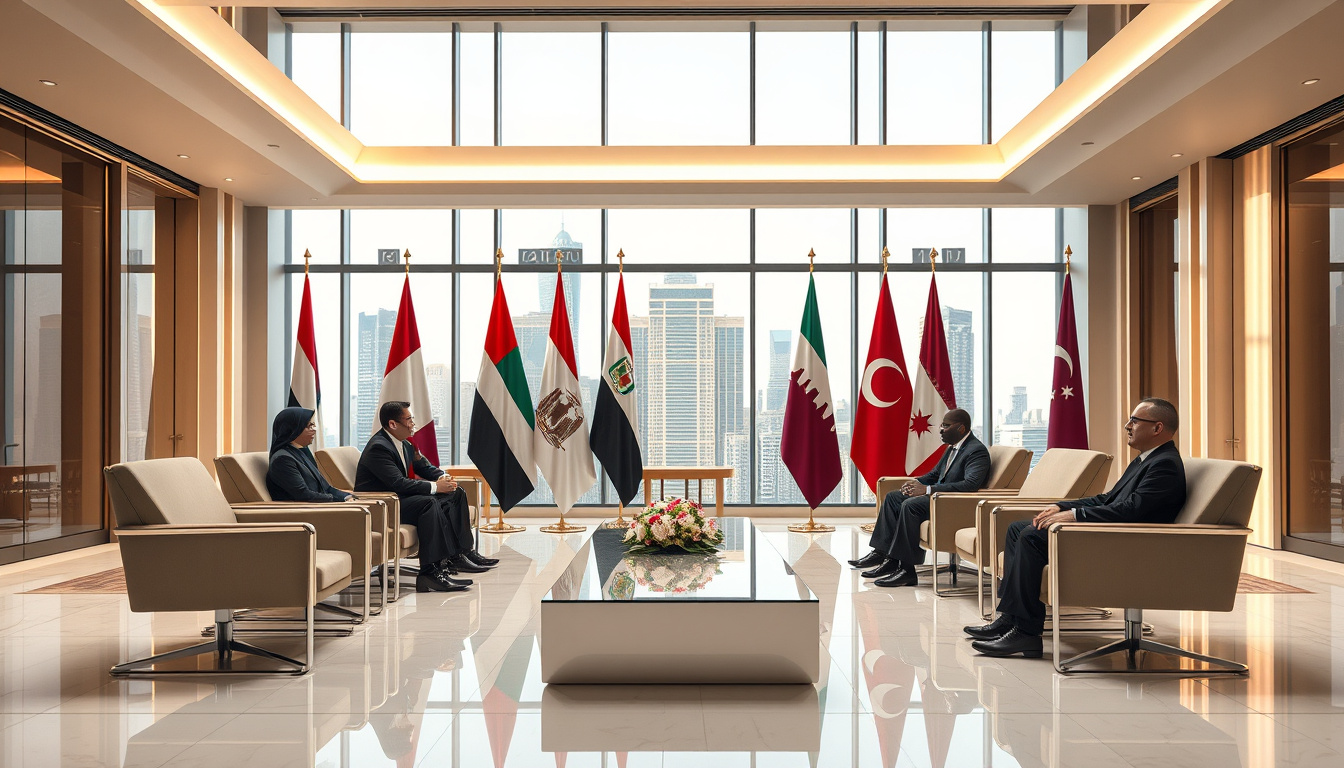
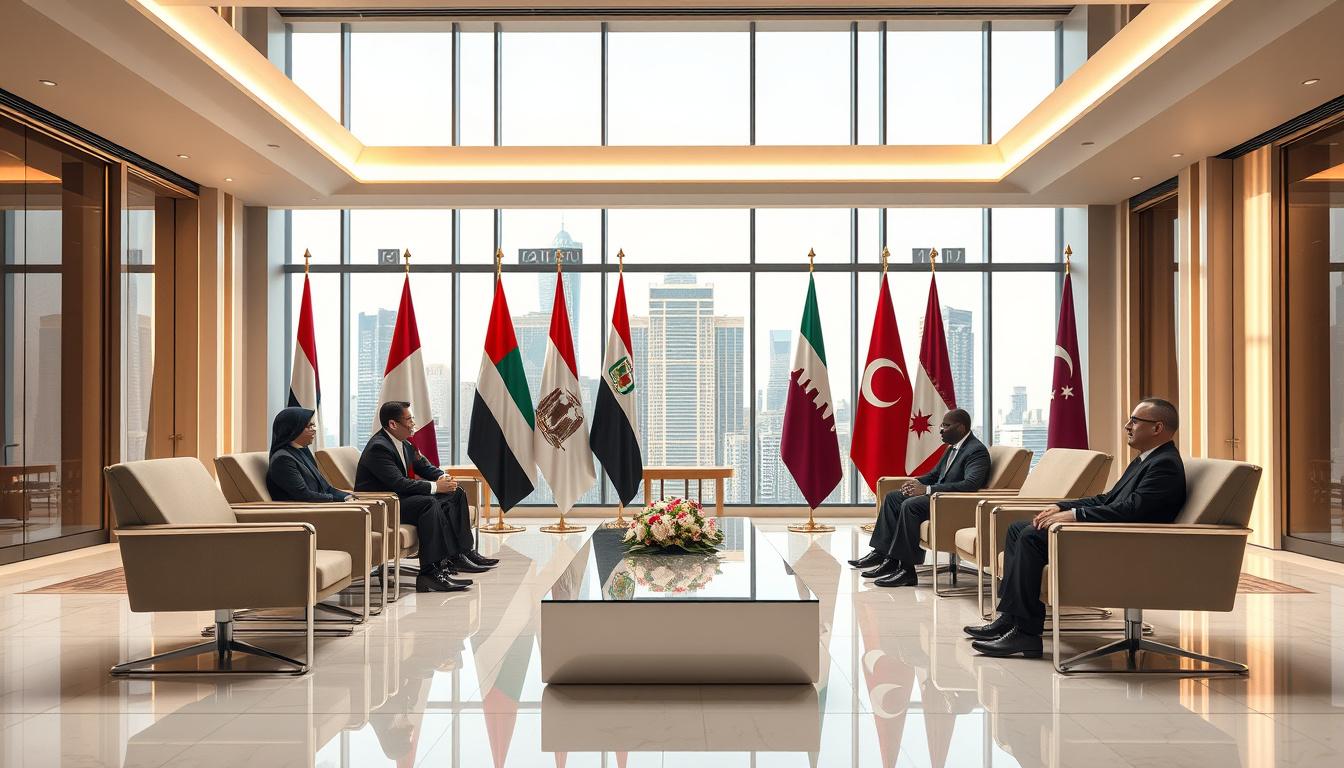
In a pivotal moment for regional diplomacy, Egyptian President Abdel Fattah El-Sisi embarked on significant visits to the United Arab Emirates (UAE) and Qatar, aiming to reinforce Egypt’s alliances and stability in the face of growing geopolitical tensions.
These visits are not merely state affairs but represent a calculated strategy to strengthen the bonds between Egypt and its Gulf partners while addressing pressing security challenges arising from external threats, notably from Iran.
As tensions escalate in the Middle East, El-Sisi’s engagements underscore Egypt’s commitment to the Gulf Cooperation Council (GCC) and its role as a stabilizing force within Arab politics.
Key Takeaways
- President El-Sisi’s visits to the UAE and Qatar aim to reinforce Egypt’s unity with Gulf states amidst regional tensions.
- Egypt emphasizes the interlinked security of its nation with that of its Gulf allies, condemning violence against them.
- The Egyptian government is advocating for political solutions and discouraging negative rhetoric to foster regional stability.
Egypt’s Strategy for Regional Stability
Egypt is taking proactive steps to ensure regional stability through its recent diplomatic initiatives aimed at the Gulf states.
President Abdel Fattah El-Sisi’s visits to the United Arab Emirates and Qatar underscore Egypt’s commitment to fostering strong relations with its neighbors amidst rising tensions caused by external threats.
During his meeting with UAE President Sheikh Mohamed bin Zayed Al Nahyan, El-Sisi expressed unequivocal support for the UAE, denouncing attacks from Iran and stressing that the security of Gulf nations is intricately linked to Egypt’s own national interests.
In a similar vein, discussions with Qatari Emir Sheikh Tamim bin Hamad Al Thani focused on enhancing collaborative efforts to de-escalate tensions and promote peace in the region.
These efforts reflect Egypt’s broader strategy to affirm its role as a stabilizing force within the Gulf Cooperation Council and to encourage political dialogue over military engagement.
Moreover, Egypt is advocating for responsible media discourse to further reinforce unity and discourage divisive rhetoric among Arab nations in light of the ongoing crises, including those fueled by Iranian hostility.
Diplomatic Engagements with Gulf Leaders
Following President El-Sisi’s diplomatic engagements in the UAE and Qatar, there has been a notable push for a unified Arab response to external threats, particularly from Iran.
Both visits served to enhance bilateral ties and foster an environment conducive to collaborative regional security initiatives.
Notably, El-Sisi’s reaffirmation of Egypt’s strategic partnership with Gulf leaders underlines the importance of collective action in safeguarding national interests.
The discussions included potential joint military exercises and intelligence-sharing to address common threats.
Additionally, both nations expressed optimism about enhancing economic cooperation, particularly in sectors such as energy and technology, which would fortify not just security but also socio-economic development across the Gulf region.
This multifaceted approach points toward a holistic strategy aimed at ensuring that Arab nations not only withstand external pressure but also thrive together in the face of adversity.