
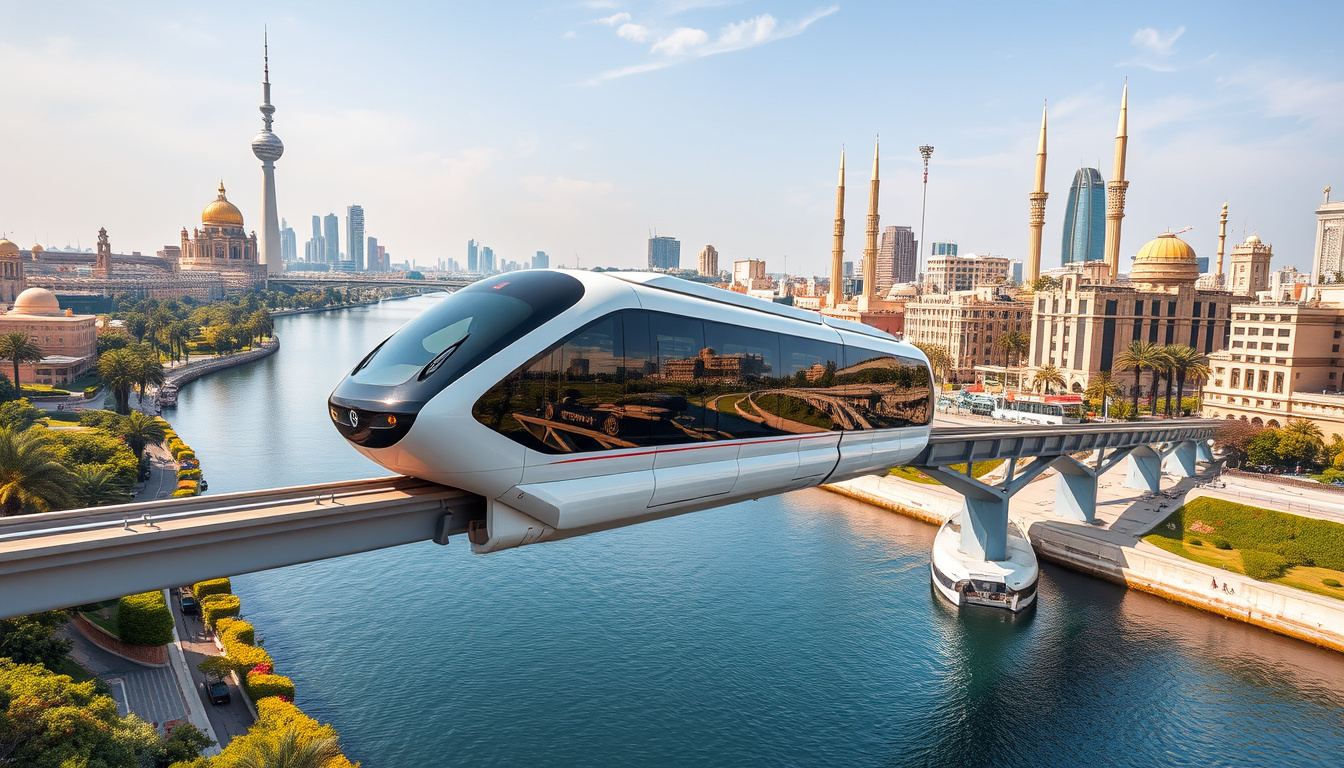
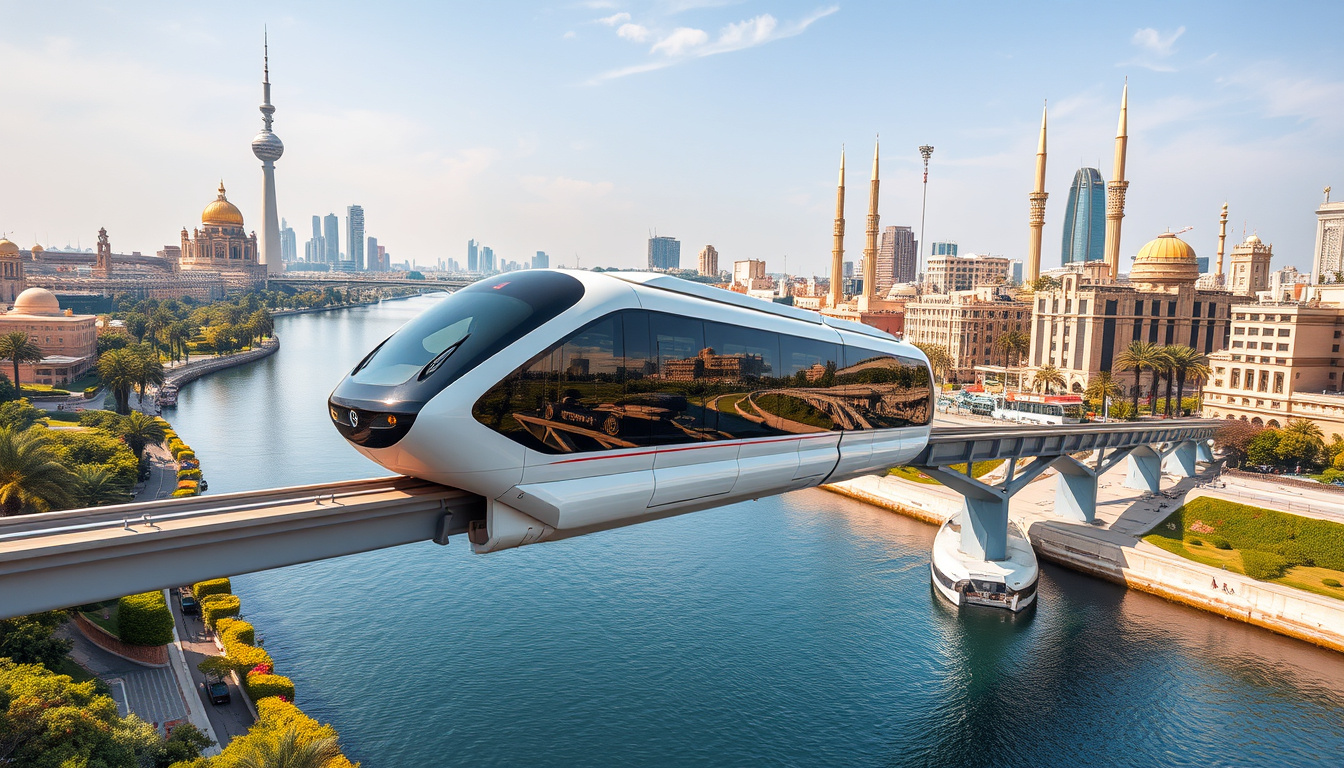
The bustling metropolis of Cairo is on the brink of a transportation revolution with the launch of the second phase of the East Nile Monorail.
Starting operations on June 27, this expansion will significantly enhance connectivity between Greater Cairo and the New Administrative Capital, making urban transit more efficient and accessible.
Covering an impressive
56.5 kilometers and featuring a total of 22 stations, the monorail promises to reshape daily commuting for thousands of residents and travelers alike.
In this article, we delve into the details of this exciting development, the stations included in the new phase, and the anticipated impact on Cairo’s urban landscape.
Key Takeaways
- The East Nile Monorail’s second phase enhances connectivity across Greater Cairo, extending services to the New Administrative Capital.
- The addition of six new stations will improve public transit access to universities, hospitals, and commercial areas.
- A significant discount on tickets during weekends and holidays aims to boost ridership and alleviate congestion in the city.
Overview of the East Nile Monorail Expansion
The East Nile Monorail Expansion heralds a significant leap forward in Egypt’s urban transit landscape, with operations for its second phase officially commencing on June
27.
This substantial addition to the existing monorail network stretches
56.5 kilometers and serves as a vital link between Greater Cairo and the New Administrative Capital.
The new phase introduces six additional stations: Cairo Stadium, Hisham Barakat, Al-Azhar University, Seventh District, Field Marshal Ahmed Ismail, and Jehan El-Sadat.
This expansion not only enhances the current network to a total of 22 stations but also significantly boosts connectivity across key areas like Cairo, Giza, and Qalyubia, making commuting smoother for residents.
Noteworthy is the integration of the East Nile Monorail with Metro Line 3 at the Cairo Stadium Station, easing public transportation access further for commuters.
The monorail will run daily from 6:00 AM to 9:00 PM, and with the introduction of a 50 percent ticket discount on weekends and public holidays, it aims to encourage more citizens to adopt this efficient transport option.
By providing crucial access to hospitals, universities, and commercial zones, the expanded monorail service promises to alleviate congestion in Greater Cairo, ultimately transforming urban mobility in the area.
Future plans also include linking this monorail system to Metro Line 4 and the anticipated Metro Line 6, reinforcing a comprehensive public transport network that can accommodate the growing demands of Egypt’s bustling capital.
Impact on Cairo’s Urban Connectivity and Transit
The East Nile Monorail’s extended operations are a game-changer for urban connectivity in Cairo, enhancing transit options for millions of residents.
With the addition of six new stations, the monorail network now stretches along a complete
56.5-kilometre route, significantly improving access to crucial areas such as educational institutions, healthcare facilities, and commercial districts.
This expanded transit system is particularly impactful for daily commuters who previously faced challenges due to Cairo’s notorious traffic congestion.
Furthermore, by connecting seamlessly with major metro lines, including Metro Line 3 and future expansions, the monorail supports a holistic approach to urban mobility, promoting a shift toward more sustainable transportation methods.
The initiative not only reduces travel times but also fosters greater economic activity and accessibility across Greater Cairo, paving the way for an efficient and modern urban transport infrastructure.