
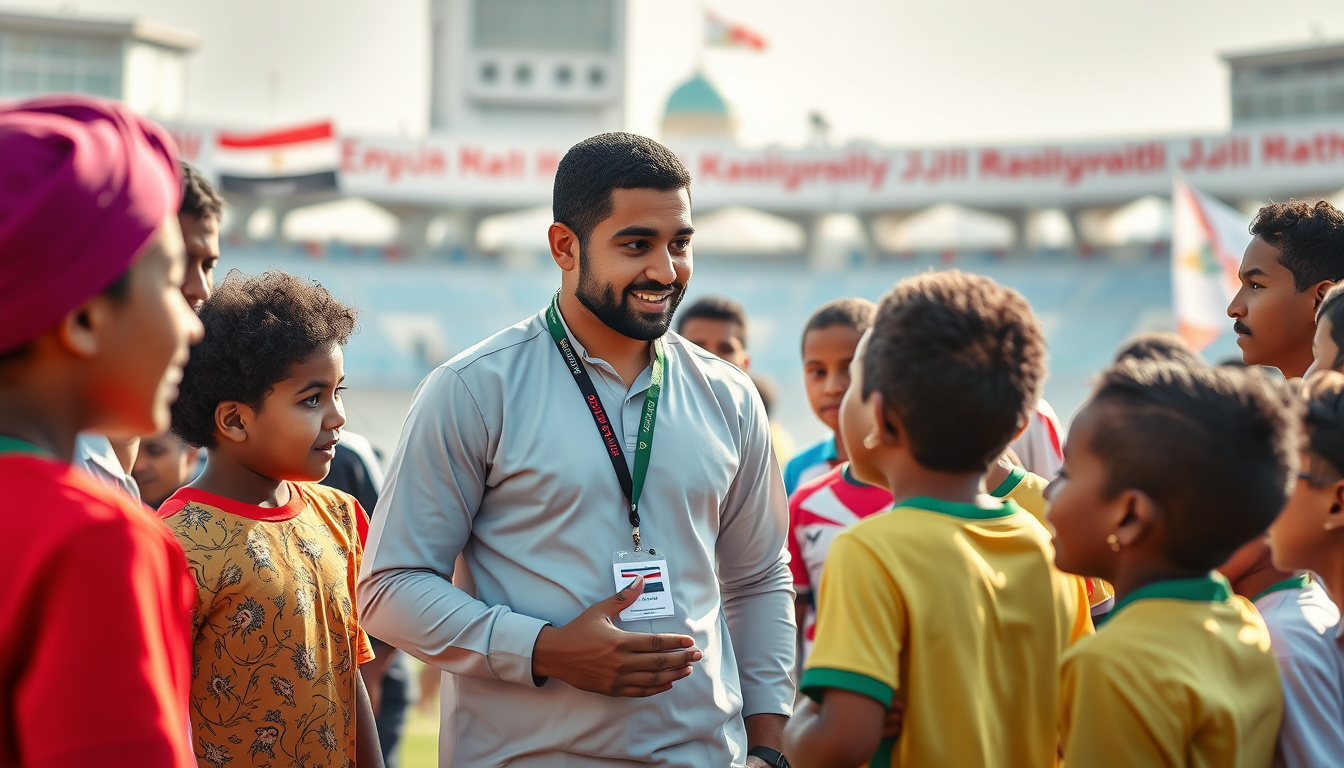
As the countdown to the Africa Cup of Nations (AFCON) qualifier against South Sudan on September 29, 2026, draws near, tensions within the Egyptian national football team have sparked significant concern.
The stakes are high, and in a bid to bolster team morale and focus, the Egyptian Youth Minister, Jouhar Nabil, has taken proactive measures to address the unsettling dynamics at play.
This intervention comes against a backdrop of recent controversies, including public criticism aimed at goalkeeper Mohamed El-Shenawy by head coach Hossam Hassan, alongside uncertainty surrounding star player Mohamed Salah’s availability for the critical match.
With the team in need of a morale boost to secure their first win in the qualifying campaign for the 2027 AFCON, Nabil’s commitment to supporting the squad and fostering collaboration within the team is drawing attention from football fans and officials alike.

Key Takeaways
- Egypt’s Youth Minister is working to resolve tensions within the national football team ahead of an important AFCON qualifier.
- Mohamed Salah’s participation in the upcoming match is uncertain, raising concerns among fans and officials alike.
- Minister Jouhar Nabil aims to unite key figures in Egyptian football to ensure a stable preparation for the upcoming match against South Sudan.
Minister’s Engagement with Key Football Figures
In an effort to stabilize the atmosphere surrounding the Egyptian national football team as they gear up for a critical Africa Cup of Nations (AFCON) qualifier against South Sudan scheduled for September 29, 2026, Youth Minister Jouhar Nabil is taking proactive measures.
Recognizing the urgency of the situation, Nabil is directly engaging with prominent figures in Egyptian football, including Hany Abou Rida, the president of the Egyptian Football Association.
This initiative comes in the wake of public discord following coach Hossam Hassan’s criticisms of goalkeeper Mohamed El-Shenawy, which created a rift in team morale.
Adding to the complexity is the ambiguous status of star player Mohamed Salah, who was notably absent from the squad selection for this upcoming match, despite having participated in the previous encounter with Angola, which ended in a disappointing goalless draw.
Coach Hassan has stressed that Salah’s absence is a tactical decision, made in consultation with the player, primarily due to concerns regarding the artificial pitch conditions in South Sudan.
Nabil’s engagement with stakeholders, including a scheduled discussion with Salah, underscores the ministry’s dedication to fostering a cohesive team environment.
With Egypt still searching for a win in their AFCON 2027 qualifying campaign, the stakes are high.
The minister’s efforts reflect a broader commitment to not only addressing immediate tensions but also enhancing the overall performance of the national team as they aim for success in crucial matches ahead.
Tensions Surrounding Mohamed Salah’s Participation
The focus of the Egyptian national team’s preparations has undeniably shifted amid these complexities.
As the Youth Minister Jouhar Nabil coordinates discussions with various stakeholders, including notable players and coaches, the primary aim is to bridge gaps and restore unity as the national team approaches a pivotal moment in its quest for AFCON success.
The interplay of personality and strategy has become increasingly critical.
With Mohamed Salah, a central figure in the squad, potentially sidelined, the team’s dynamics are at a crossroads.
This scenario underscores the importance of communication and collaboration, not just among players but also between management and the sports ministry.
Salah’s experience and prowess on the field are invaluable, leading to speculation regarding his future involvement in the qualifiers.
The upcoming match against South Sudan will serve as a litmus test for Egypt’s resolve and adaptability in the face of mounting pressure.
As fans eagerly await the team’s lineup, they hope that the recent conflicts can be resolved to continue the legacy of Egyptian football on the African stage.