
Dahshur, located just south of Giza, is home to two of Egypt's most fascinating pyramids: the Bent Pyramid and the Red Pyramid. Both structures are associated with Pharaoh Sneferu of the Fourth Dynasty, marking significant developments in ancient Egyptian architecture. While Giza's pyramids often attract the majority of tourists, Dahshur offers a different pair of monuments to understand and compare.
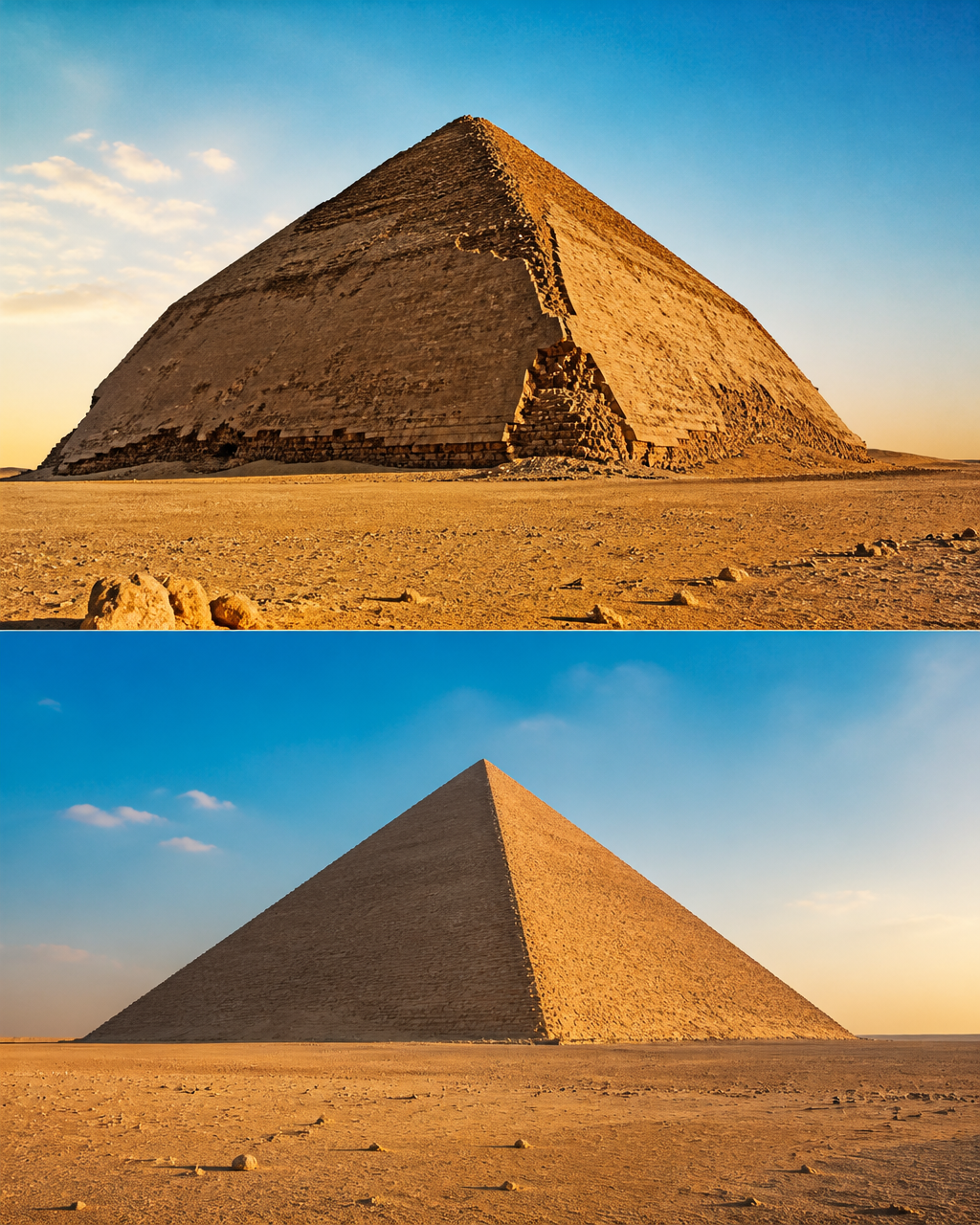
Two shapes, one useful comparison
The Ministry of Tourism and Antiquities associates both the Bent and Red Pyramids with Sneferu of the Fourth Dynasty. The Bent Pyramid changes slope part way up its sides, giving it the outline behind its name. The ministry explains this change in the context of construction difficulties and architectural development. A guide can use that visible feature to introduce the questions builders faced.
The Red Pyramid takes its modern name from the reddish appearance of its blocks. According to the ministry, it originally had white limestone casing. Remembering that difference between present appearance and original finish can change the way you look at the monument. You are seeing a surviving structure, not an untouched image of the day it was completed.
Look before comparing explanations
Stand where visitors are permitted and compare the outlines. Which part of the Bent Pyramid changes direction? How does the continuous slope of the Red Pyramid read differently against the sky? Ask a guide to connect an explanation to the visible feature rather than relying only on a date or a measurement you are unlikely to remember.
Avoid treating a short visitor article as a complete account of the building process. When you hear a detailed construction theory, ask how certain the interpretation is and what evidence supports it. That is a useful question, not a challenge to the guide. It gives you a better way to separate a clear physical observation from an explanation that may be debated.
Give each stop a purpose
A good reason to include Dahshur is the chance to compare monuments deliberately. Before booking, decide what you would like from the visit: an introduction to their history, time for exterior photographs or a more detailed architectural explanation. Ask the operator whether the proposed schedule allows for that priority.
A hypothetical group visit
Imagine that one person wants to photograph the changing outline while another mainly wants to understand the historical setting. Agree on a short explanation followed by a pause for looking and photographs. This makes the visit less likely to become a sequence of hurried stops without promising private access or an empty site.
If you are combining Dahshur with another destination, ask which part of the day is being shortened to make that possible. More names on an itinerary do not necessarily mean a better experience. Ask what is included, where the group meets again and how any change will be agreed.
Keep the interior optional
The ministry describes confined passages inside the Red Pyramid. Do not assume that everyone in a group wants or is able to enter an interior, or that a particular interior will be accessible on your visit. Ask the operator about the current arrangement and the alternative for someone who stays outside. An exterior visit is a valid way to engage with the site.
This is not an assessment of individual fitness or a guarantee of access. If a route does not suit you, tell the guide and choose an alternative. The point is to have that conversation before the group is committed to a plan.
Planning Your Visit to Dahshur
When planning a visit to Dahshur, it's essential to understand the layout and accessibility of the site. Here are some practical tips for making the most of your experience:
- Getting There: Confirm a transport arrangement for your actual departure address, planned stops and return. This guide does not give a fixed journey time.
- Entry Requirements: Check the current official entry arrangements and ask your operator which areas are expected to be accessible.
- Timing: Consider visiting early in the morning or late afternoon to avoid the heat and crowds, allowing for a more peaceful exploration.
- What to Expect: Do not build the visit around a promise of fewer visitors. Focus on the monuments and agree on how much time the operator allows at each stop.
- Photography: Bring a camera to capture the distinct architectural features of both pyramids, but be mindful of local regulations regarding photography inside the pyramids.
Exploring Beyond the Pyramids
While the Bent and Red Pyramids are the primary attractions, Dahshur has more to offer. The surrounding desert landscape provides a stunning backdrop for those looking to escape the busier sites of Giza. Consider taking a leisurely walk around the area to appreciate the scale and grandeur of these ancient structures while staying on permitted visitor routes.
Alternative Experiences
For those who desire a deeper understanding of ancient Egyptian culture, consider hiring a local guide. They can provide valuable insights into the history and significance of the pyramids, enhancing your visit. If another site is proposed, ask about the additional travel and the time it would take from the stops you have already chosen.
A short note to save after the visit
Label your photographs while the explanation is still fresh. Write down which pyramid appears in each image and one detail you found interesting. If you are sharing pictures with friends, distinguish what the guide explained from what you noticed yourself. A simple note is more useful than repeating an uncertain claim with confidence.
Keep the official source links with your planning notes. They are a starting point for checking the monuments, while a booking confirmation records the particular service you agreed with an operator. They serve different purposes: one should not be used as proof of the other.
Key Takeaways
- The Bent Pyramid showcases a unique architectural evolution with its dual angles, while the Red Pyramid represents the pinnacle of pyramid construction with its smooth sides.
- Dahshur offers a different architectural comparison from the Giza Plateau; crowd levels are not guaranteed.
- Planning ahead and understanding entry regulations can enhance your visit to Dahshur, ensuring a rewarding experience.
FAQs
What is the historical significance of the Bent Pyramid?
The Bent Pyramid is historically significant as it illustrates the transitional phase in pyramid construction, marking the evolution from step-sided to smooth-sided pyramids. Commissioned by Pharaoh Sneferu, it reflects the architectural experimentation of the Fourth Dynasty.
Can I enter the Bent and Red Pyramids?
Check current access with the official site and your operator. Interior visits are optional, and this article does not confirm that an interior is open or suitable for a particular visitor.
How can I get to Dahshur from Cairo?
Arrange transport suited to your departure point and itinerary, and confirm the return. Ask the provider for a current plan rather than relying on a fixed travel-time claim from an older article.
In conclusion, a visit to the Bent and Red Pyramids in Dahshur provides a unique glimpse into ancient Egyptian architecture and history. This lesser-known site is a must-visit for those looking to deepen their understanding of one of the world's most fascinating civilisations.