
The Nubian communities in Egypt, particularly around Aswan, offer a unique cultural experience that extends beyond their rich history and vibrant traditions. Known for their warm hospitality, distinctive language, and traditional crafts, Nubians also take pride in their culinary heritage. Enjoying a Nubian meal can be one of the highlights of your visit to Aswan, combining delicious food with insights into their way of life. In this article, we will explore the culture surrounding Nubian meals, the hospitality you can expect, and some important questions to consider before dining.
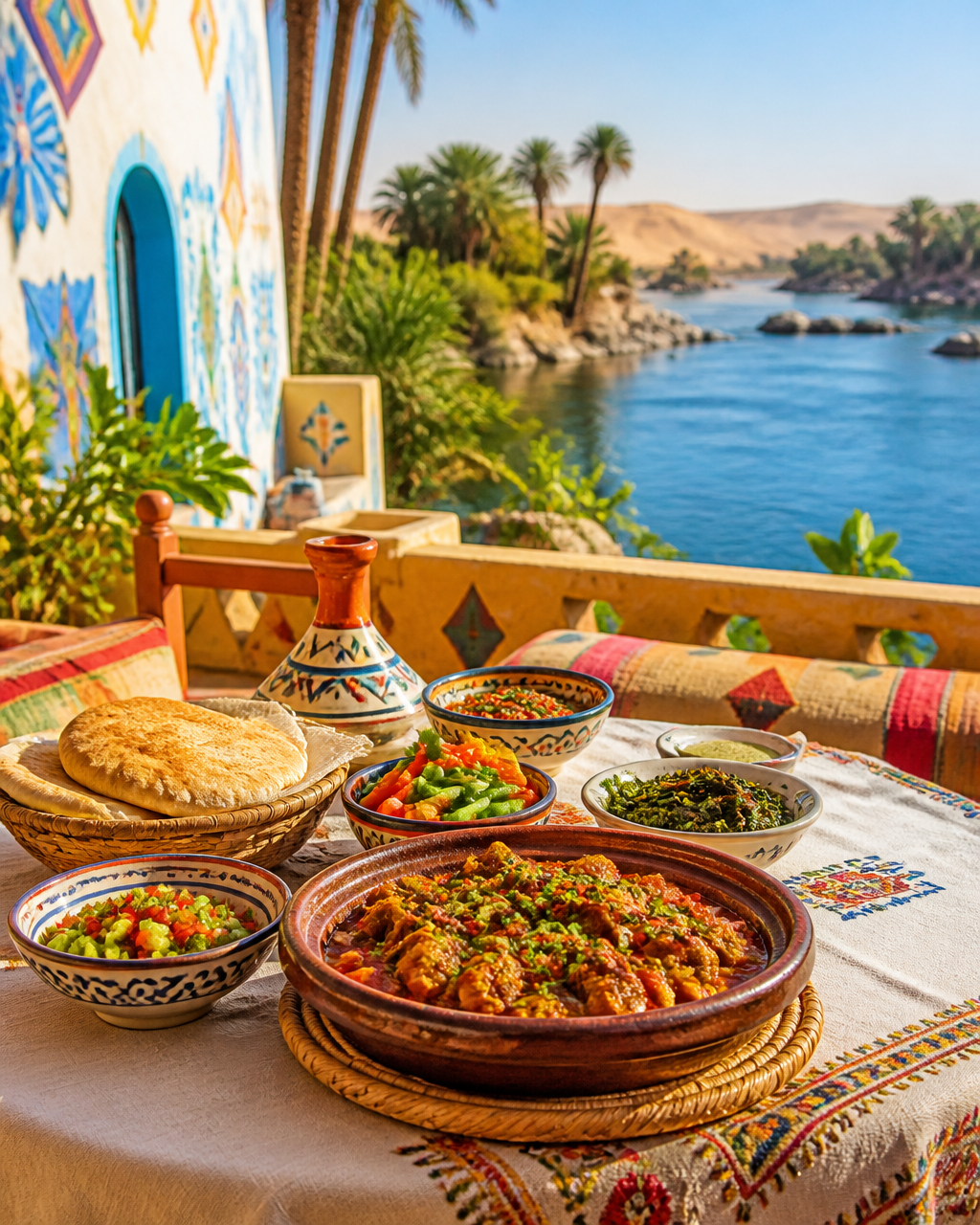
Culture is the setting, not a fixed performance
Egypt's official tourism site describes Nubian communities as maintaining distinctive traditions, food, crafts, music and language. It identifies Gharb Soheil as a village visited by travellers, and Siou and Koti on Elephantine Island. Those are communities where people live, not a promise that every home offers the same visitor experience.
The tourism site also describes opportunities to try traditional meals in local restaurants, including meals prepared with homegrown ingredients. Use that as an invitation to ask questions. It is not a guarantee about the ingredients, menu or sourcing at any particular venue.
Choose the experience you actually want
You might want a quiet lunch, a conversation with a host, a group meal or an evening that includes music. These are different expectations. Say which matters most when making an enquiry, and ask what the host can actually provide. Do not book a standard meal and assume that a cooking lesson or performance comes with it.
If you are invited to a private home as part of an organised visit, ask how the arrangement works. Who is hosting, what is included, and how is the host paid? Treat the invitation with the same courtesy you would expect in your own home. Ask before entering a private room or photographing a person, and accept a refusal without negotiation.
Let the host describe the food
Instead of relying on a generic list of supposedly typical dishes, ask what will be served that day. Ask which ingredients are in the dish and how it is prepared. If something matters to you, a direct question is more useful than assuming that a dish name tells you everything.
You can ask whether a meal is a set menu or ordered individually, whether dishes are shared, and whether smaller portions are available. Describe preferences without expecting every kitchen to adapt. A vegetarian preference, an ingredient avoidance and a serious allergy are not interchangeable requests. Confirm what the venue can and cannot accommodate before committing to the booking.
Keep the conversation natural
A good question does not need to be complicated. Try asking which part of the meal the host particularly enjoys preparing, or how they would suggest eating the dishes together. Avoid treating one person's answer as the definitive account of every Nubian household. The pleasure is in learning about the meal in front of you.
Questions to Ask Before Enjoying a Nubian Meal
To ensure a fulfilling experience during your Nubian dining adventure, there are several practical questions you should consider asking your hosts or restaurant staff. Here’s a helpful checklist:
1. What is Cooked That Day?
Inquire about the day’s offerings. Ask whether the menu is fixed in advance or depends on the day’s preparation. This gives you a chance to check ingredients and decide whether the meal suits your group.
2. Dietary Needs and Preferences
If you have any dietary restrictions or preferences, it is essential to communicate these clearly. Ask what the kitchen can accommodate and accept that some requests may not be possible. Confirm important requirements before ordering.
3. Portion Options
Ask about portion sizes. Some restaurants may offer different serving sizes, so understanding your options can help ensure that you order appropriately for your group.
4. Agreed Prices
Discuss prices upfront to avoid any misunderstandings later. Ensure you are clear about what is included in the price, especially if performances or additional dishes are part of the experience.
5. Performances Included?
If you are interested in experiencing traditional music or dance, check if this is included in your meal package. Some venues may have scheduled performances, while others may offer them as an extra.
6. Permissions for Photographs
Nubian culture places significant importance on privacy and respect. Always ask for permission before taking photographs, especially of people or their homes.
7. Paying Hosts Fairly
When dining in a Nubian household, remember to consider fair compensation for the meal and hospitality. This gesture is a sign of respect and appreciation for their effort in sharing their culture with you.
Recommended Locations for Nubian Meals
While in Aswan, there are several notable places where you can enjoy a traditional Nubian meal:
Gharb Soheil Village
Egypt’s tourism site identifies Gharb Soheil as a village visited by travellers. Ask an operator or venue about the actual meal arrangement rather than assuming that any private home welcomes unannounced guests.
Siou and Koti on Elephantine Island
The official tourism source identifies Siou and Koti as villages on Elephantine Island. Check the location and arrival arrangements of any venue you select; the village name alone does not confirm a river view or a particular menu.
The Importance of Cultural Respect
While enjoying a Nubian meal, it is crucial to approach the experience with respect and openness. Engaging with the community, understanding their customs, and appreciating their way of life will enhance your experience significantly. Being mindful of local traditions and practices will not only enrich your stay but also foster goodwill between you and your hosts.
Conclusion
Dining in a Nubian setting in Aswan is not just about the food; it’s an engaging cultural experience that connects you to the heritage and hospitality of the Nubian people. By asking the right questions and showing respect for their traditions, you can enjoy a memorable meal that reflects the essence of Nubian culture.
Frequently Asked Questions
What is typical in a Nubian meal?
Ask your host for that day’s menu and ingredients. There is no single meal that every restaurant or household is obliged to serve, and a tourism description should not replace a direct enquiry.
How can I ensure dietary restrictions are accommodated?
Communicate your dietary needs clearly to your host or restaurant staff before ordering, and ask what the kitchen can reliably provide. Do not assume that any requirement can be accommodated.
Are traditional performances always included with meals?
Not all meals come with performances, so it's important to ask in advance if you are interested in experiencing traditional music or dance as part of your dining experience.