
Before paying a deposit on an apartment in Hurghada, establish three things: who is entitled to sell it, what you will actually own or be entitled to use, and what happens to your money if the transaction cannot proceed. An attractive asking price cannot answer any of those questions.
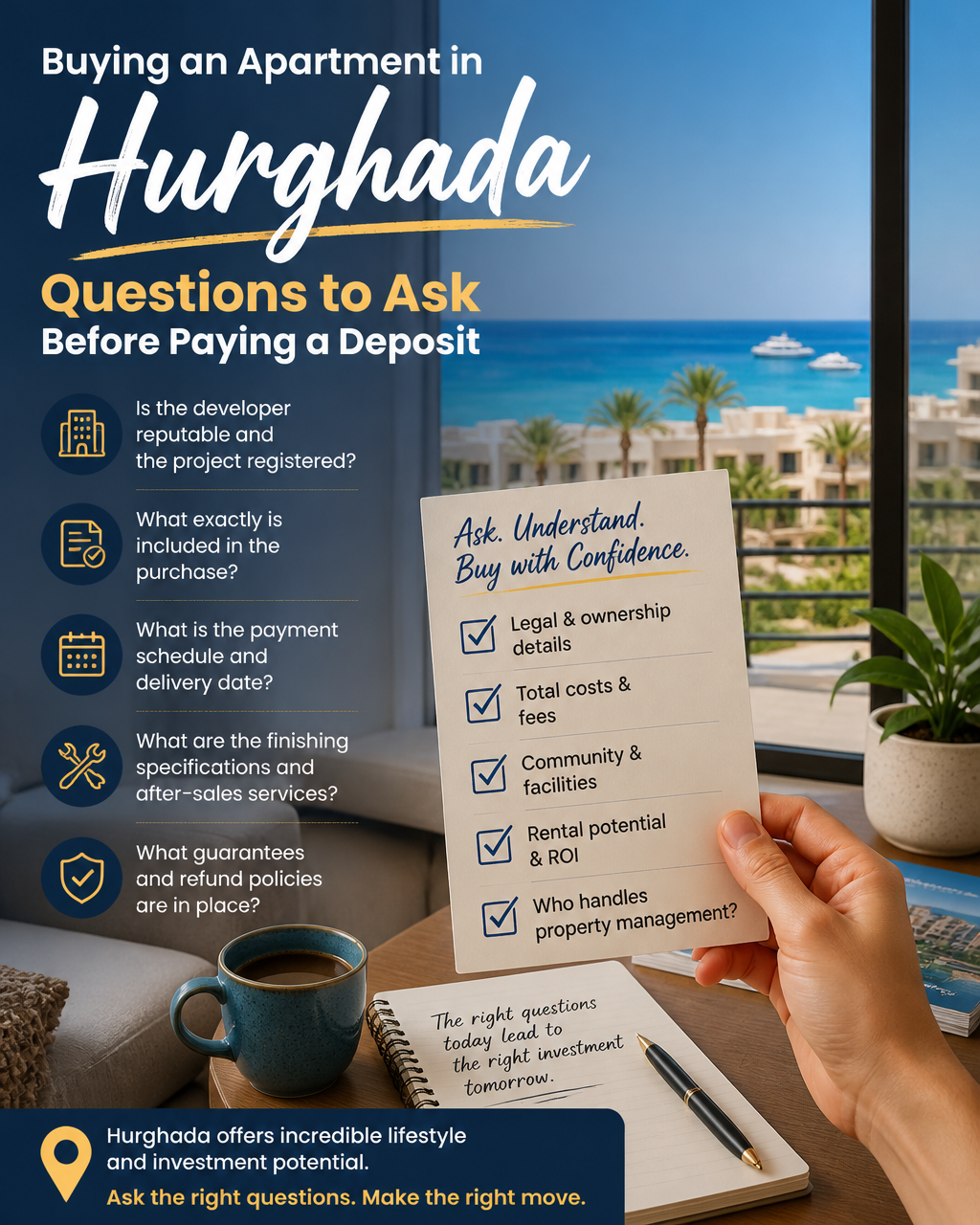
The difficulty is that a viewing usually concentrates on the apartment, while some of the most expensive problems sit outside its front door. Resort management, maintenance obligations, beach access and the paperwork connecting one owner to the next all deserve attention before you reserve a property.
This guide sets out a practical order for those checks. Use it to organise your viewing and the questions you put to an independent Egyptian property lawyer, the seller and the resort management company.
Start with a proper comparison, not the advertised discount
Two one-bedroom apartments in the same part of Hurghada can be very different purchases. One may include usable outdoor space, reliable lifts and maintained communal areas. Another may have a lower asking price but require extensive work or carry unresolved charges.
Build a shortlist of genuinely comparable properties. Record the development, floor, stated area, view, condition, furniture included and asking price. Ask how the advertised area was measured and whether it includes a balcony or an allocation of communal space. A price per square metre is less useful when the underlying measurements differ.
Treat listing prices as sellers' expectations. They do not establish the amount a comparable apartment actually sold for. If an agent describes a property as below market value, ask what evidence supports that description and when the comparison was made.
Make the comparison in one currency using a recorded exchange rate and date. Separately list any payment charges or conversion costs you expect to incur. Otherwise, a change in the exchange rate can obscure the difference between the properties themselves.
Give your lawyer the documents before discussing a deposit
Ask the seller for the documents they intend to rely on, rather than accepting a general assurance that the apartment has “all the papers”. Your lawyer should explain what those documents establish, which checks remain outstanding and how the proposed transfer would be completed.
For a resale, ask your lawyer to examine the seller's identity, their authority to sell and the documentary history connecting the seller to the property. If somebody is acting through a power of attorney, the lawyer should check whether it is suitable for the proposed transaction and what further verification is needed.
Be equally clear about the legal route being offered. Ask which documents you will receive, which steps will be taken after signing, who will carry them out and how completion will be evidenced. Do not assume that different court documents, contracts and registration procedures are interchangeable.
Where a developer or management company is involved, ask whether its records identify the seller as the owner and what it requires from a buyer. Your lawyer should address any difference between the legal documents and the company's administrative records before money changes hands.
Practical check: Ask for a written explanation of the proposed ownership and transfer process in language you understand. “This is how everyone buys here” does not tell you which checks have been completed for your apartment.
Check the resort as carefully as the apartment
A freshly decorated apartment can distract from a poorly maintained building. Walk through the entrance, stairwells, lift area, gardens and pool surroundings. Look for water damage, broken fittings, unfinished work and facilities that appear unavailable.
Ask who currently manages the development and what the management arrangement covers. Find out how owners report problems, who approves expenditure and whether owners receive statements or other information about communal spending.
Beach and pool access need particular care. Ask whether access is included in the arrangement being sold, whether separate charges apply and whether guests or tenants have different conditions. If a neighbouring hotel's facilities are mentioned during the viewing, request the written basis for that access.
Speak to more than one existing owner if possible. Ask concrete questions: does the lift work consistently, how are water interruptions handled, and how quickly are reported problems addressed? Treat those conversations as useful leads for further checking, rather than a substitute for documents.
Visit outside the most flattering time of day. An evening visit may reveal noise, lighting or access issues that were not apparent during a quiet afternoon viewing.
Separate the purchase price from the running costs
Request a written breakdown of the charges associated with the apartment. Keep the seller's asking price, transaction expenses, outstanding balances and future running costs in separate categories.
Maintenance arrangements deserve their own explanation. Ask whether the development uses recurring service charges, a one-off maintenance fund, additional contributions or some combination. Establish what each payment is intended to cover and which documents describe the arrangement.
Ask for recent statements and receipts relating to the apartment. Check the periods covered, the property identification and the name shown on each document. Where records remain in a previous owner's name, ask your lawyer and management how the payment history will be reconciled with the proposed transfer.
Do not assume that a paid receipt resolves every possible claim. Request confirmation of any outstanding balance and ask whether extra charges are proposed or disputed. If a transfer, administration or change-of-name fee is mentioned, obtain the amount and written basis for your lawyer to review; do not rely on a verbal explanation of whether it is payable.
Also ask how water and electricity are supplied and charged. Request recent bills, identify the meters serving the apartment and establish how accounts or balances would be dealt with at handover.
Inspect what will be expensive to put right
During a second viewing, concentrate on practical checks. Open the taps, run the shower, inspect beneath sinks and look around windows and external walls for signs of leaks or damp. Ask permission to test the air conditioning and note any equipment that cannot be demonstrated.
Check doors, balcony access, sockets, lighting and the condition of bathroom fittings. An apartment described as furnished should have an agreed inventory. Photograph the items included and record obvious damage or equipment the seller intends to remove.
Where a defect may be significant, arrange an independent inspection or obtain an appropriate specialist's assessment. An agent's estimate for putting something right is not the same as a quotation from the person who would undertake the work.
Consider ordinary use too. Is there space to store luggage? Can you carry shopping from the entrance? Would you be comfortable using the apartment if the lift were unavailable? These details matter more during a long stay than they do in listing photographs.
Put the deposit conditions in writing
Before transferring a reservation payment or deposit, establish who will receive it, in what capacity and against which document. Your lawyer should review the proposed terms and advise how payment should be documented.
The agreement should make clear what the payment secures, how long the arrangement lasts, which checks remain to be completed and what happens if a material problem prevents the transaction from proceeding. Ask specifically about refunds, deductions, deadlines and responsibility for charges already incurred.
For example, imagine that an apartment is reserved before management supplies its account statement. The statement then identifies a disputed balance. A useful agreement should address how an unresolved issue of that kind affects the transaction, rather than leaving the buyer and seller to negotiate after the money has been paid.
Verify payment instructions through a trusted channel, particularly if bank details arrive in a new message. Keep the signed agreement, transfer confirmation and receipt together. Avoid describing a payment only as “for the flat”; the records should identify the property and the purpose of the payment.
Buying remotely needs more evidence
A video walkthrough is useful, but it should follow a checklist. Request a continuous view from the building entrance to the apartment, a view from the balcony and a clear demonstration of the rooms, fixtures and equipment you need to assess.
Ask for recent, dated photographs of any issue raised during the viewing. Have an independent person inspect the apartment where possible, and agree which checks must be completed before your next payment. A polished promotional video cannot replace inspection or legal review.
Arrange the handover in writing as well. Record who will attend, how keys will be delivered, when meter readings will be taken and how the inventory and condition will be acknowledged.
A final checklist before you commit
Keep one property file containing:
- The seller's documents and your lawyer's written explanation of the proposed transfer.
- The apartment details, agreed inventory and inspection findings.
- Management correspondence, charge statements and relevant payment receipts.
- Written clarification of facilities and access being offered.
- The full cost breakdown, proposed deposit agreement and payment instructions.
- The outstanding questions, the person responsible for each answer and the deadline for resolving them.
An unanswered question is not necessarily a reason to abandon a purchase. It is a reason to decide, with appropriate advice, whether that issue must be resolved before paying.
Frequently asked questions
Should I pay a deposit before my lawyer has checked the documents?
Give your lawyer the proposed agreement and available documents first. Ask which checks are essential before payment and whether the proposed terms adequately address anything still outstanding. A seller's deadline does not remove the need to understand the commitment.
Can I rely on the maintenance receipts supplied by the seller?
Use the receipts as part of the evidence. Match them to the apartment and billing periods, and request an account statement or other written confirmation from management. Ask your lawyer how to handle any difference between the receipts, the statement and the seller's explanation.
How do I decide whether an apartment is good value?
Compare similar properties, then allow for condition, documented charges, included facilities and the work needed after purchase. Keep asking prices separate from evidence of completed sales. The most useful shortlist combines a fair price with clear documents and practical suitability for the way you intend to use the apartment.
You can explore further Egypt property information at FindAPropertyEgypt.com and use the checklist above to make your next viewing more productive.