
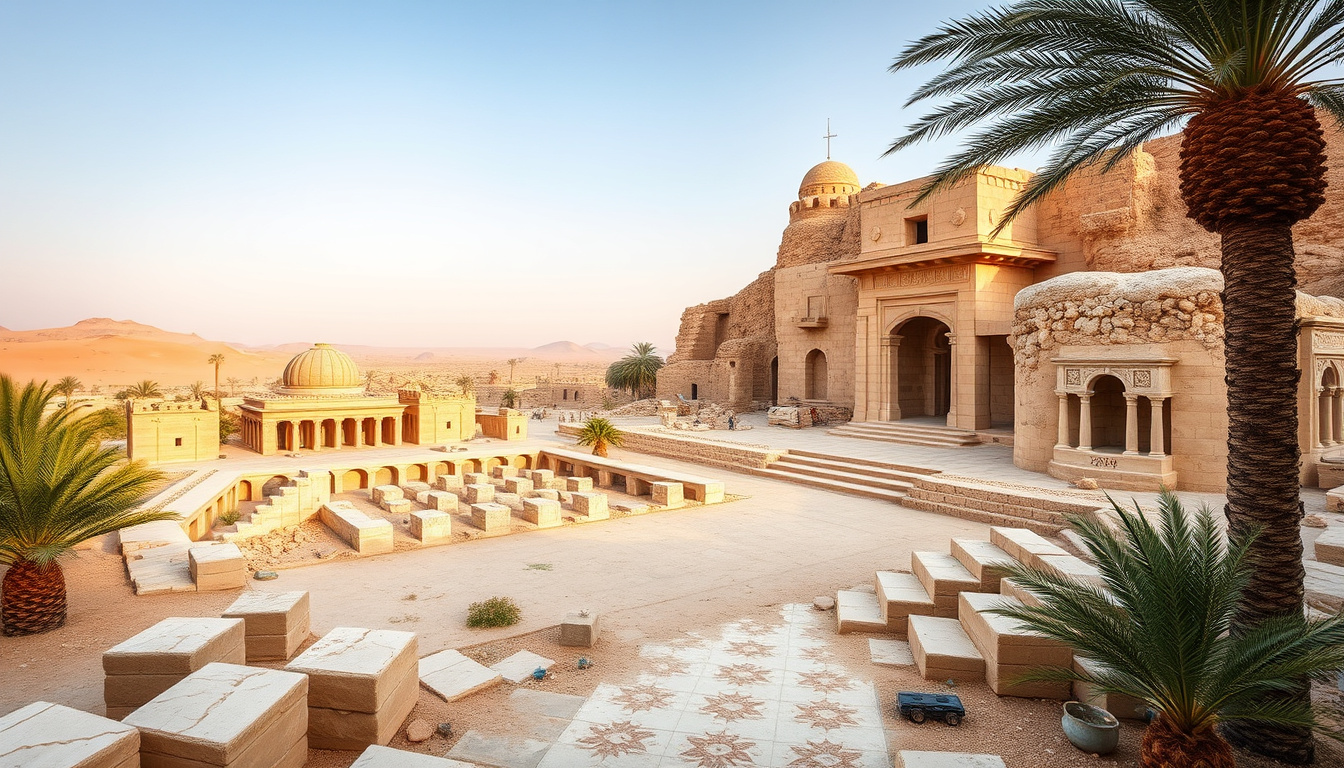
On July 4, 2026, a remarkable archaeological announcement exploded into the global spotlight: the discovery of a Byzantine-era residential city nestled in Egypt’s Dakhla Oasis.
This find, led by a team of dedicated archaeologists at the Ain El-Sabil site in the New Valley Governorate, opens a fascinating window into life over 1,600 years ago.
Spanning from 330 to 1453 AD, the city provides invaluable insights into the urban, social, and economic dynamics of ancient communities in this remote yet significant region.
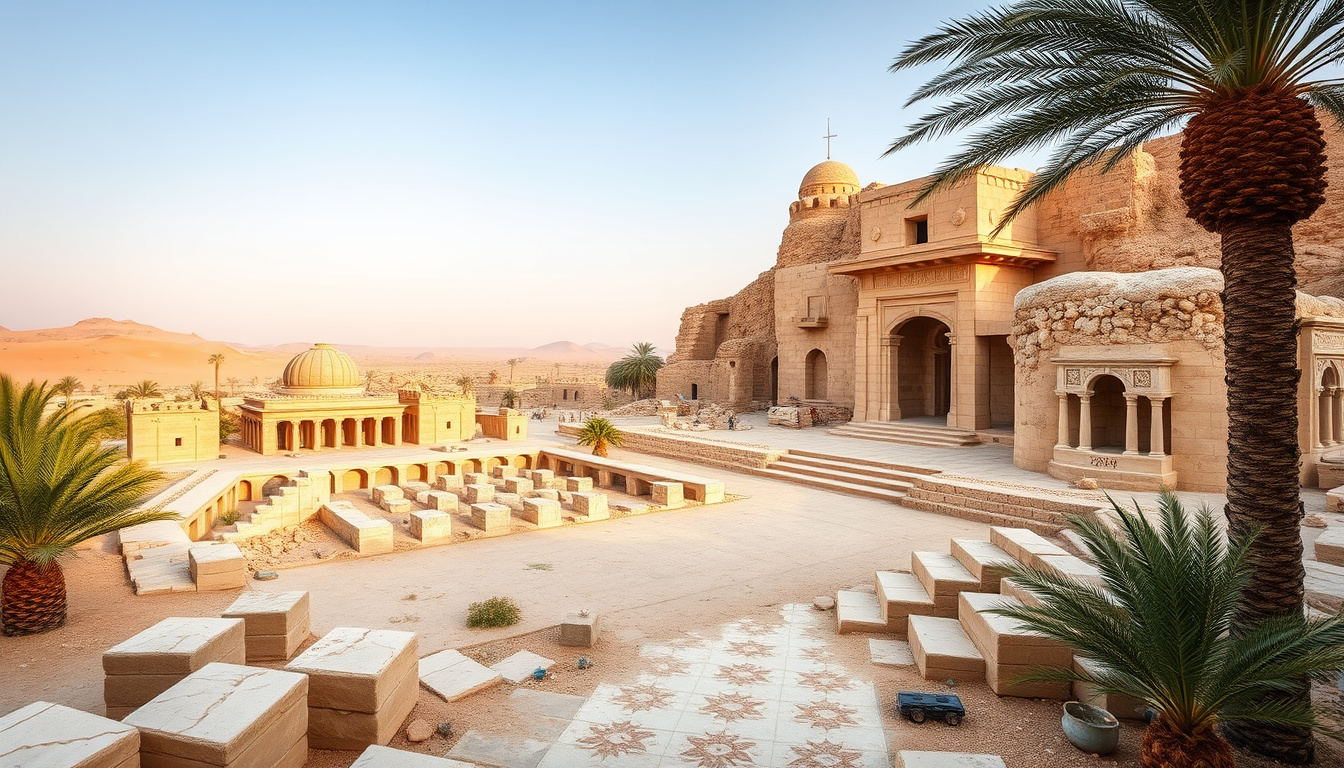
The meticulous organization of the settlement features a sophisticated urban plan, with main streets arranged in a north-south orientation intersected by east-west roads and vibrant public squares, carving a snapshot of the era’s communal life.
Structures such as a basilica church and diverse residential homes with intricate details, including vaulted ceilings and bread ovens, highlight the architectural ingenuity of the time.
As we delve deeper into the archaeological significance of this discovery, we uncover the stories of individuals who lived there, their daily routines, economic practices, and the cultural richness that characterized life in Byzantine Egypt.
Key Takeaways
- A Byzantine-era city has been discovered in Egypt’s Dakhla Oasis, shedding light on urban life from 330 to 1453 AD.
- Significant archaeological finds, including a basilica church and residential homes, reveal the social and economic practices of the time.
- The discovery enhances the New Valley’s cultural heritage and potential as a tourism destination.
The Archaeological Significance of the Dakhla Oasis Discovery
The recent discovery of a Byzantine-era residential city in the Dakhla Oasis is nothing short of a remarkable archaeological triumph.
Announced on July 4, 2026, this find emerges from the Ain El-Sabil site in Egypt’s New Valley Governorate, where archaeologists uncovered a well-preserved settlement that dates from 330 to 1453 AD.
Constructed primarily from mudbrick, the layout of this ancient city provides fascinating insights into the urban, social, and economic dynamics of communities that thrived over 1,600 years ago.
The urban plan reveals an organized structure with main streets oriented north-south and intersecting east-west roads, contributing to public squares, thereby reflecting a sophisticated approach to city planning in its time.
Among the standout features of this site are a basilica church and residential buildings, many of which boast vaulted ceilings and even dedicated bread ovens.
Notably, the excavation highlighted the House of Tisous, associated with a church deacon from the fourth century, and the House of Tapibos, thought to serve as a house church.
Alongside these buildings, the archaeological team recovered a treasure trove of artifacts, including pottery, storage vessels, and stone grinding tools, which hint at the everyday lives of the inhabitants.
Approximately 200 ostraca inscribed in Coptic and Greek provide valuable information on commercial practices, while the discovery of bronze and gold coins sheds light on the economic activities of the era.
Overall, this outstanding archaeological find not only underscores the significance of the Dakhla Oasis in historical context but also enhances the New Valley’s reputation as a burgeoning cultural tourism destination, inviting visitors to explore the rich tapestry of Egypt’s diverse heritage.
Exploring Daily Life and Economic Practices in Byzantine Egypt
The discovery at Ain El-Sabil offers an unprecedented glimpse into Byzantine Egypt, particularly highlighting the daily life and economic practices of its residents.
The urban layout, with its strategically positioned streets and public spaces, suggests a community that valued both functionality and social interaction.
The presence of a basilica church indicates the importance of religion in daily life, while the residential homes, complete with bread ovens, reflect domestic and culinary practices that catered to the community’s needs.
The artifacts retrieved from the site, such as pottery and storage vessels, give further insight into trade and consumption patterns, revealing a society that engaged in both local and long-distance trade.
The inscribed ostraca, serving as evidence of daily transactions and communications, provide a tangible link to the past, while the coins found at the site illustrate a flourishing economy that adapted through the centuries.
This find not only enriches our understanding of Byzantine life but also emphasizes the cultural diversity that characterized Egypt, ensuring that the Dakhla Oasis remains a focal point for archaeological exploration and cultural tourism.