
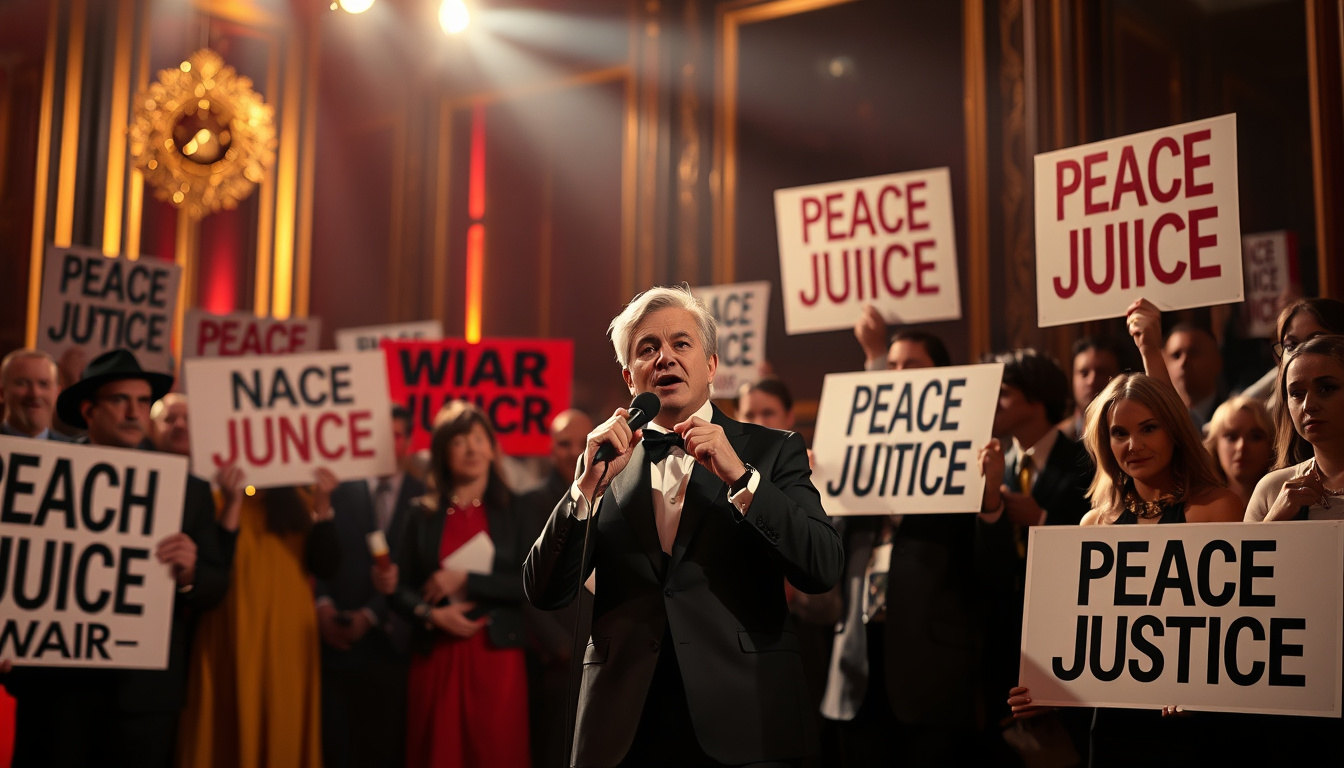
The 2026 Oscars held on March 15 marked not just a celebration of cinematic excellence but also a significant platform for advocacy, primarily spotlighting the ongoing humanitarian crisis in Palestine.
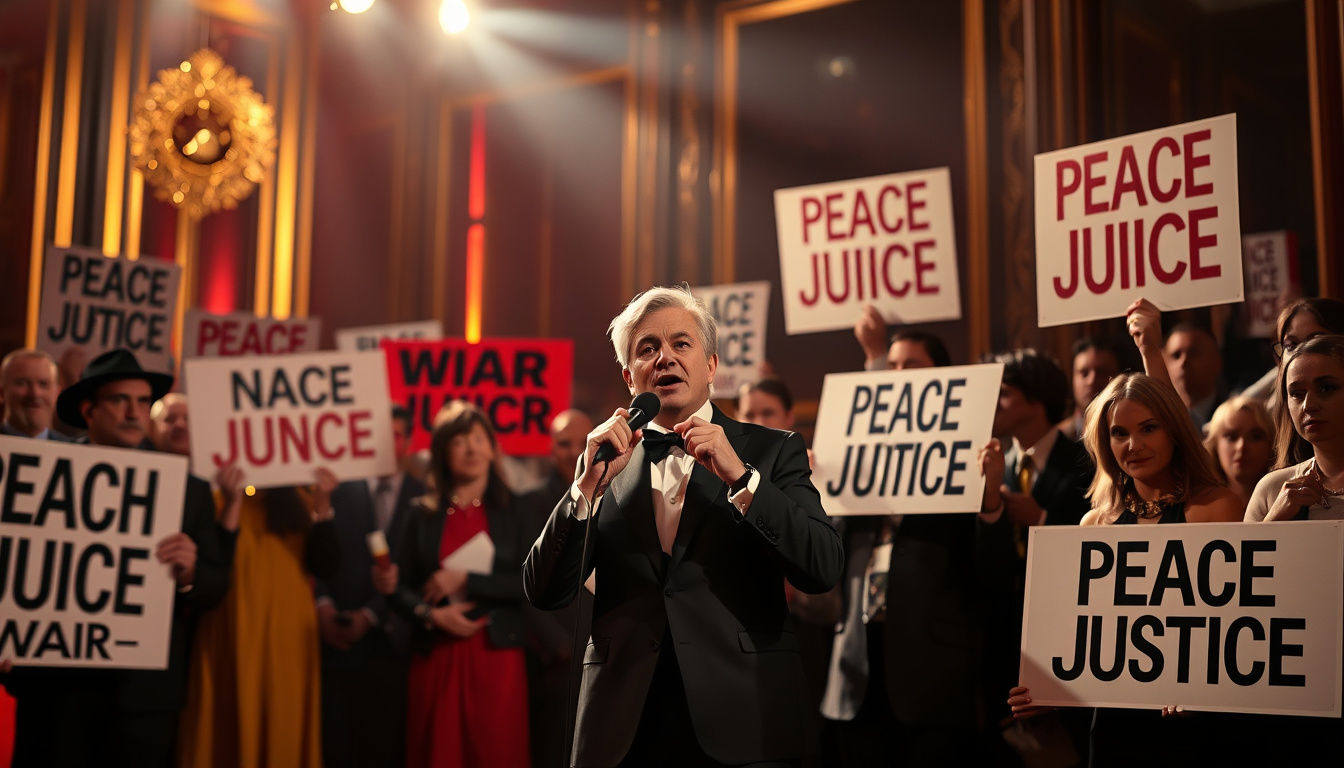
Spanish actor Javier Bardem ignited a global discussion during his presentation for the Oscar for Best International Feature Film, where he boldly declared, ‘No to war and free Palestine.’ His resonant statement, combined with poignant symbols of protest, such as a pin emblazoned with the word ‘Palestine’ and a placard stating ‘No a la Guerra’ (No to the war), created ripples of impact that transcended the boundaries of Hollywood.
As Bardem’s words echoed through the audience at the Dolby Theatre, they became a trending topic worldwide under the hashtag #Oscars2026, highlighting the increasing intersection of art and activism.
Key Takeaways
- Javier Bardem’s powerful message at the 2026 Oscars resonated globally, advocating for Palestinian rights and anti-war sentiments.
- His remarks and symbolic gestures sparked widespread discussions about the ongoing conflict in Gaza and criticized key global leaders.
- The event highlighted the importance of art in activism, with many attendees showing solidarity for Palestinian causes through various forms of expression.
Javier Bardem’s Powerful Protest and Its Impact
Javier Bardem’s powerful protest at the 2026 Oscars has created ripples in both the entertainment industry and global discourse surrounding the Israeli-Palestinian conflict.
During his presentation for the Best International Feature Film, Bardem’s fervent proclamation of ‘No to war and free Palestine’ echoed throughout the Dolby Theatre, drawing immediate attention and sparking conversation worldwide, trending under #Oscars2026.
By sporting a pin reflecting his solidarity with Palestine and a placard boldly stating ‘No a la Guerra’—a phrase that harks back to his protests against the Iraq War—Bardem amplified a critical message against not only the violence in Gaza but also what he described as the ‘illegal war’ in Iran.
His comments, which included a stark categorization of the devastation in Gaza as genocide, were supported by references to the devastating statistics of child casualties, intensifying calls for international sanctions against Israel.
Bardem’s remarks resonated deeply amidst a broader show of solidarity at the Oscars, where nominees like the Jordanian-Palestinian film ‘The Voice of Hind Rajab’ shed light on the stories of those affected, despite their creators being barred from attending.
With many taking to the red carpet adorned in Artists4Ceasefire pins, the event became a powerful platform for advocating peace, drawing attention to the dire humanitarian situation that has seen over 20,000 children lose their lives since late
2025.
Bardem’s bold stand not only reaffirmed his commitment to humanitarian issues but also sparked a worldwide discourse on the responsibilities of artists and public figures in times of conflict.
Solidarity Movements and Artistic Responses at the Oscars
The 2026 Oscars marked a significant departure from traditional ceremonies, showcasing how art and activism can intertwine compellingly.
Javier Bardem, an acclaimed Spanish actor, took center stage, not just to present awards but to deliver a message that encapsulated the ongoing humanitarian crisis in Palestine.
His commitment to the cause reverberated throughout the Dolby Theatre as he utilized his platform to advocate for peace and justice.
Bardem’s statements, particularly about the devastating implications of geopolitical conflicts, were echoed by several attendees who engaged in similar acts of solidarity.
This collective effort highlighted the essential role that cultural events can play in drawing attention to pressing global issues, exemplifying the responsibility of artists to not only entertain but also educate and inspire change among their audiences.
Additionally, the challenges faced by the creators of ‘The Voice of Hind Rajab,’ who were unable to attend due to political restrictions, underscored the very real barriers that artists face in confronting political injustices.
Thus, the Oscars became not just about celebrating cinematic achievements, but also about amplifying crucial narratives that demand acknowledgment and action.