
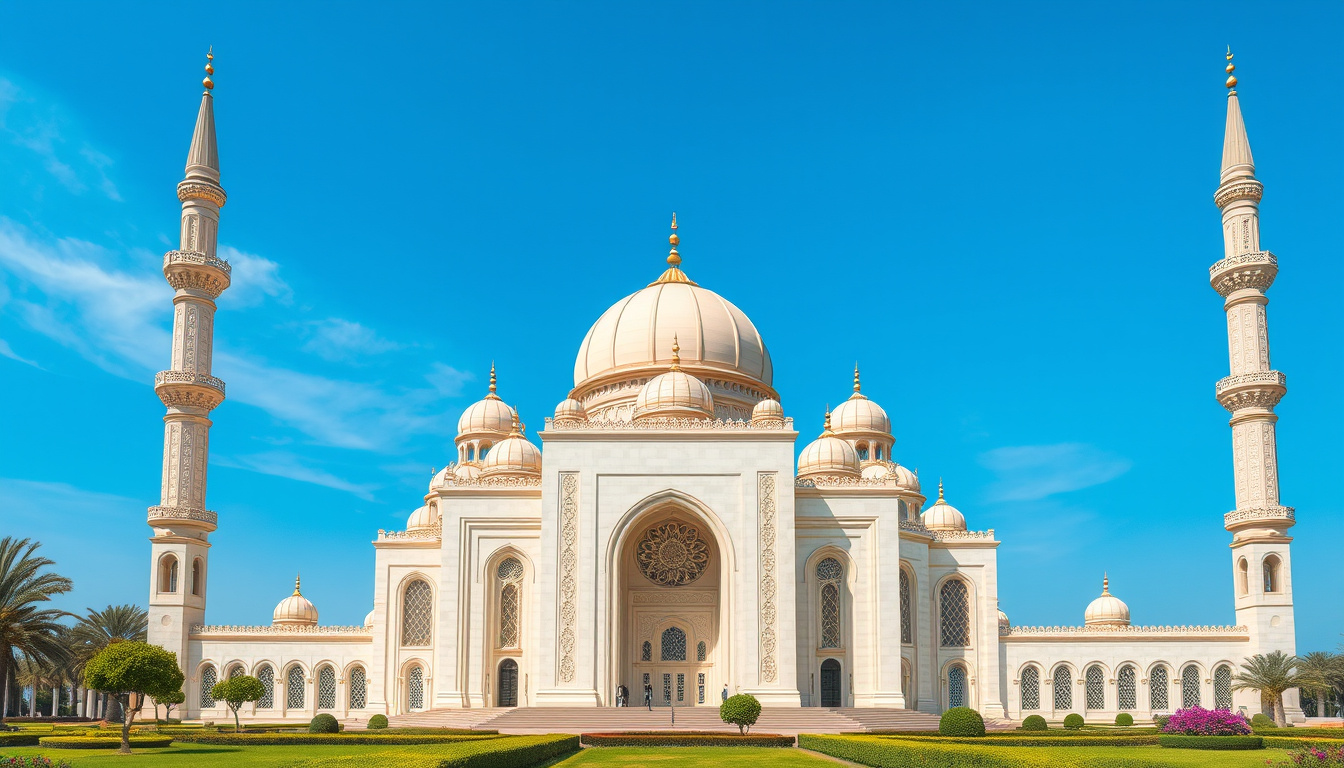
The Grand Mosque of Egypt, inaugurated in March 2023 as a highlight of the New Administrative Capital (NAC), represents not only a stunning feat of modern architecture but also a significant landmark in the country’s spiritual and cultural landscape.
With its blend of traditional Islamic design and contemporary aesthetics, the mosque has captured the world’s attention while also achieving remarkable accolades, including three Guinness World Records.
From its towering minarets and grand gateways to its exquisite interiors adorned with natural marble and intricate wooden craftsmanship, the Grand Mosque stands as a symbol of Egypt’s rich heritage and forward-looking ambitions.
This article delves into the architectural splendor and cultural significance of this remarkable mosque, putting a spotlight on its innovative features and the historical context that shapes its existence.

Key Takeaways
- The Grand Mosque in Egypt showcases a fusion of traditional Islamic architecture and modern design, making it a landmark of faith.
- It has set three Guinness World Records, highlighting its unique features like the heaviest and largest chandeliers in the world.
- As part of Egypt’s New Administrative Capital, the mosque symbolizes the country’s architectural heritage and aspirations for modernization.
Architectural Splendor and Cultural Significance
## Architectural Splendor and Cultural Significance
The Grand Mosque, prominently situated in Egypt’s New Administrative Capital (NAC), stands as a monumental symbol of religious devotion and cultural identity since its inauguration in March
2023.
This awe-inspiring architectural feat has made headlines not just for its size and beauty, but also for securing three prestigious Guinness World Records: it features the world’s heaviest chandelier weighing an impressive 24,300 kg, the largest chandelier with a sweeping 22-meter diameter adorned with 107 elegant lanterns, and the tallest wooden minbar standing at
16.45 meters, skillfully crafted by Argynza Constructions.
Encompassing nearly 476,000 square meters, the Grand Mosque is among Africa’s largest, capable of accommodating an astounding 137,000 worshippers within its expansive prayer halls, classrooms, and diverse cultural facilities.
The mosque’s eye-catching design includes three magnificent gateways, each topped with traditional Islamic domes, and is flanked by two soaring minarets that reach a height of 148 meters.
Inside, visitors are treated to a dazzling array of natural marble embellished with intricate Islamic motifs, luxurious wooden ceilings crafted from rare Aru wood, and exquisite arabesque patterns, all complemented by the grandeur of gilded copper chandeliers.
The inauguration ceremony was a momentous occasion, graced by the presence of President Abdel Fattah al-Sisi, marking a significant blend of Egypt’s rich historical traditions and its forward-looking vision of modernization.
Ultimately, the Grand Mosque is not only a remarkable architectural achievement but also a vital-cultural centerpiece, embodying Egypt’s respect for its architectural legacy while embracing contemporary aspirations.
As the spiritual heart of the New Administrative Capital, it invites both locals and international visitors to engage with its profound heritage and forward-thinking ethos.
Modern Innovations and World Records Achievements
As the Grand Mosque continues to draw attention globally, its significance transcends mere architectural appreciation; it represents a thriving hub for community engagement and cultural exchange.
The mosque not only serves as a place of worship but also as a center for education and interfaith dialogue, highlighting Egypt’s commitment to fostering understanding within a diverse population.
Through various programs and lectures offered in its spacious classrooms, attendees can learn about Islamic teachings, history, and art, enriching their cultural knowledge and appreciation.
Additionally, the mosque’s strategic location in the heart of the New Administrative Capital underscores its role in the modernization of Egypt, serving as both an inspiring landmark and a communal gathering space.
By blending traditional Islamic architecture with contemporary design elements, this majestic structure exemplifies how faith and modernity can coexist harmoniously, providing a profound experience for all who visit.