
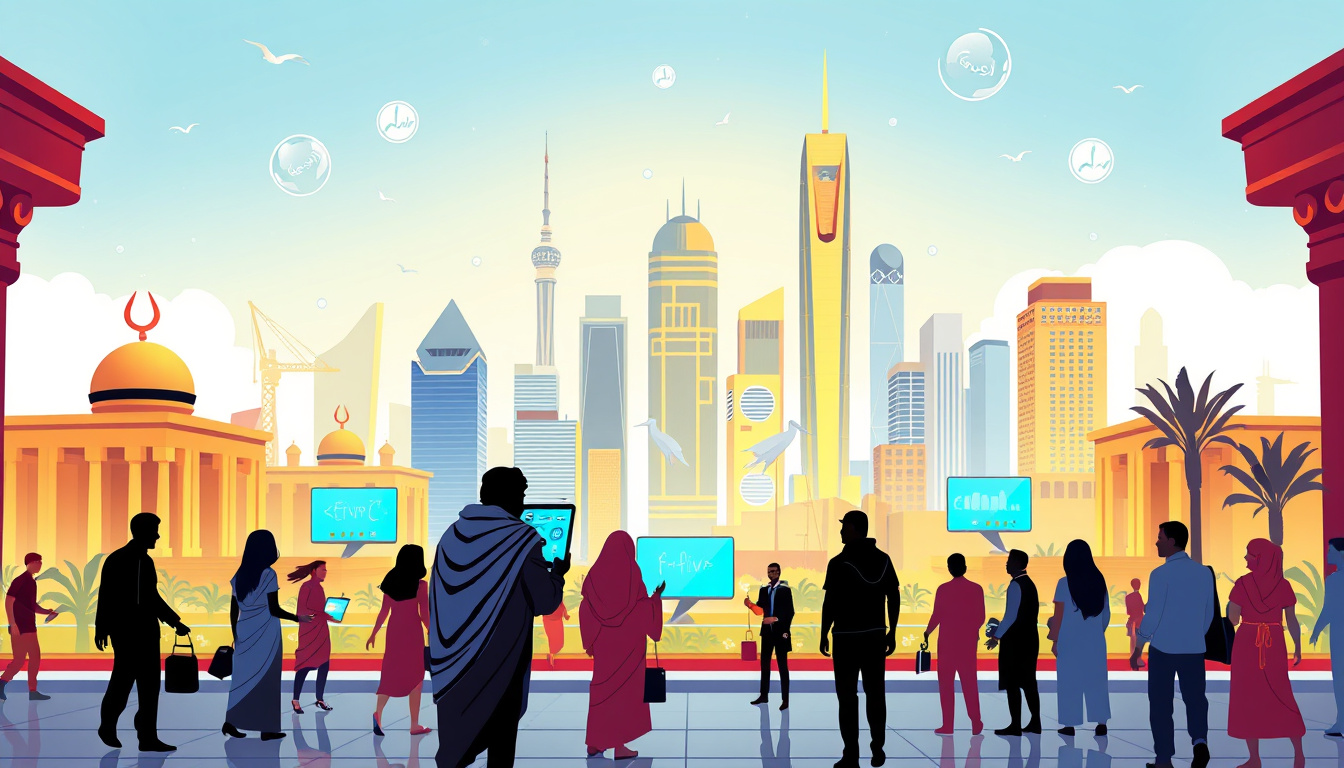
In an age where technology evolves at an unprecedented pace, the intersection between artificial intelligence (AI) and language is increasingly significant.
This evolution is particularly pronounced in regions like Egypt, where tools such as ChatGPT are transforming the way people communicate and learn.
Throughout history, shifts in language have often mirrored technological advancements—from the early days of shorthand in messaging apps to the introduction of hashtags in social media.
Today, with the influence of Large Language Models (LLMs), we are witnessing a rapid evolution in spoken and written language across the globe.
A recent study from the Max Planck Institute highlights that frequent interactions with LLMs are not only shaping vocabulary but also altering communication norms, raising important questions about the future of linguistic diversity and the authenticity of human expression.
In this article, we will explore how AI technologies are impacting language in Egypt and beyond, the challenges they pose to linguistic diversity, and what this means for our future communication.
Key Takeaways
- AI and technologies like ChatGPT are accelerating linguistic changes by introducing new vocabulary into professional and everyday language.
- In Egypt, reliance on AI tools for communication tasks poses a risk of diminishing regional dialects and unique expressions.
- The trend of humans mimicking AI-generated language may lead to a homogenization of communication styles, threatening linguistic diversity.
The Historical Context of Language Evolution and Technology
### The Historical Context of Language Evolution and Technology
Language is in a constant state of evolution, a process deeply tied to the technological advancements of its time.
From the advent of the printing press to the rise of the internet, every major technological leap has influenced how we communicate.
In the late 1990s and early 2000s, the proliferation of messaging platforms like MSN Messenger initiated significant linguistic changes.
Users began adopting shorthand language—think ‘lol,’ ‘brb,’ and acronyms that substituted for longer phrases—creating a unique digital dialect.
Fast forward to today, and social media has introduced new terms like ‘hashtag,’ forever altering the linguistic landscape.
What we are witnessing now is a remarkable acceleration in this evolution, primarily driven by artificial intelligence (AI) and Large Language Models (LLMs) such as ChatGPT.
According to a report by the Max Planck Institute set to be released in 2025, our frequent interactions with LLMs are reshaping spoken language at an unprecedented rate.
The vocabulary we use in professional settings is seeing a notable shift, with words like ‘meticulous’ and ‘vibrant’ becoming commonplace in conversations that were previously more straightforward.
In Egypt, the embrace of AI tools among students and professionals is a striking example of this global phenomenon.
Many are using AI for a plethora of tasks ranging from tutoring to translation to market research.
However, this widespread, predominantly AI-generated language raises serious concerns about linguistic homogenization.
As regional expressions and unique dialects become less prominent, there is a risk that the rich tapestry of linguistic diversity may begin to unravel.
The format and style of AI-generated content often promote a standardized writing style, stripping away personal voice and idiosyncrasies that make language unique.
Thus, we find ourselves at a critical juncture where the tools designed to enhance our communication may inadvertently lead to a loss of linguistic identity.
The possibility of reversing this trend is uncertain, as our human expressions may increasingly begin to mirror AI-generated styles, creating a ‘closed cultural feedback loop’ that influences how we interact.
The implications of these changes are profound, raising questions not only about language but about culture and identity in a digital age.
The Impact of AI on Linguistic Diversity and Communication Norms
The challenges posed by AI on linguistic diversity extend beyond regional dialects to the very essence of how we communicate on a global scale.
AI tools, while designed to enhance efficiency and connectivity, often favor a simplified and streamlined way of speaking and writing, promoting a homogenized communication style.
This emphasis on clarity and accessibility can undermine the rich variety of idioms and expressions that reflect our experiences and cultural backgrounds.
As interactions with LLMs become more prevalent, there is a growing concern that this might lead to a loss of nuanced language, which carries within it the flavors and quirks of human expression.
Furthermore, the implications of such changes are not merely academic; they affect how future generations will perceive and utilize language, potentially resulting in the erosion of cultural heritage as unique vernaculars fade into obsolescence.