
The Egyptian Museum in Tahrir can fill as much time as you give it. The trick is to arrive with a question you want answered, rather than a list of every room you might see. On a first visit, start with the objects the museum is known for, then leave time to follow whatever catches your eye.
Make sure you are heading to the right museum
This guide is for the Egyptian Museum in Tahrir Square. Cairo has more than one major museum, so check the venue named on your ticket or tour confirmation. If you want to see a specific object, check its current location before you book: older guidebooks and walkthrough videos may show collections that have since moved.
Planning Your Visit
1. Check Visitor Information
Before setting off, it is essential to check the museum's official visitor information. This includes current opening hours, ticket prices, and any specific regulations regarding photography or guided tours. Check again close to your visit.
You can refer to the official Egyptian Museum website for the most accurate and up-to-date information.
2. Allocate Enough Time
A focused visit to the museum can take anywhere from two to four hours, depending on your interests. To fully appreciate the artefacts, allow yourself ample time to explore. If you have specific themes or objects in mind, dedicate at least an hour or two to those areas. If a quiet visit matters to you, ask about busy periods rather than assuming a particular day will be quieter.
3. Choose Your Themes or Objects
Focusing on specific themes or a select number of objects can help streamline your visit. Here are a few suggestions to consider:
Ancient Egyptian Art
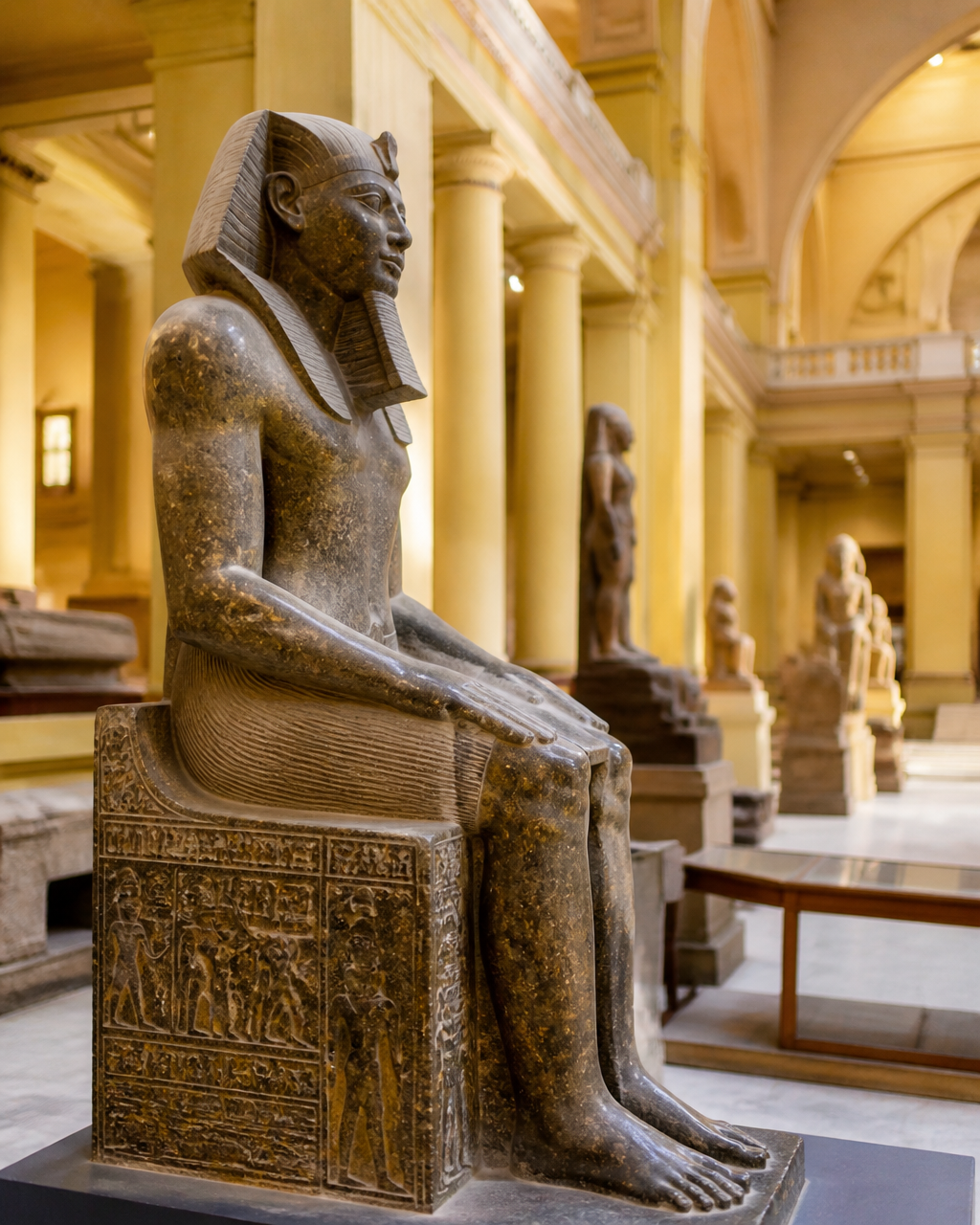
- Sculptures: The museum contains several remarkable sculptures, including statues of pharaohs and deities. Pay special attention to the intricately carved limestone and granite pieces that reflect the artistry of ancient craftsmen.
- Reliefs: Look for the wall reliefs that depict daily life and religious practices in ancient Egypt. These can provide context to the artefacts you see.
Objects made for burial
Compare the shape and decoration of a sarcophagus with any surviving inscriptions explained on its label. Think about what the object tells you about the person it was made for, then look at how much of that account comes from the label and how much you can see for yourself.
4. Use a Museum Guide or Audio Guide
To enhance your understanding, consider renting an audio guide or joining a guided tour. These resources provide valuable context and background information about the exhibits, helping you appreciate the significance of each artefact.
5. Take Breaks and Stay Hydrated
Exploring the museum can be an intense experience, so remember to take breaks. Ask staff about seating if someone in your group needs a rest. Staying hydrated is equally important, especially if you visit during the warmer months.
6. Visiting Tips
- Arrive Early: Arriving at opening time can help you avoid the crowds and give you the chance to enjoy the exhibits more peacefully.
- Dress Comfortably: Wear comfortable shoes as you will be walking and standing for extended periods.
- Photography: Check the museum’s policy on photography as some areas may have restrictions to protect the artefacts.
Conclusion
The Egyptian Museum in Tahrir is a remarkable institution that provides a window into the past, showcasing the incredible achievements of ancient Egyptian civilization. By planning your visit with a focus on specific themes or artefacts, checking visitor information in advance, and allowing yourself enough time to explore, you can create a meaningful and enriching experience.
FAQs
How much time should I allocate for my visit?
A focused visit typically takes between two to four hours, depending on your interests and the depth of exploration you wish to undertake.
Can I take photos inside the museum?
Photography policies may vary, so it’s best to check the museum's official guidelines regarding photography before your visit.
Is there a café or resting area in the museum?
Ask the museum about seating and refreshments before you go if you are planning a longer visit.
By following these practical tips, your visit to the Egyptian Museum can be both enjoyable and educational, allowing you to immerse yourself in the rich history of ancient Egypt.
Two ways to make the collection manageable
Follow one material
Choose stone, wood or another material you keep noticing. Start by looking at the objects from a distance, then move closer where allowed. Look for differences in finish, scale and detail. A polished surface and a roughly worked back can make the same object feel completely different. Read the label after you have looked closely enough to form a question about how the maker worked or where the object was intended to sit.
If you are visiting with someone who is less keen on museums, try this as a short shared exercise rather than a formal tour. Each person picks one object they would like to show the other. Explain what caught your eye in your own words. There is no need to pick the most famous exhibit. A small item can be a better starting point than a large statue if the label helps you place it in a particular household, workshop or period.
Follow one kind of object
Alternatively, look for objects that served a similar purpose. Two statues might differ in size, setting or who paid for them. Two containers might look alike at first but have very different inscriptions. Take one detail from each object and compare them on the spot. You will remember the contrast more readily than a list of dates.
If you are using a guide, say what you would like to learn at the start. A useful request is, ‘Could you show me two examples and explain how to tell them apart?’ That gives the guide a clearer brief than asking for all the highlights. If you are visiting independently, a note with the gallery and object name will be more useful later than a photograph with no context.
Plan the part of the day outside the museum
Put the museum first in your itinerary if it is the main reason you are coming to Tahrir. Save the exact entrance on your map and choose a meeting point if people arrive separately. Agree on a point to stop and decide whether everyone wants another room or a break. If you have a timed booking elsewhere in Cairo, allow for the exit and onward journey before adding another activity.
A good museum visit can end with one story you can tell someone afterwards. Try answering this on your way out: which object would you go back to see, and what would you look for next time? That is a better measure of a focused visit than how many rooms you managed to get through.