
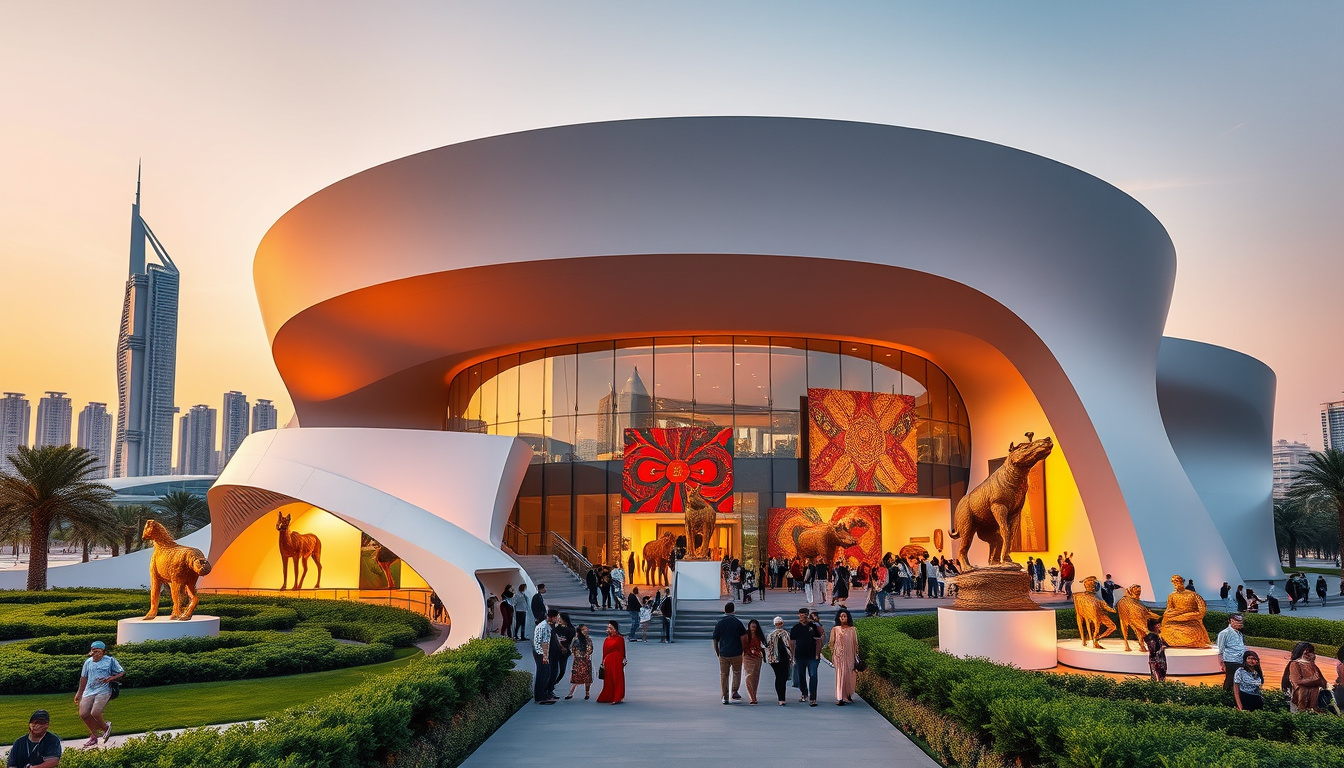
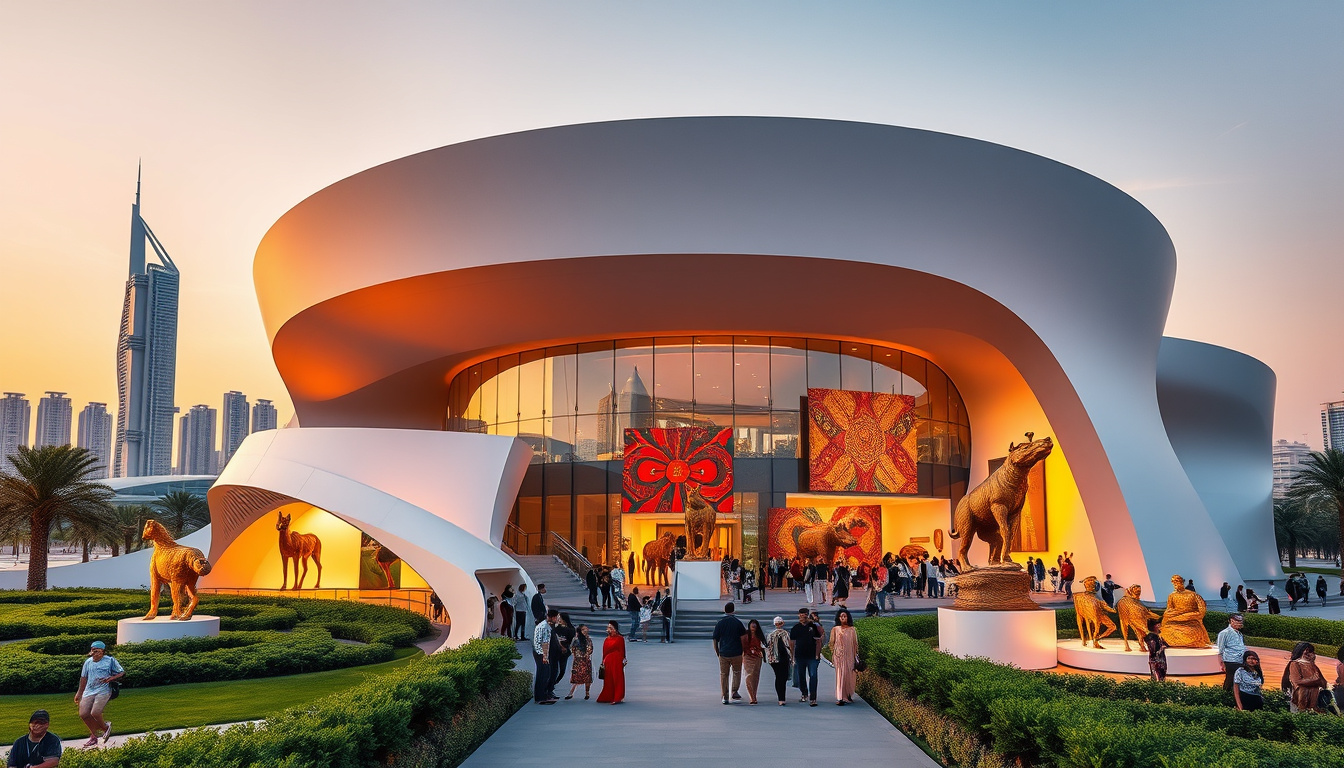
The Guggenheim Abu Dhabi is set to redefine the cultural landscape of the UAE with its grand opening on December 11,
2026.
As the largest site within the prestigious Guggenheim network, this iconic museum will not only serve as a beacon of contemporary art but also mark a pivotal moment in the UAE’s cultural ambitions.
Strategically located on Saadiyat Island, the Guggenheim will join an impressive array of cultural institutions, including the renowned Louvre Abu Dhabi and the upcoming Zayed National Museum.
This concerted effort illustrates the UAE’s commitment to diversify its economy beyond oil, while simultaneously placing culture at the heart of its tourism strategy and global competitive advantage.
Key Takeaways
- Guggenheim Abu Dhabi aims to become a cultural landmark by focusing on African art and heritage.
- The initiative reflects the UAE’s strategy to diversify its economy through cultural tourism.
- Abu Dhabi is positioning itself as an integrated cultural district, enhancing its global competitiveness.
The Vision Behind Guggenheim Abu Dhabi
The Guggenheim Abu Dhabi, scheduled to unveil its doors on December 11, 2026, represents a monumental advancement in the United Arab Emirates’ cultural landscape, positioning itself as the largest site within the renowned Guggenheim network.
Nestled on Saadiyat Island, the Guggenheim will join prestigious cultural entities, including the Louvre Abu Dhabi and the Zayed National Museum, contributing to a robust museum district that underscores Abu Dhabi’s ambition to diversify its economy beyond oil reliance.
This strategic move highlights culture as a vital facet of tourism and a key element in enhancing global competitiveness.
A distinguishing feature of the Guggenheim Abu Dhabi is its commitment to African art, particularly works from North Africa and Sub-Saharan regions.
This initiative marks a significant step towards rectifying the historical neglect of African narratives within the global art dialogue.
The Louvre Abu Dhabi recently showcased a compelling exhibition centered on Sub-Saharan Africa, further affirming the UAE’s dedication to presenting African artists and cultural expressions.
Unlike its Gulf neighbors, the UAE demonstrates a holistic and foresighted approach, integrating Saadiyat Island into a cohesive cultural district rather than viewing it merely as a collection of individual museums.
This vision is propelled by the presence of over 750,000 African visitors each year, creating substantial opportunities for cultural cross-pollination and stronger diplomatic relationships with the continent.
Ultimately, the Guggenheim Abu Dhabi exemplifies the UAE’s ambition not only to emerge as a pivotal cultural hub but also to celebrate and elevate African heritage, ensuring that the rich narratives and artistic legacies of Africa are prominently showcased and revered in a global context.
Celebrating African Art: A Cultural Shift
The evolution of the UAE’s cultural landscape is not merely about building museums; it’s about fostering a vibrant exchange of ideas and perspectives that enriches the broader community.
The Guggenheim Abu Dhabi will serve as a pivotal platform for contemporary African artists, bridging gaps between cultures and elevating underrepresented voices within the global arts dialogue.
This initiative aligns with the UAE’s vision of creating an inclusive environment where diversity is celebrated, promoting artistic collaborations that transcend geographical boundaries.
As more visitors from diverse backgrounds flock to Abu Dhabi, the museum will become a focal point for discussions surrounding identity, heritage, and artistic expression, shaping a deeper understanding of African art and its significance.
Thus, Abu Dhabi is not just investing in infrastructure; it is cultivating a legacy that honors the past while embracing the future through artistic innovation and cultural diplomacy.