
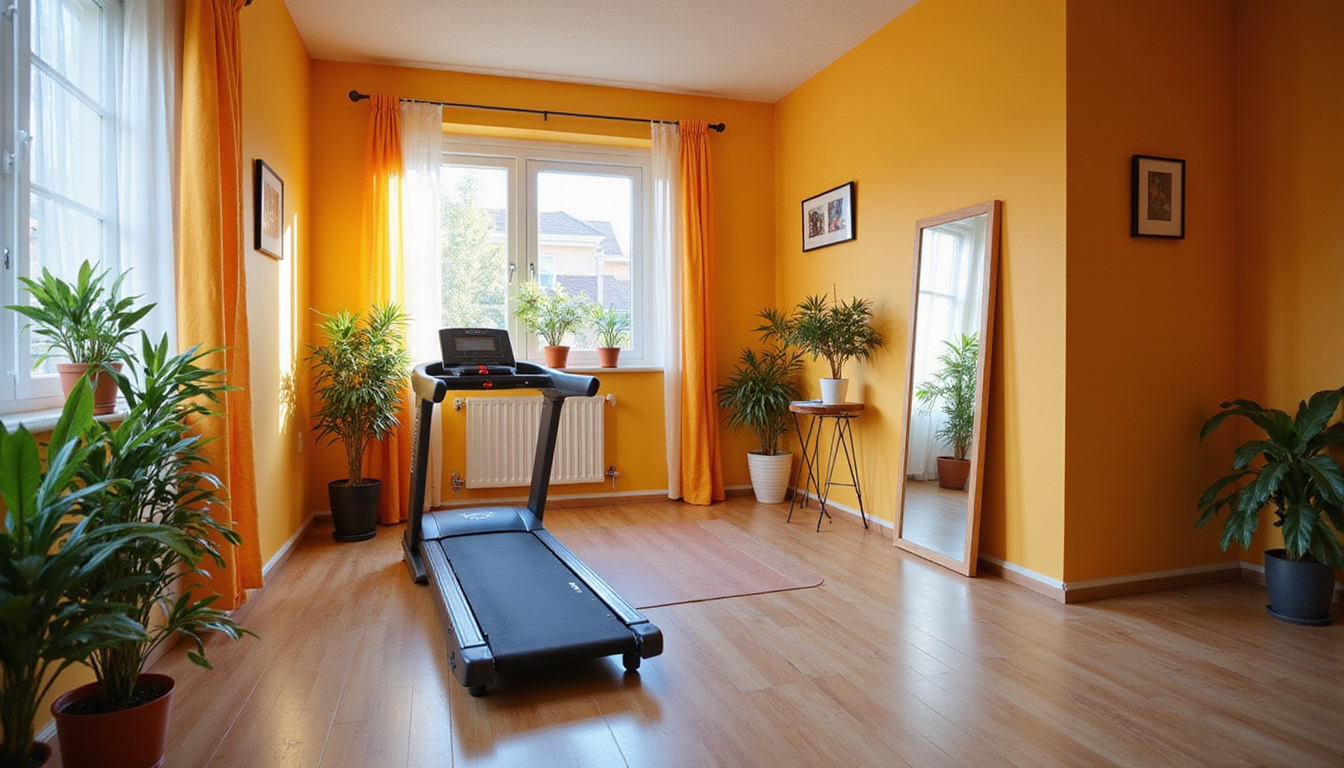
Setting up an in room gym helps you stick with fitness. It saves you time, space, and trips to a gym. With a few tools and some planning, a small bedroom, home office, or studio becomes a workout area that builds strength, aids movement, and boosts heart work.
Below you see clear tips on picking gear, planning your space, and laying out a routine that fits your schedule and your small area.
Why an In Room Gym Is Worth It
An in room gym gives you quick access to exercise. You work out without travel time, busy machines, or high fees. This setup builds routine, privacy, freedom, and control.
- Consistency: Fewer limits make workouts likely.
- Privacy: Train at home if you feel self‑conscience in public.
- Flexibility: Exercise in short sessions during the day.
- Control: Pick tools and moves that suit your body, time, and aims.
Research links home exercise to better follow-through for busy adults (source: CDC Physical Activity Guidelines).
Step 1: Assess Your Space Before Buying Anything
Before buying gear, look at where your gym will be and how it will work daily.
Measure and Map
- Find a spot: Aim for a 2m x 2m (about 6.5 ft x 6.5 ft) area if you can. Smaller areas work with smart plans.
- Check the ceiling: Look at the height for overhead presses, jump rope, or bands.
- Find strong spots: Use door frames, solid furniture, or wall studs for bands and suspension straps.
- Mind noise: In an apartment, choose low-noise moves and protect your floor.
Define Your Primary Goal
Match your gear to your top aim:
- Fat loss and conditioning
- Strength and muscle
- Better movement and less pain
- Overall health
You can cover all with a well-planned gym, but naming your main goal helps you pick must‑have items.
Step 2: Flooring and Protection – The Unsung Essential
Good flooring helps more than many think. It guards your joints, cuts noise, and saves your carpet or floor.
Best picks for small spaces:
- Interlocking foam or rubber tiles: They cost little, store well, and cover only the exercise spot.
- Foldable exercise mat: Good for bodyweight moves, stretches, and core work.
- Yoga mat: A solid choice if space and funds are tight.
If you plan weight work, choose firm rubber tiles. They give more grip and keep you steadier.
Step 3: Core Equipment for a Versatile In Room Gym
In a small room, every tool must work for several moves. Choose gear that is small and used in many ways.
1. Resistance Bands (Must-Have)
If you add one item to your gym, pick resistance bands.
Here is why they work well:
- They are light and take up little space.
- They work for many levels.
- They add angles that free weights may miss.
- They suit warm-ups, recovery, and full-body work.
A good set comes with:
- Loop bands (short; work glutes and hips)
- Long tube bands with handles
- A door hook for rows, presses, or pulls
2. Adjustable Dumbbells or Kettlebells
Free weights help you build more strength than bands alone.
- Adjustable dumbbells: They save space because one set can replace many pairs.
- Kettlebell (or two): Great for swings, squats, deadlifts, presses, and carries.
If funds allow, pick adjustable dumbbells. If you choose one type, pick a kettlebell that challenges both your lower and upper body. (Many choose around 8–16 kg for women and 12–20+ kg for men, yet choose weight by your own feel).
3. Suspension Trainer (Optional but Strong)
A door-mounted suspension trainer (like TRX) turns your gym into a full-body tool. It uses your weight for work, lets you row without heavy machines, suits all skill levels, and packs small in a drawer.
Just check your door is strong and can close with the strap in place.
4. Minimal Cardio Tools
Big machines take space. Choose tools that work in many ways:
- Jump rope: A powerful tool for heart work in a tiny area (watch your ceiling).
- A sturdy step or low bench: Great for step-ups, incline pushups, and light cardio.
- Band circuits: Do high-rep, short-rest sets with bands to raise your heart rate.
You can also use moves with no gear: high knees, quick squats, or bear crawls if space lets you.
Step 4: Smart Storage for a Clutter-Free Room
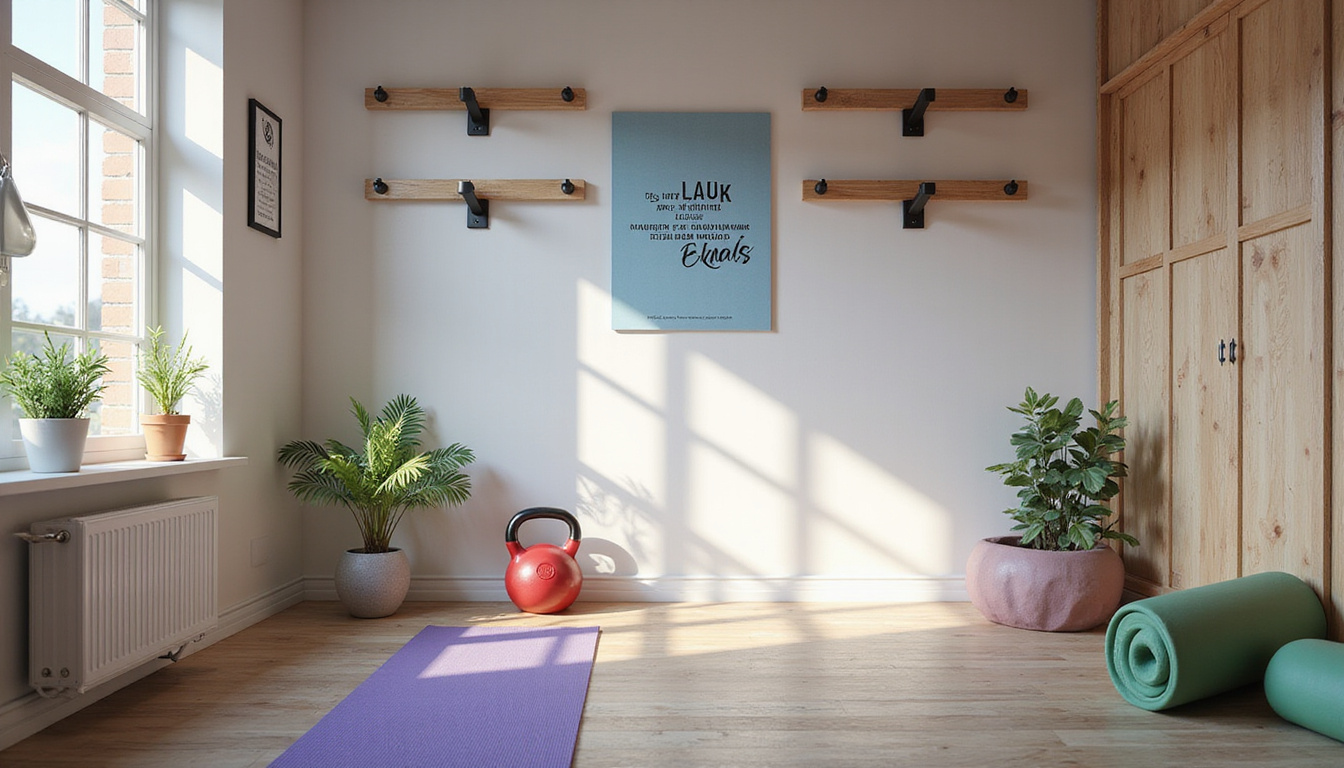
A small gym in a room can crowd your space. Smart storage keeps things neat.
Try these ideas:
- Under-bed boxes for bands, mats, and light items
- Wall hooks or boards for hanging bands and ropes
- Closet bins for small gear
- Foldable benches or mats that tuck behind doors or closets
Easy set up and storage help you use your gym often.
Step 5: Example Layouts for Different Room Types
Small Bedroom Corner
- One yoga mat or rubber tiles in a corner
- Dumbbells kept under a bedside table
- Hooks or an over-door rack for bands and a suspension trainer
- A mirror on the wall to check your form
Studio Apartment
- A set “gym zone” with interlocking tiles
- A kettlebell and band set in a tidy basket
- A foldable step which can also serve as a small table or seat
- A suspension trainer fixed to the main door
Home Office In Room Gym
- A mat that stays out
- Dumbbells or kettlebells under the desk
- Bands within easy reach by the door
- Short 5–10 minute breaks for movement
Step 6: Build a Complete Workout in a Tiny Space
A small in room gym can work for strength, heart work, and movement. Here is one way to plan your session.
Warm-Up (5–8 minutes)
- Do light work in place: march, shadow box, or jump jack.
- Move your arms and legs: do leg swings, arm circles, or hip rolls.
- Use mini-bands for glute work, side steps, and pull-aparts.
Strength Training (20–25 minutes)
Try 2–4 sessions each week that work the main moves:
- Squat move
- Bodyweight squats, goblet squats, or split squats
- Hinge move
- Hip hinges, deadlifts with weights, or swings
- Push move
- Pushups (on floor, incline, or against a desk), or band presses
- Pull move
- Band rows using a door anchor, or suspension rows
- Core move
- Planks, dead bugs, hollow holds, or twisting moves
A full-body circuit can be:
- Goblet squat – 10–12 reps
- Band row – 10–12 reps
- Pushup (any style) – 8–12 reps
- Romanian deadlift with weights – 10–12 reps
- Plank – 20–40 seconds
Do 2–4 rounds and rest 30–60 seconds between rounds.
Cardio Finishers (5–10 minutes)
Try short, hard bursts:
EMOM (Every Minute On the Minute)
- Minute 1: 30 seconds jump rope, 30 seconds rest
- Minute 2: 30 seconds kettlebell swings, 30 seconds rest
- Continue for 6–10 minutes
Low-impact option:
- 40 seconds of brisk step-ups on a low bench
- 20 seconds rest
- Repeat 8–10 times
Cooldown and Mobility (5 minutes)
Finish with light stretches for your hips, legs, chest, and shoulders. Take slow deep breaths to help your body rest.
Step 7: Noise Control for Apartment-Friendly Training
If your gym sits above neighbors or on fragile floors, keep noise low:
- Pick rubber flooring to absorb force
- Choose step-ups, glute bridges, and band work over high jumps
- Use slow, steady moves instead of fast jumps
- Keep music low or use headphones
You can work hard and keep the peace.
Budgeting and Prioritizing Purchases
You do not need all gear at once. Build your gym in steps:
Stage 1: Base
- Mat or floor tiles
- Resistance bands
Stage 2: Strength
- Dumbbells or one or two kettlebells
Stage 3: Extras
- Suspension trainer
- Aerobic step or small bench
Stage 4: Extra touches
- Foam roller or massage balls
- Small mirror for checking moves
- A Bluetooth speaker for tunes
This step-by-step plan keeps cost low while growing your gym.
Safety Tips for Training in a Small Room
Safety must always come first:
- Clear the room of clutter, cords, or loose rugs before you start.
- Check that anchors for bands and suspension trainers hold firm before you use them.
- Do only weights you can control safely.
- Watch your space when doing moves under low lights or fans.
- Wear proper shoes or go barefoot if your floor is safe.
Simple Weekly Plan for Your In Room Gym
Here is one simple structure you can adjust:
Day 1 – Full Body Strength A
- Squats, rows, pushups, and core moves
Day 2 – Cardio & Mobility
- Jump rope, step-ups, and a movement circuit
Day 3 – Full Body Strength B
- Deadlifts/hinges, overhead presses (if ceiling allows), band pulls, and core moves
Day 4 – Optional Recovery / Light Work
- Easy band moves, stretching, or walking
Even three sessions of 25–30 minutes each week can make a change in strength, energy, and mood when you use your in room gym.
FAQ: In Room Gym Basics
1. How can I set up an in room gym in a very small space?
Choose small, multi-use gear: a mat, bands with a door hook, and one set of weights. Use vertical space with hooks, shelves, or over-door racks. Plan moves that stay within a small area.
2. What equipment is best for an in room home gym on a budget?
Start with a good yoga or exercise mat and a set of resistance bands. These can work for full-body, movement, and light heart work. When funds permit, add a kettlebell or dumbbells. These basics meet most needs.
3. Can I build muscle with a small in room workout space?
Yes. Muscle growth comes from steady progress and routine over the size of your gym. Use bands and weights to slowly add resistance. Focus on moves like squats, hinges, pushes, and pulls and train 2–4 times a week. Your small gym can help your strength grow.
Turn Your Room into a Results-Driven Fitness Zone
You do not need a garage, extra room, or costly machines to get fit. With a clear plan, a few small tools, and smart storage, your in room gym becomes a hub for daily movement, strength, and endurance.
Claim your corner, lay down a mat, and add one tool at a time. Your future self will praise you with each full workout done without leaving your room.