
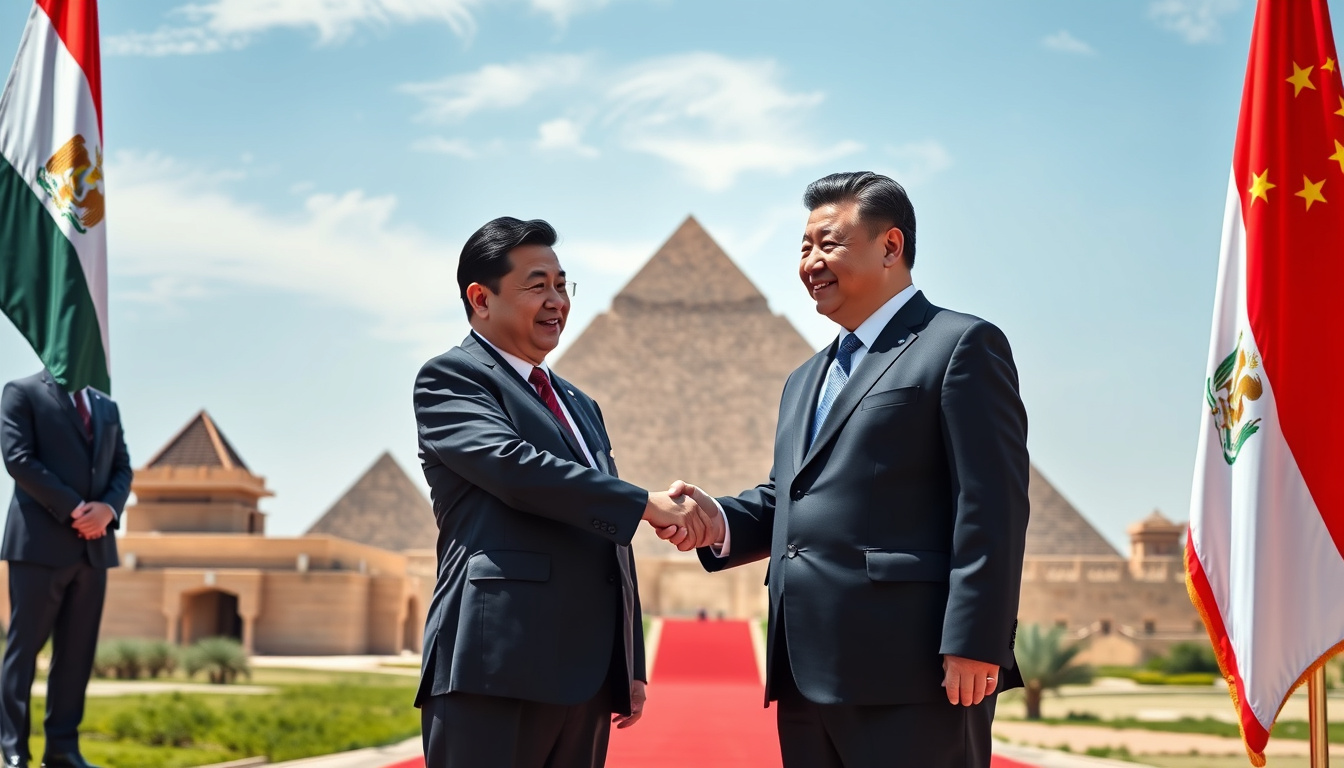
In a historic turn of events underscoring the deepening ties between China and Egypt, Chinese President Xi Jinping embarked on a pivotal visit to Egypt on September 1-2,
2026.
Hosted by President Abdel Fattah El-Sisi, this visit marked a significant milestone, celebrating 70 years of diplomatic relations between the two nations.
As they forge a pathway forward, the discussions during this visit highlighted not only the enduring nature of their Comprehensive Strategic Partnership, solidified in 2014, but also a shared vision aimed at bolstering economic cooperation and technological advancement.
This article delves into the key outcomes of Xi Jinping’s visit and outlines the future areas of collaboration in technology and trade.
Key Takeaways
- Xi Jinping’s visit to Egypt marks a pivotal moment in strengthening China-Egypt diplomatic and economic relations.
- The partnership is pivoting towards technology cooperation, focusing on sectors like electric vehicles and renewable energy.
- Efforts are underway to balance trade with China by increasing Egyptian exports and reducing barriers to market entry.
Strengthening Bilateral Ties: Key Outcomes of Xi Jinping’s Visit
During Chinese President Xi Jinping’s recent visit to Egypt on September 1-2, 2026, the two nations celebrated a significant milestone, marking 70 years of diplomatic relations.
Invited by President Abdel Fattah El-Sisi, Xi’s visit underscored the evolving Comprehensive Strategic Partnership established in
2014.
One of the pivotal agreements reached was the initiation of the third phase of the TEDA Suez Economic and Trade Cooperation Zone, which already hosts over 200 companies, representing a cornerstone of Chinese investment in Egypt.
Throughout discussions, both leaders acknowledged the importance of the Nile River in safeguarding Egypt’s water and food security, while Egypt reaffirmed its support for China’s stance on Taiwan, highlighting the diplomatic intimacy between the countries.
This visit signals a shift in their partnership focus from traditional infrastructure projects to more advanced sectors such as technology, electric vehicles, renewable energy, and AI.
Both governments are now aiming to improve the trade balance, which has previously favored Chinese goods, by facilitating the entry of more Egyptian products into the Chinese market and committing to lower customs duties.
Financial strategies are also noteworthy, including the introduction of Panda Bonds and enhanced currency-swap agreements to encourage local currency trading and create a robust economic framework.
The agreements established during this visit are poised for rapid implementation, with further negotiations on the horizon to foster even stronger bilateral ties.
Future Areas of Cooperation: Technology and Trade Enhancements
The recent visit of Chinese President Xi Jinping to Egypt not only celebrated 70 years of diplomatic relations but also set the stage for a new era of cooperation that emphasizes technology and trade enhancements.
With the TEDA Suez Economic and Trade Cooperation Zone as a centerpiece of their collaboration, both countries are committed to diversifying their economic activities.
This shift in focus away from purely infrastructure development allows Egypt to leverage its agricultural and manufacturing capabilities, introducing more of its products, such as textiles and foodstuffs, to the expanding Chinese market.
Additionally, the discussions regarding electric vehicles and renewable energy showcase a mutual commitment to sustainable development, potentially positioning both nations as leaders in green technology.
As Egypt seeks to reshape its trade dynamics with China through reduced tariffs and expedited customs processes, the partnership promises to deliver economic benefits and innovative solutions that resonate well beyond their borders.