
When designed strategically, property brochures can do far more than just present basic details about a home or development. They can create an emotional connection, communicate value, and filter in serious, high value buyers while discouraging time‑wasters. Whether you’re marketing a luxury villa in New Cairo, an investment apartment in the New Administrative Capital, or a seafront chalet in the North Coast, mastering property brochures is one of the fastest ways to elevate your real estate brand and results.
Below is a practical, people-first guide to planning, designing, and using property brochures that truly sell.
Why Property Brochures Still Matter in a Digital-First Market
With portals, social media, and virtual tours, you might assume property brochures are outdated. In practice, the opposite is true—buyers at the upper end of the market expect a premium, tangible representation of the property.
High value buyers rely on property brochures because:
- They want curated, easy-to-skim information without endless online scrolling.
- Printed materials feel more permanent and credible than a web listing.
- A well-crafted brochure signals professionalism and confidence from the developer or agent.
- They can share brochures with partners, family members, or advisors when making decisions.
The key is to ensure your property brochures complement your digital presence, not compete with it. Use them as a high-impact, curated version of your full marketing story.
Define Your Ideal Buyer Before You Design
Effective property brochures start with clarity about who you’re targeting. A brochure for a semi‑finished investment unit in 6th of October City should look and read very differently from one for a finished penthouse in Zamalek.
Ask these questions before you start:
- Who is the primary buyer? (local end-user, GCC investor, European expat, corporate buyer)
- What is their main motivation? (rental yields, capital appreciation, school proximity, seaside lifestyle, retirement)
- What objections do they usually have? (payment plans, developer credibility, maintenance standards, neighborhood safety)
Document your answers and use them to shape:
- The tone of your copy
- The amenities you highlight
- The data you emphasize (ROI projections, lifestyle features, school distances, etc.)
This clarity ensures your property brochures work as a magnet for the right people instead of a generic flyer for everyone.
Content Essentials: What Every High-Converting Property Brochure Must Include
To attract high value buyers, your brochure content must be both emotionally engaging and factually complete. At minimum, your property brochures should cover:
1. A Compelling Cover
The cover is what makes someone pick the brochure up—or ignore it.
- Use one hero image that reflects the best angle of the property or its lifestyle (e.g., sunset over a pool, Nile view, marina, golf course).
- Keep the headline short and benefit-led:
- “Riverside Living in the Heart of Cairo”
- “Seafront Luxury With Guaranteed Rental Returns”
- Add a small, clear subheading describing the property type and location.
2. A Strong Opening Spread
The first two inside pages should answer: “Why this property, why now?”
- A brief concept statement (3–5 sentences) explaining the vision of the project.
- A summary of the top 3–5 key benefits (e.g., location, payment terms, amenities, investment potential).
- A strong visual: panoramic view, CGI render, or lifestyle collage.
3. Detailed but Digestible Property Information
High value buyers expect clarity and completeness, but they don’t want to wade through clutter. Include:
- Property type(s): apartment, villa, townhouse, duplex, penthouse, chalet, etc.
- Size ranges and configurations (e.g., 2–4 bedroom units from 120–260 sqm).
- Finishing level (core & shell, semi‑finished, fully finished, ultra‑luxury).
- Pricing ranges and payment plans (down payment, installments, delivery date).
- Facilities: pools, club house, spa, concierge, parking, security, smart home systems.
- Developer track record with 1–2 supporting visuals or short case studies.
Use icons, tables, and short bullets to make details scannable.
4. Location and Lifestyle
For many high value purchases in Egypt and beyond, location and lifestyle are more important than the unit layout.
Show:
- Distance to key destinations: airports, business districts, top schools, shopping malls, beaches, hospitals.
- A simple location map with clear markers.
- Photos that show real or expected lifestyle: families at the clubhouse, beach activities, green landscapes.
Connect each image with a benefit: “5 minutes from international schools,” “Direct access to private beach,” “Walking distance to metro station.”
5. Social Proof and Credibility
Luxury or investment buyers are risk-aware. Use your property brochures to proactively build trust:
- Short testimonials from existing buyers.
- Mention of awards, ISO certifications, or partnerships with known contractors/architects.
- Reference to completed projects with photos.
- Clear information about delivery dates and legal status of the land and licenses, where possible.
Research consistently shows that trust signals significantly influence real estate decisions, especially for foreign or first-time buyers (source: RICS Research).
Visual Design: Turning Your Brochure into a Premium Brand Asset
Buyers often judge the property—and the developer—by the quality of the property brochures. Design is not decoration; it is part of your sales pitch.
Prioritize Clean, Modern Layouts
- Use generous white space to feel premium and uncluttered.
- Stick to 2–3 core brand colors and 1–2 fonts.
- Avoid heavy blocks of text; break content into small sections and bullets.
Use Professional Photography and Renders
- Always use high-resolution, professionally edited images.
- If you’re selling off-plan, invest in realistic 3D renders and lifestyle imagery.
- Avoid over-filtered, misleading visuals; today’s buyers are quick to detect exaggeration.
Design for Both Print and Digital
Your property brochures should adapt easily:
- Print version: high-resolution PDF prepared for quality paper stock.
- Digital version: optimized PDF for email/WhatsApp, with clickable links to maps, website, or video.
- Consider a vertical format option for easy mobile viewing.
Copywriting Techniques That Persuade High Value Buyers
The words in your property brochures are just as important as the visuals. Aim for clear, confident, and benefit-driven copy.
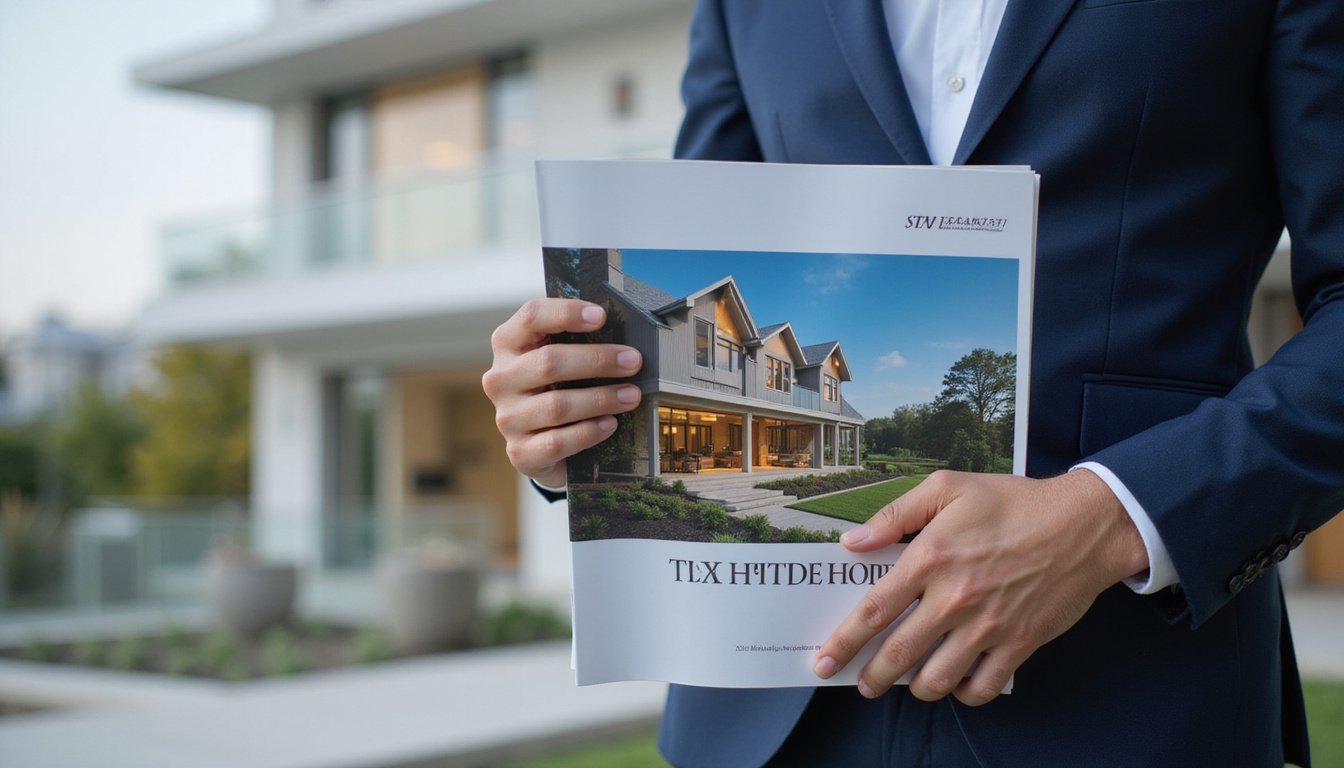
Focus on Benefits, Not Just Features
Instead of:
- “24/7 security and CCTV cameras”
Say:
- “24/7 security and CCTV to ensure a safe, worry-free environment for your family.”
Translate each feature into a real-world advantage: time saved, comfort increased, risk reduced, or returns improved.
Use Specifics to Build Credibility
High value buyers appreciate precision:
- “7-minute drive from Cairo Festival City” beats “Close to major shopping destinations.”
- “Up to 11% projected rental yield based on current area averages” is better than “High rental yield.”
Keep It Human and Accessible
Avoid jargon and overly technical language. You’re not writing a legal contract; you’re helping someone imagine a better life or a stronger portfolio.
Use second person (“you,” “your family,” “your tenants”) to keep the reader engaged.
Smart Distribution: Getting Your Brochures Into the Right Hands
Even the best property brochures won’t work if they’re not seen by the right audience. Combine offline and online channels.
Offline Distribution
Sales offices and showrooms
- Launch events, property exhibitions, and open days
- Partner locations: banks, relocation agencies, law firms, business lounges
- In-property units: keep copies in sample apartments and villas
Online Distribution
Downloadable brochure on your website and property portal listings
- Direct sharing via WhatsApp and email to qualified leads
- Embedded or linked in social media campaigns
- QR codes on outdoor billboards or print ads that lead to the brochure
Consider adding a short introductory video on the first page of your digital brochure. For example, linking to “Things I Wish I Knew Before Moving to Egypt – My Honest Experience” can help foreign buyers better understand daily life and expectations in Egypt:
Measuring Performance and Improving Your Property Brochures
Treat each new brochure as a test that can be improved.
Track:
- How many leads request or download the brochure.
- How many brochure recipients convert into site visits.
- Which pages or sections prospects ask questions about (indicating unclear information).
- Feedback from your sales team:
- Do buyers seem impressed by the brochure?
- Which parts do they refer to most often?
Use that feedback to refine your next property brochures: update FAQs, simplify layouts, add missing visuals, or clarify pricing and terms.
Common Mistakes That Drive Serious Buyers Away
Avoid these frequent brochure errors that can quietly cost you high value buyers:
- Overloaded pages: Too much text and too many images create confusion and fatigue.
- Low-quality printing or flimsy paper: Sends a signal of corner-cutting that buyers may project onto your project itself.
- Outdated information: Old prices, old delivery dates, or missing updates damage trust.
- Unclear contact details: Make it absolutely obvious how to inquire, book a viewing, or reserve a unit.
- Generic messaging: If your brochure could describe any property, it’s not strong enough.
Checklist: Before You Approve Your Next Property Brochure
Use this quick list to ensure your brochure is ready for high value buyers:
- [ ] Clear definition of target buyer and their key motivations
- [ ] Strong, benefit-focused cover and headline
- [ ] Concise opening that answers “Why this property?”
- [ ] High-quality, realistic photos and/or renders
- [ ] Detailed but easy-to-skim information (sizes, prices, payment plans, amenities)
- [ ] Clear location map and lifestyle messaging
- [ ] Trust elements (developer history, testimonials, completed projects)
- [ ] Professional, consistent design aligned with brand
- [ ] Separate print and digital-ready versions
- [ ] Up-to-date information and obvious calls-to-action
Revisit this checklist with every new project to keep your property brochures performing at a high standard.
FAQ: Property Brochures and High Value Buyers
1. What should be included in a real estate property brochure for luxury homes?
A luxury real estate property brochure should include a compelling cover, high-end photography, detailed floor plans, clear pricing and payment structures, amenity highlights, location advantages, and strong trust signals like developer history and testimonials. Focus heavily on lifestyle—privacy, views, services, and exclusivity.
2. How can digital property brochures help attract international buyers?
Digital property brochures let you combine visuals, detailed specs, and clickable links to maps, videos, and virtual tours in one place. For international buyers, they are easy to share with family or advisors, translate if needed, and review across devices. When optimized for mobile and paired with clear contact options (WhatsApp, email, Zoom booking), they greatly improve engagement.
3. Are printed property brochures still effective in 2025 and beyond?
Yes. Printed property brochures remain particularly effective for serious, high value buyers who visit sales offices, exhibitions, or show units. The key is to use them as premium, carefully edited versions of your digital content, not as replacements. Quality paper, professional design, and updated information are essential to maintain credibility.
Turn Your Brochures Into a Competitive Advantage
Every serious buyer you meet—whether local, regional, or international—will form an opinion about your brand and your properties within seconds. Well-crafted property brochures can instantly communicate quality, confidence, and care, positioning your projects above the noise of generic listings and low-effort marketing.
If you’re ready to attract more high value buyers, start by upgrading your brochures. Audit your current materials, refine your messaging, invest in strong visuals, and align your print and digital versions. The result will be a more professional image, more qualified inquiries, and a smoother path from first impression to signed contract.