

Finding truly spacious, reasonably priced 4 bedroom apartments in today’s urban markets can feel like a full‑time job. Growing families, remote workers, and co-living groups are all chasing the same thing: enough rooms to live, work, and relax—without blowing the budget. The good news is that with a clear strategy, realistic expectations, and smart use of online tools, you can uncover larger homes that balance space, location, and cost.
This guide walks you through how to search, evaluate, and negotiate for four-bedroom units in cities—whether you’re planning a move to Cairo, Alexandria, or any other major urban center.
Why 4 Bedroom Apartments Are in High Demand
Urban life has changed dramatically in recent years, and so has what people need from their homes.
Common reasons renters and buyers seek 4 bedroom apartments:
- Multi‑child or multigenerational families
- Hybrid and remote workers who need dedicated home offices
- Co-living arrangements between friends or colleagues
- Investors looking for high-yield rental properties
In dense cities, typical apartments prioritize compact layouts. That makes 4 bedroom apartments relatively scarce—and when demand outstrips supply, prices inevitably rise. Understanding this dynamic helps you plan your search and budget more strategically.
Step One: Define What “Spacious” Really Means for You
“Spacious” is subjective. Before browsing listings, clarify what it looks like for your household.
Key questions to ask:
- How many people will live here now—and in 2–5 years? Plan for growth if you’re starting a family or expecting relatives to move in.
- Do you need all 4 bedrooms as sleeping spaces? Many urban residents convert one room into an office, gym, or studio.
- What minimum total area works for you? In many cities, a well-designed 140–170 m² (or 1,500–1,800 sq ft) 4-bed can feel more comfortable than a poorly laid out larger one.
- How much storage do you need? Built‑in wardrobes, storage rooms, or a maid’s room can significantly increase functional space.
Write down non‑negotiables versus “nice to have” features. For example:
- Non‑negotiable: 4 enclosed bedrooms with windows, at least 2 bathrooms, elevator access
- Nice to have: balcony with view, separate maid’s room, underground parking, shared pool or gym
This clarity will save time and help you evaluate trade‑offs when you start seeing real units.
Where to Look: Neighborhoods and Building Types That Offer More Space
Not all neighborhoods are equal when it comes to finding 4 bedroom apartments that are both spacious and affordable. In most cities, you’ll find better value by looking just beyond the most coveted central districts.
1. Emerging or “Second Ring” Neighborhoods
Areas that are slightly outside the historic or business core often offer:
- Larger apartment footprints
- Newer construction with modern layouts
- Lower cost per square meter
Examples in an Egyptian context might include new urban communities or expanding suburbs around major cities, which often feature mid‑rise compounds and gated communities designed with families in mind.
2. Older, Well-Built Buildings
Pre‑2000 buildings in many cities tend to offer:
- Higher ceilings
- More generous room sizes
- Better cross‑ventilation
The trade‑off: older buildings may lack modern amenities like underground parking, 24/7 security, or energy‑efficient windows. But if space is your priority, these buildings often deliver more square meters for your money.
3. Mixed‑Use Developments and Compounds
Master‑planned communities and mixed‑use developments can be attractive for families:
- On‑site schools, clinics, shopping, and entertainment
- Shared amenities—pools, gyms, kids’ play areas
- More consistent maintenance standards
These areas often have a range of 3 and 4 bedroom apartments designed specifically for family living or long‑term rentals.
How to Search Online Efficiently for 4 Bedroom Apartments
Property portals and social media groups are usually the starting point. To avoid getting overwhelmed:
- Use filter tools aggressively. Set:
- Minimum bedrooms: 4
- Minimum area: your defined threshold
- Price range with a 10–15% buffer above your ideal
- Search by neighborhood plus “4 bedroom apartments.” This helps you understand sub‑market pricing and availability.
- Save searches and set alerts. New 4 bedroom apartments often get snapped up quickly; alerts help you see them first.
- Use map views. Check transport links, proximity to schools, hospitals, and workplaces.
- Join local Facebook or WhatsApp property groups. Landlords and owners sometimes list directly there, avoiding broker fees.
For a grounded understanding of general housing and cost-of-living trends, it can help to cross‑check with reputable data sources like the World Bank or national statistics agencies (for example, the World Bank’s urban housing reports can provide useful context on city housing pressures and affordability trends (source)).
Viewing 4 Bedroom Apartments: What to Check Beyond the Photos
Photos can be flattering—or misleading. In-person or video tours are essential for 4-bed units, where layout and livability matter as much as total floor area.
When viewing:
- Measure or estimate room sizes. That “bedroom” might only fit a single bed.
- Study the layout. Are bedrooms clustered together (great for families) or spread out (better for co-living or privacy)?
- Check natural light and ventilation. Corner units and dual‑aspect layouts often feel larger and more comfortable.
- Inspect bathrooms and kitchen carefully. With larger households, plumbing and hot water capacity matter.
- Listen for noise. Thin walls or proximity to major roads can make a big unit unpleasant.
- Ask about utilities and maintenance fees. Larger apartments can mean higher monthly running costs.
If you can’t visit in person, insist on a live video walk‑through rather than relying only on listing photos.
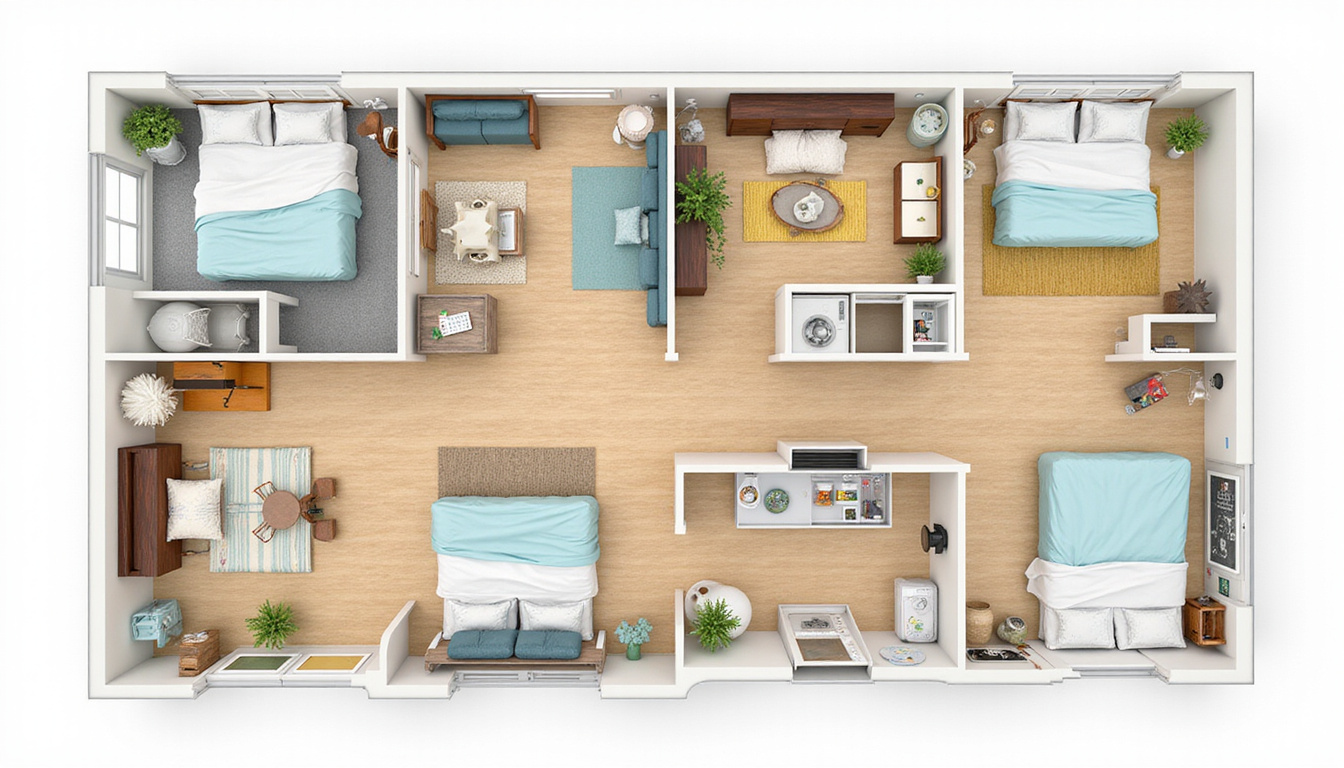
Balancing Space and Budget: Smart Compromises
Finding truly affordable 4 bedroom apartments usually requires flexibility. Instead of compromising on safety or structural quality, consider these areas where you can be more adaptable:
- Location: Move one transport stop further from the city center, or choose a neighborhood still growing in popularity.
- View vs. floor: Lower floors may be cheaper than high floors with panoramic views, while offering the same interior space.
- Brand‑new vs. slightly older: Units that are 5–10 years old often offer better value than brand‑new, premium‑priced launches.
- Luxury finishes vs. solid basics: High-end fittings can be upgraded later; prioritize a sound structure, sensible layout, and enough bathrooms.
Creating a simple comparison sheet for each apartment—rating space, commute, amenities, and monthly cost—helps you see where each option shines or falls short.
Cost of Living and Running a Larger Apartment
A bigger apartment doesn’t just mean a higher rent or purchase price; ongoing costs matter too.
Typical recurring expenses for 4 bedroom apartments include:
- Utilities: Electricity, water, gas—expect higher consumption for larger households.
- Cooling and heating: More rooms mean more AC units or radiators.
- Building or community fees: Service charges for elevators, security, landscaping, pools, etc.
- Parking: Extra costs if spaces are rented or purchased separately.
- Domestic help: Larger spaces may need more cleaning and maintenance time.
If you’re relocating to Egypt or another country, this breakdown of total housing and living expenses can be especially useful: [The Real Cost of Living In Egypt 2025](
Even if your focus is a specific city, it will help you frame a realistic budget for life in a larger apartment.
When evaluating a unit, always ask for:
- Average monthly utility bills from current or previous tenants
- Annual building/community fees
- Any upcoming special assessments or renovations that may raise costs
Negotiating Better Deals on 4 Bedroom Apartments
Because 4 bedroom apartments are higher‑ticket units, there’s often more room to negotiate—especially if they’ve been on the market for a while.
Negotiation tips:
- Research comparable listings. Document similar 4-bed units in the area and their asking prices.
- Highlight your strengths. Long-term leases, good references, or paying several months upfront can justify a discount.
- Look for vacant units. Landlords may prefer a slightly lower rent over another month of zero income.
- Ask for value, not just price. If the owner won’t reduce the price, negotiate for:
- Included parking
- Extra storage space
- Minor repairs or upgrades before move-in
- Flexible payment terms
In buying scenarios, consider engaging a local real estate agent or consultant who understands current price trends and typical discounts in your target area.
Checklist: What to Look for in a 4 Bedroom Apartment
Use this quick list when screening options:
- Total area and number of bathrooms suitable for your household size
- Logical layout with minimal wasted corridor space
- Adequate natural light and ventilation in all bedrooms
- Sound insulation between rooms and neighboring units
- Reliable elevators and well‑maintained common areas
- Parking availability and guest access rules
- Proximity to schools, hospitals, and grocery stores
- Security measures (guards, cameras, controlled access)
- Realistic total monthly cost (rent/mortgage + fees + utilities)
- Flexibility of rooms (office/kids’ room/guest room) for future needs
Keeping these factors in mind prevents you from getting distracted by superficial features and helps you focus on what truly supports comfortable day‑to‑day living.
FAQs About 4 Bedroom Apartments
1. Are 4 bedroom apartments worth it compared to two smaller units?
If you have a family or want shared living with common spaces, 4 bedroom apartments usually offer better social cohesion and lower total running costs than renting two separate smaller units. However, two units can offer more privacy for separate households. Compare total cost (including fees and utilities) and your lifestyle needs before deciding.
2. How can I find cheap 4 bedroom apartments in big cities?
Look in emerging neighborhoods, older but solid buildings, and just beyond the most prestigious districts. Use filters on property portals, set alerts, and network through local groups. Be flexible on finishes and views, but do not compromise on safety or building quality.
3. What should I check in luxury 4 bedroom apartments before signing?
For higher‑end four bedroom apartments, confirm that amenities (pool, gym, security, parking) are actually functioning and maintained, verify service charges, and review owners’ association rules. Inspect finishing quality, check for water pressure in all bathrooms, and budget for higher utility costs due to larger area and additional appliances.
Ready to Start Your Search for a Spacious Urban Home?
Finding the right 4 bedroom apartment is about more than counting rooms—it’s about matching space, budget, and location with the way you actually live. When you define what “spacious” means for your household, target the right neighborhoods, and look carefully at layout and long‑term costs, you vastly increase your chances of securing a comfortable, affordable urban home.
If you’re serious about upgrading to a 4-bed—whether for a growing family, co‑living with friends, or an investment that can generate solid rental returns—now is the time to act. Start shortlisting neighborhoods, set up your property alerts, and schedule a few viewings this week. With a clear plan and the strategies in this guide, your ideal four-bedroom apartment is not just a dream; it’s your next address.