
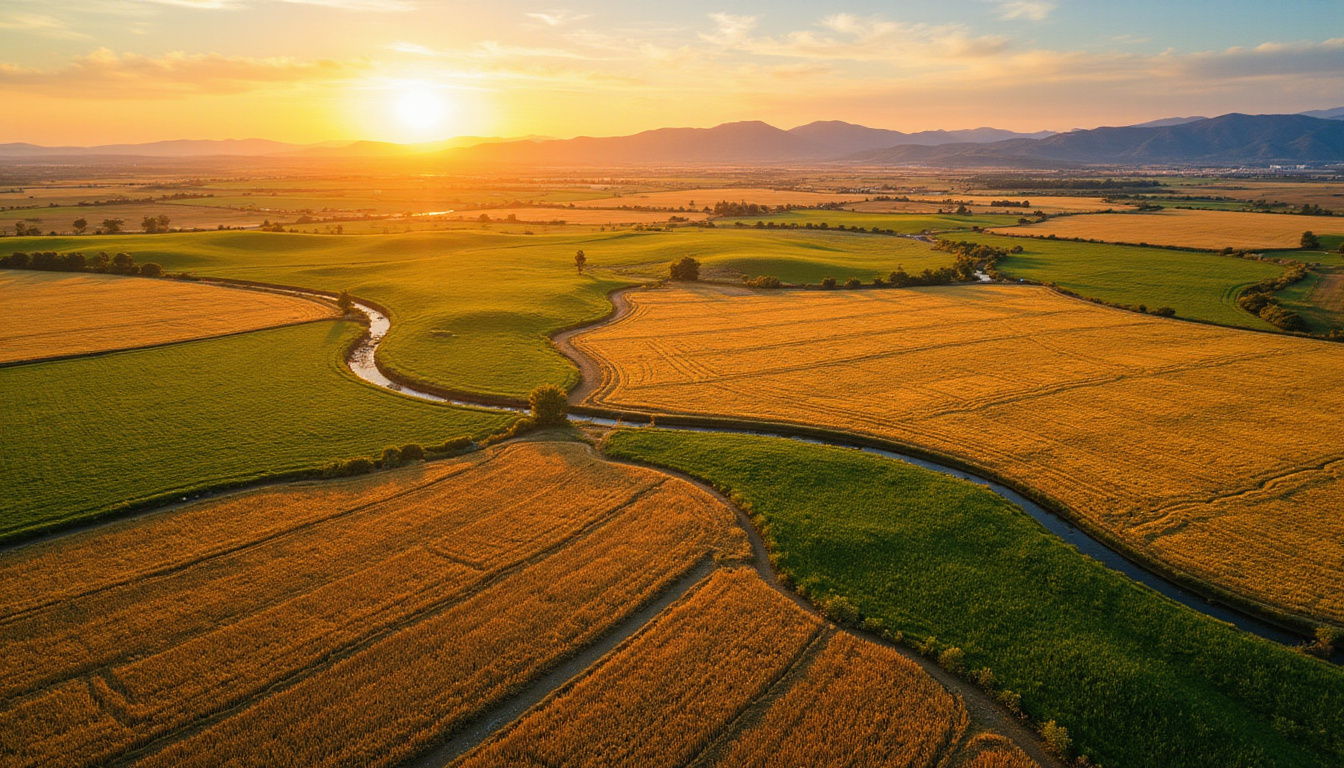
Investing in agricultural land has quietly become one of the most interesting ways to build long‑term, inflation‑resistant wealth—especially in markets like Egypt and other emerging economies. Whether you’re planning to farm yourself, lease to an operator, or simply hold for future appreciation, the right agricultural land can generate steady income and preserve capital across generations.
This guide breaks down the real investment secrets behind choosing profitable agricultural land, how to evaluate opportunities, and the step‑by‑step process to buy productive property with confidence.
Why Agricultural Land Is a Powerful Long‑Term Investment
Agricultural land sits at the intersection of three powerful trends: food demand, population growth, and land scarcity. Unlike many paper assets, farmland produces something real and essential—food and commodities.
Key advantages of agricultural land as an investment:
- Tangible, finite asset: You’re buying a real piece of earth. They’re not making more of it.
- Inflation hedge: As food prices rise, farm incomes and land values often follow.
- Multiple income streams: Rent to farmers, cultivate crops yourself, develop greenhouses, or even add agritourism.
- Low correlation with stocks: Farmland often behaves differently than equities, adding diversification to a portfolio.
According to global research, quality farmland has historically delivered competitive returns with relatively low volatility over long periods (source: Food and Agriculture Organization of the UN – FAO).
Step 1: Clarify Your Investment Strategy and Time Horizon
Before you start scanning listings for agricultural land, define what “success” looks like for you. The right property for a hands‑on farmer is very different from the right plot for a passive investor.
Ask yourself:
- Am I an active or passive investor?
- Active: You’ll manage crops, irrigation, or livestock yourself.
- Passive: You’ll lease to a farmer or operator for rental income.
- What is my time horizon?
- Short–medium term (5–10 years): Focus on areas with strong development prospects or infrastructure upgrades.
- Long term (10–30+ years): Prioritize soil quality, water security, and stability.
- What is my risk tolerance?
- Higher risk: Emerging regions, land development, reclamation projects.
- Lower risk: Established farming belts and irrigated, already-productive land.
- What is my capital and cash flow situation?
- Can you afford upfront land improvement (fencing, wells, soil amendments)?
- Do you need immediate rental income, or can you wait for appreciation?
Once your strategy is clear, you can narrow your search to the type of agricultural land that fits your goals.
Step 2: Location Secrets – Where Agricultural Land Gains Real Value
In agricultural land investing, location can be the difference between a cash‑flowing asset and a never‑ending project.
Key location factors to evaluate:
1. Proximity to Water and Irrigation
Water is the lifeblood of productive agricultural land. In Egypt, for example, access to Nile-fed irrigation canals or reliable wells dramatically increases viability.
Consider:
- Existing irrigation systems and their legal status
- Water rights or quotas in the area
- Groundwater depth and quality (if relying on wells)
- Local and national water management policies
2. Access to Markets and Infrastructure
Transport and logistics deeply affect the profitability of agricultural land:
- Distance to major roads and highways
- Proximity to local markets, packing facilities, and export hubs
- Availability of electricity (critical for pumps, cold storage, and processing)
- Phone and internet coverage, especially if you plan modern precision agriculture
3. Clusters and Agricultural Zones
Land in established agricultural clusters often has:
- Better infrastructure (canals, roads, distribution centers)
- Established service providers (mechanics, agronomists, seed and fertilizer suppliers)
- Active local labor markets with farming experience
In Egypt, for instance, large organized agricultural zones and reclamation projects can offer economies of scale and clearer regulatory frameworks.
Step 3: Soil, Climate, and Crop Suitability – The Productivity Core
True investment secrets are often buried in the soil. A beautiful piece of rural land can be nearly useless agriculturally if the soil and climate don’t match your intended crops.
Soil Analysis: Don’t Skip the Science
Before you buy agricultural land, commission a professional soil test. At minimum, you should know:
- Texture: Sandy, loamy, or clay – loam is often ideal for many crops.
- pH level: Influences nutrient availability; most crops prefer 6.0–7.5.
- Organic matter: Higher content improves productivity and water retention.
- Salinity: High salinity can severely limit what you can grow and increase costs.
- Nutrient profile: Nitrogen, phosphorus, potassium, and micronutrients.
A local agronomist or agricultural extension service can help you interpret the results and estimate how much investment is needed to reach target productivity.
Climate and Microclimate
Climate determines what your agricultural land wants to grow:
- Temperature ranges across seasons
- Frost risk and heat waves
- Humidity and wind patterns
- Historical rainfall (even if irrigated, rainfall matters for some crops)
For example, in Egypt and similar climates, some areas are better suited for vegetables and citrus, others for olives, dates, or field crops like wheat and maize. Choose land aligned with proven, profitable crops in that region.

Step 4: Legal Due Diligence – Protect Yourself Before You Pay
Legal clarity is non‑negotiable when buying agricultural land. Problems here can destroy even the best agronomic potential.
Check the following:
Clear Title and Ownership
- Verify the current registered owner and ensure there are no competing claims.
- Confirm there are no outstanding debts, liens, or mortgages on the land.
- Ensure the seller has the legal right to sell (especially in inheritance situations).
Land Use and Zoning
- Confirm that the land is officially classified as agricultural land.
- Understand any restrictions:
- Can you build structures (e.g., storage, housing, greenhouses)?
- Are there protected areas, easements, or right‑of‑way issues?
Foreign Ownership Rules (if applicable)
If you are a non‑citizen investing in a country like Egypt or elsewhere:
- Check national laws regarding foreign ownership of agricultural land.
- Investigate options such as:
- Long‑term leases
- Local company ownership structures
- Joint ventures with local partners
Always work with a local real estate/land lawyer who understands rural and agricultural transactions, not just urban property law.
Step 5: Financial Analysis – Turning Land into Returns
Treat your agricultural land purchase as a business decision. Beyond the purchase price, calculate what is needed to make the property productive.
Estimate Total Acquisition and Setup Costs
Include:
- Purchase price and all transaction fees/taxes
- Legal and notary fees
- Survey and soil testing costs
- Infrastructure: wells, pumps, irrigation network, fencing, access road improvements
- Buildings or storage if needed
Project Income Scenarios
Based on your chosen strategy:
Leasing to Farmers
- Typical annual rent per feddan/hectare/acre in the region
- Length and terms of lease contracts (who pays for inputs, maintenance?)
- Vacancy risk (difficulty finding reliable tenants)
Owner‑Operated Farming
- Expected yield per unit area for chosen crops
- Farm‑gate prices (minus transport and marketing)
- Input costs: seeds/seedlings, fertilizer, pesticides, labor, fuel
- Equipment purchase or rental
Run at least three scenarios:
- Conservative (low yields, average prices)
- Base case (standard yields, realistic prices)
- Optimistic (good weather, strong market)
The goal: ensure the agricultural land can generate sustainable net income or, at minimum, hold its value while you wait for appreciation.
Step 6: On‑the‑Ground Inspection – What to Look For
Never buy agricultural land based solely on photos or maps. Walk the property with experts if possible.
During inspection, check:
- Topography: Is the land flat or gently sloping? Steep slopes can cause erosion and limit mechanization.
- Existing infrastructure: Condition of pumps, canals, drip lines, storage sheds, and access road.
- Flood or waterlogging signs: Standing water, salt crust, or erosion gullies.
- Neighboring land use:
- Active farms suggest good conditions and shared knowledge.
- Polluting factories or residential encroachment may be red flags.
- Labor availability: Are there nearby villages or towns where you can hire workers?
Talking to neighboring farmers is often one of the most valuable “secrets” to understanding real productivity, water availability, and local challenges.
Step 7: Negotiating and Closing the Deal
Once you’ve identified suitable agricultural land, negotiate based on data, not emotion.
Points to Leverage in Negotiation
- Recent comparable sales in the area
- Any issues discovered:
- Poor infrastructure
- Required soil amendments
- Limited water access
- Payment structure:
- Possibility of paying in installments
- Seller financing options
Always:
- Use a written purchase agreement reviewed by your lawyer.
- Define what is included (water rights, equipment, buildings, existing crops/trees).
- Ensure the transfer is formally registered in the land registry system.
Hidden Upside: Value‑Add Strategies for Agricultural Land
Beyond simple buy‑and‑hold, there are ways to improve both the productivity and value of your agricultural land:
- Convert to higher‑value crops (e.g., from basic grains to fruits, vegetables, or herbs).
- Install modern irrigation (drip or pivot) to increase yields and reduce water use.
- Obtain certifications (organic, GlobalG.A.P., fair trade) to access premium markets.
- Add basic processing (sorting, packing, drying) to capture more of the value chain.
- Develop agritourism (farm stays, pick‑your‑own experiences) where location allows.
These improvements not only raise annual income but also make the land more attractive to future buyers.
Understanding Life Around Your Investment
If you’re considering managing or living near your agricultural land—especially in a new country—it helps to understand everyday realities such as cost of living, cultural norms, and lifestyle.
For a candid perspective on living in Egypt and budgeting around a property investment, you may find this video insightful:
The Real Cost of Living In Egypt 2025 –
Checklist: Key Steps Before You Buy Agricultural Land
Use this list as a quick reference while evaluating properties:
- Define your investment goals (active vs passive, time horizon, budget).
- Shortlist regions with good water access, infrastructure, and market proximity.
- Obtain soil tests and climate data for your target crops.
- Confirm land classification, title clarity, and legal restrictions.
- Estimate total setup costs and run income/return scenarios.
- Inspect the land in person and speak to neighbors/farmers.
- Negotiate based on objective data and necessary improvements.
- Use a qualified local lawyer to finalize and register the purchase.
FAQ About Investing in Agricultural Land
Q1: Is agricultural land a good investment for beginners?
Yes—if you approach it systematically. For beginners, it’s often best to start with leased agricultural land in an established farming area, where you receive rental income from experienced farmers rather than managing production yourself. This lowers operational risk while still exposing you to potential land appreciation.
Q2: How can I estimate the value of agricultural land in a rural area?
Value is driven by a combination of factors: soil and water quality, location and access to markets, existing infrastructure, and typical crop income per hectare or feddan in that region. Gathering recent comparable sales of nearby agricultural properties and analyzing potential net farm income are the two most common methods.
Q3: What risks should I consider before buying farm or agricultural property?
Main risks include water scarcity, climate variability, soil degradation, uncertain land titles, and market volatility for specific crops. Mitigate by choosing regions with secure irrigation, diversifying crops (or leasing to diversified farmers), and conducting very thorough legal and technical due diligence on the agricultural land before purchase.
Turn Agricultural Land into a Generational Asset
Productive agricultural land isn’t just another real estate purchase—it’s a living asset that can feed people, create jobs, and anchor your wealth for decades. When you combine the right location, strong water and soil fundamentals, clear legal status, and a realistic financial plan, you gain more than a plot of earth: you gain a resilient, sustainable investment.
If you’re serious about acquiring agricultural land—whether in Egypt or any other promising region—now is the time to move from research to action. Start by defining your investment goals, speaking with local experts, and shortlisting target areas. With disciplined due diligence and a long‑term mindset, your next land purchase can become one of the most stable and rewarding pillars of your portfolio.