
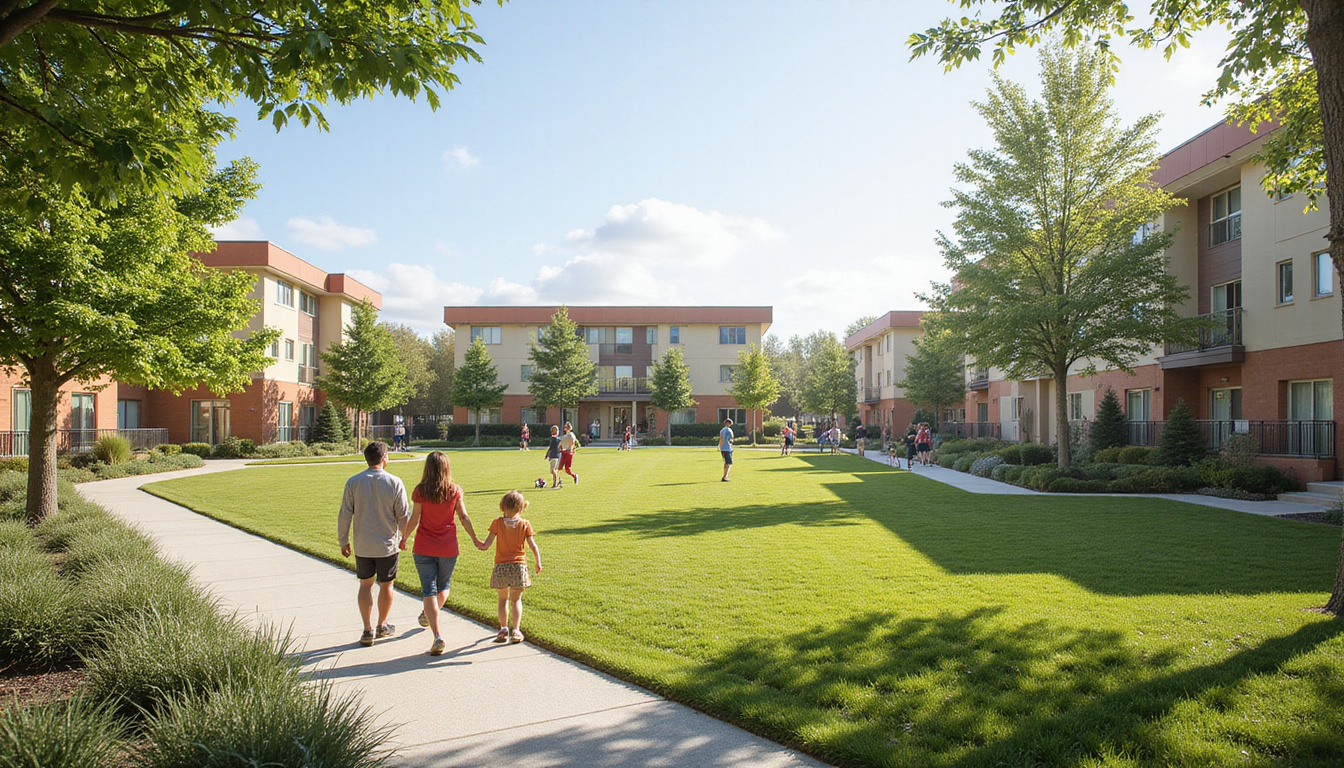
Choosing between different residential compounds can feel overwhelming—especially when you’re choosing not just a home, but a lifestyle for your family. In Egypt and across the region, compounds have become the go-to choice for buyers and renters looking for safety, green space, and a sense of community. But not all compounds are created equal, and the “perfect” one depends heavily on your family’s needs, routine, and long-term plans.
This guide walks you through exactly how to evaluate residential compounds so you can make a confident, well-informed decision.
What Are Residential Compounds—and Why Are They So Popular?
Residential compounds are master-planned, gated communities that typically include:
- 24/7 security and controlled access
- Residential buildings or villas (or a mix)
- Shared facilities such as pools, gyms, and clubhouses
- Green spaces and pedestrian-friendly paths
- On-site services like supermarkets, clinics, and nurseries
In Egypt, residential compounds have exploded in areas like New Cairo, 6th of October, Sheikh Zayed, and the New Administrative Capital. Families are drawn to them for three main reasons:
- Security – controlled entry points, security cameras, and patrols.
- Lifestyle – cleaner air, organized streets, and recreational facilities.
- Community – neighbors with similar priorities and family structures.
If you’re planning a move, it also helps to understand the broader lifestyle and cost-of-living implications. This video gives a useful overview of practical life considerations in Egypt’s cities:
Step 1: Define Your Family’s Priorities Before Touring Any Compound
Before you visit any residential compounds or talk to agents, get clear on what matters most for your household. This avoids falling in love with a compound that doesn’t actually suit your daily reality.
Ask yourself:
- What’s our main driver? Safety, children’s schooling, quiet environment, investment potential, or commute?
- How old are the kids? Toddlers need safe playgrounds and nurseries; teenagers need sports facilities, social spaces, and privacy.
- Do we rely on a car? If not, proximity to public transportation and on-site services becomes critical.
- What’s our realistic budget? Include down payment, monthly installments, maintenance fees, and utility costs.
- Are we buying to live or buying to invest? Some compounds are better for capital appreciation; others are better for long-term living comfort.
Write these priorities down and rank them. When you start comparing compounds, refer back to this list to stay grounded.
Step 2: Location and Accessibility – The Hidden Cost of Distance
Location is still the single biggest factor affecting your quality of life in any of the residential compounds you consider.
Key Location Questions to Ask
Commute to work or business
- How long will the commute really be at peak times?
- Is there more than one route in and out, or will you rely on a single congested road?
Access to schools and universities
- How far are reputable schools? 10–20 minutes is ideal for younger children.
- Can older kids commute safely on their own?
Healthcare and emergencies
- Distance to major hospitals and specialized clinics.
- Availability of nearby pharmacies (24/7 is a major plus).
Daily convenience
- Is there a commercial area within or near the compound (supermarkets, cafes, essential shops)?
- Will family and friends find it easy to visit?
While newer residential compounds are often further from city centers, some compensate with integrated services and good road connections. Still, consider the “time cost” of every drive; what looks good on a map can feel very different in rush hour.
Step 3: Safety, Security, and Privacy
Families usually choose residential compounds for peace of mind. But security levels can vary significantly.
What to Check About Security
- Gate control – Are entries properly monitored? Are visitors documented?
- Surveillance – Are there CCTV cameras covering main roads, entrances, and common areas?
- On-ground presence – Are there enough security personnel, and are they well-trained?
- Perimeter – Is the compound fully fenced or walled? Are there “soft spots” along the boundary?
Privacy Considerations
- The distance between buildings or villas: can neighbors see straight into your living room or garden?
- Sound insulation: are walls thick enough, especially in apartments?
- Separation between public zones (clubhouse, commercial area) and strictly residential zones.
A safe, well-designed compound should let children move relatively freely—walking to a neighbor’s house or cycling without you worrying about cars or trespassers.
Step 4: Family-Oriented Amenities and Green Space
The soul of truly family-friendly residential compounds is their shared spaces. You’re not just buying square meters inside your home; you’re buying all the outdoor and indoor areas you’ll use.
Must-Have Family Amenities
Look for:
- Playgrounds – age-appropriate, shaded, with safe flooring and clean equipment.
- Sports areas – football courts, basketball, tennis, swimming pools; bonus points for kids’ pools and swimming classes.
- Pedestrian and cycling paths – long walkways free from speeding cars encourage kids and parents to spend time outdoors.
- Green areas – real lawns, trees, and garden spaces—not just decorative shrubs.
Some higher-end residential compounds also offer:
- Clubhouses with kids’ rooms and activity programs
- On-site nurseries or daycare
- Community events, bazaars, or festivals that foster social bonds between neighbors
Walk around at different times of day. Are people actually using the common areas? Do children look comfortable and engaged? A family-friendly space should feel alive but not chaotic.

Step 5: Educational and Childcare Options
For families, education is often the deciding factor among residential compounds.
Points to Evaluate
School proximity and quality
- Are there reputable schools within a 5–20 minute drive?
- What curricula are available—national, American, British, IB, or others?
- Are there school buses allowed into the compound or waiting areas at the gates?
On-site or nearby nurseries
- Convenient for working parents who need drop-off and pick-up without long detours.
- Check opening hours, security measures, and staff qualifications.
Extracurricular activities on-site
- Music, languages, sports academies, or arts programs running within the compound or its clubhouse save you time and commuting costs.
For many families, paying a bit more in installments is acceptable if it means better schools and less daily stress.
Step 6: Layout, Unit Types, and Future Flexibility
Inside residential compounds, layouts and unit types can differ dramatically—even within the same price range.
Evaluate the Compound Master Plan
- Density – How many units are there compared to the total land area? Too dense means noise, crowding, and pressure on facilities.
- Circulation – Are roads wide enough? Are there safe crossing points for children?
- Zoning – Are commercial areas kept separate from quiet residential streets?
Choosing the Right Unit for a Growing Family
Consider:
- Number of bedrooms and bathrooms
- Storage space (often overlooked)
- Balcony or garden area
- Natural light and ventilation
- Possibility of future expansion (e.g., converting a living space, adding a room, or moving to a larger unit within the same compound)
Ask about soundproofing, elevator quality (for apartments), and parking allocation. You want daily life to feel comfortable, not cramped or frustrating.
Step 7: Services, Maintenance, and Long-Term Management
A crucial—but often underestimated—aspect of residential compounds is how they are managed after handover.
Key Service and Management Questions
Who manages the compound?
- A reputable property management company or the developer’s in-house team?
Maintenance fees
- How much are they? What exactly do they cover (landscaping, security, cleaning, facility upkeep)?
- How often are they revised?
Service quality
- Are common areas clean? Are elevators working? Are facilities well maintained?
- Is there a responsive maintenance team for repairs inside your unit (if included)?
Utilities and infrastructure
- Stable electricity and water supply, backup generators, water treatment, waste collection.
- Internet and mobile coverage—vital for remote work and online schooling.
To get a realistic picture, speak to current residents if possible, not just sales staff. Residents will tell you the truth about noise, service delays, and hidden fees.
Step 8: Affordability, Financing, and Investment Potential
Residential compounds often come with flexible payment plans, but you still need to be precise about your financial capacity.
Build a Full Cost Picture
Include:
- Down payment and installments
- Interest or financing charges (if using bank financing or developer plans)
- Registration and legal fees
- Monthly or quarterly maintenance fees
- Furnishing and appliance costs
Don’t stretch so far that you become “house poor”—owning in one of the residential compounds should raise your quality of life, not trap you financially.
Think About Resale and Rental Demand
For long-term security, check:
- Reputation of the developer and their track record of delivery
- Transaction volumes and price trends in similar compounds and neighborhoods
- Proximity to employment centers, universities, and commercial hubs (good for rental demand)
For market context and real estate data in Egypt, you can sometimes find useful overviews through regional property reports and official statistics (for example, via the Central Agency for Public Mobilization and Statistics, CAPMAS – source).
Step 9: Community Culture and Lifestyle Fit
Not all residential compounds feel the same. Beyond facilities, each one has its own “personality.”
How to Sense Community Fit
- Visit during weekdays and weekends, daytime and evening.
- Notice noise levels, crowd behavior, and how residents interact.
- Check social media groups or resident forums (if accessible) to see recurring issues or positive feedback.
- Ask about rules: pets, home businesses, renovations, and noise restrictions.
Some compounds are very quiet and conservative; others are lively, social, and event-heavy. Choose the atmosphere that aligns with your family’s values and preferred lifestyle.
Quick Checklist for Comparing Residential Compounds
Use this simple list when touring and shortlisting:
- Location and commute time
- Nearby schools, nurseries, and healthcare
- Security systems and privacy
- Green spaces, playgrounds, and sports facilities
- Quality and density of buildings
- Unit design, flexibility, and storage
- Maintenance quality and management reputation
- Real monthly and annual costs
- Community culture and noise levels
- Potential for resale or rental if your plans change
Tick these items off for each compound to keep your comparison objective.
FAQs About Residential Compounds and Family Living
Q1: Are residential compounds better for families than standalone apartments in the city?
Residential compounds generally offer stronger security, more green space, and child-friendly amenities than typical standalone apartments. For families, this often means a safer environment, more outdoor time for kids, and a built-in community. However, inner-city apartments might offer shorter commutes and lower overall costs, so the “better” choice depends on your daily routine and budget.
Q2: What should I prioritize when choosing between different residential compounds?
Prioritize safety, location relative to your work and children’s schools, and the quality of facilities you’ll actually use (playgrounds, sports areas, clinics, supermarkets). Look beyond marketing brochures and evaluate overall management quality, maintenance fees, and the real community culture on the ground.
Q3: Are residential compounds in new areas a good long-term investment?
Many residential compounds in emerging areas can offer solid long-term appreciation if they’re supported by infrastructure, commercial development, and reputable schools. Focus on developers with a strong delivery record, planned public transport links, and clear signs of growing population and services in the surrounding district.
Ready to Choose the Right Compound for Your Family?
Your choice among the many residential compounds on the market will shape your family’s everyday life—how your children play, how long you commute, how safe and relaxed you feel at home. Take the time to visit, compare, ask residents, and run the numbers carefully.
If you’re exploring compounds in Egypt and want help shortlisting communities that truly match your budget, school preferences, and lifestyle, reach out to a trusted local property advisor or consultancy. Ask for tailored recommendations, recent transaction data, and on-the-ground insights—not just sales pitches.
Start with a clear list of must-haves, tour at least three different residential compounds, and don’t commit until you’ve compared location, services, and real long-term costs side by side. The right choice will give your family not just a property, but a community to grow in for years to come.