
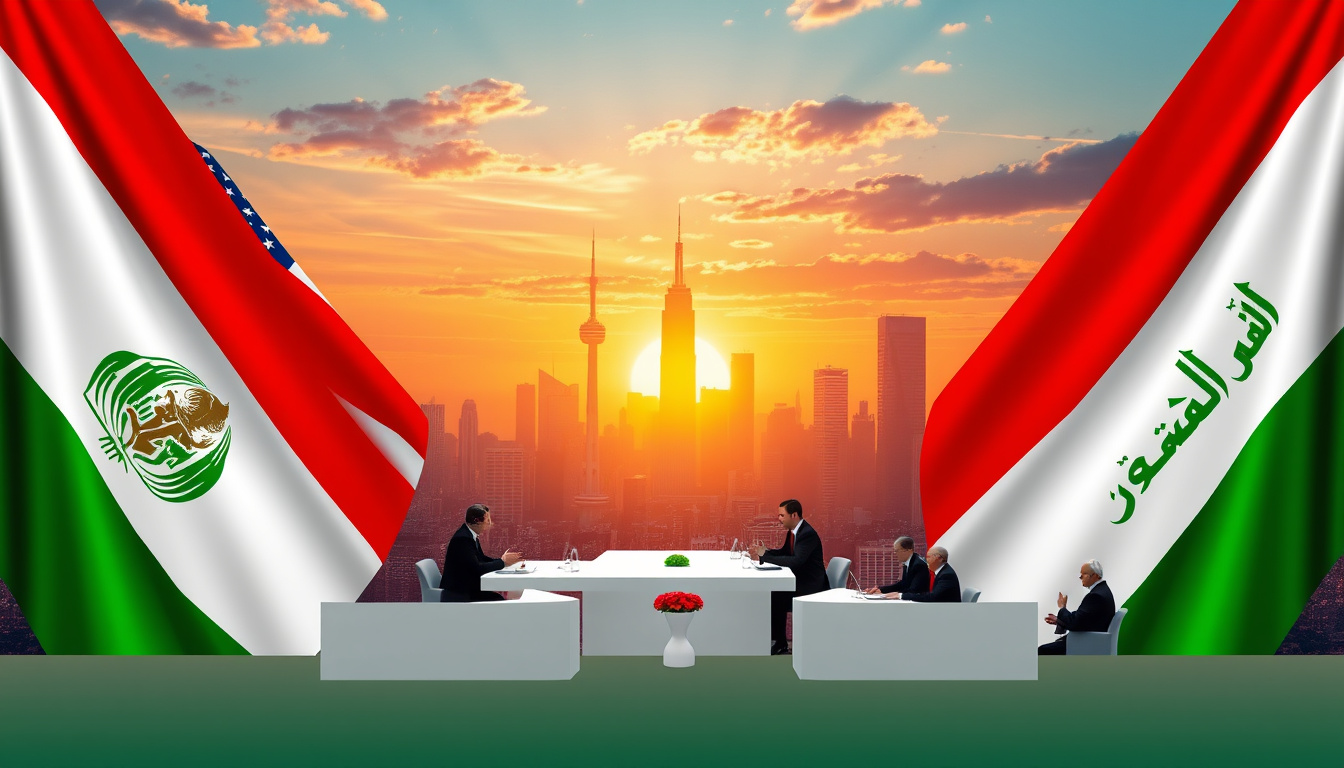
In the complex landscape of Middle Eastern geopolitics, Egypt has once again positioned itself as a pivotal player in the pursuit of peace and stability in the region.
On March 23, the Egyptian Ministry of Foreign Affairs publicly endorsed the remarks made by U.S.
President Donald Trump regarding efforts to de-escalate tensions that have been intensifying due to recent military clashes involving Iran, Israel, and the United States.
This endorsement underscores the importance Egypt places on renewing dialogue and implementing diplomatic solutions to ongoing conflicts that threaten both regional security and the global economic landscape.
In this article, we will explore Egypt’s critical role in promoting peace, the challenges it faces, and the emerging opportunities for regional diplomacy.
Key Takeaways
- Egypt supports Trump’s diplomatic efforts to ease Middle East tensions.
- The country remains committed to engaging with regional partners to foster dialogue and maintain security.
- Continued escalation in the region could have dire consequences for stability and global economics.
Egypt’s Role in Promoting Middle East Peace
In recent developments, Egypt has taken a proactive stance in promoting peace within the Middle East, notably expressing approval of U.S.
President Donald Trump’s remarks aimed at de-escalating regional tensions.
On March 23, the Egyptian Ministry of Foreign Affairs issued a statement highlighting its commitment to diplomatic solutions and ongoing coordination with both regional partners and the international community.
The Egyptian government condemned the recent attacks targeting Gulf states and Jordan, emphasizing the critical nature of maintaining their security and sovereignty.
Furthermore, with rising concerns over the potential consequences of ongoing military conflicts—both for regional stability and the global economy—Egypt has ramped up its diplomatic efforts, urging a commitment to ceasefire initiatives and dialogue.
The ministry recognized Trump’s calls for engagement with Iran, viewing them as vital opportunities to potentially ease hostilities.
President Abdel Fattah Al-Sisi’s recent interactions with leaders from the Gulf States also underscore Egypt’s advocacy for Gulf security and stability, particularly amid escalating tensions involving the U.S., Israel, and Iran.
As these geopolitical dynamics evolve, Egypt’s strategic role becomes increasingly significant in fostering a more stable and peaceful Middle East.
Challenges and Opportunities in Regional Diplomacy
The landscape of regional diplomacy in the Middle East is fraught with both challenges and opportunities, especially in light of recent geopolitical events.
Key among these is the commitment demonstrated by Egypt to serve as a stabilizing force amid rising tensions.
As noted in the March 23 statements from Egypt’s Ministry of Foreign Affairs, the nation is coordinating closely with regional and global partners to advocate for dialogue and de-escalation.
The Egyptian government is acutely aware of the potential volatility that continued hostilities—particularly involving major powers—could introduce to both regional security and the global economic arena.
This recognition has spurred Egypt to enhance its diplomatic activities, focusing on open communication and fostering ceasefire initiatives.
By also engaging with leaders across the Gulf region, Egypt is positioning itself as a pivotal player in promoting collective security and mutual cooperation, which are essential for achieving long-term peace in the Middle East.