

Overwater bungalows spark a dream trip. The water meets your door. A ladder reaches the sea. Your private deck shows endless blue. Not all stays feel the same. Picking a good island resort can make your trip a joy or a pain.
This guide breaks down what to check. Look at the destination, cost, reef, and privacy. Make your choice with care for your style and needs.
1. Start With the Right Destination
First, set your sights on a place. The place will shape your cost, flight time, fun, and feel.
The classic hotspots
Maldives
- Good for: Honeymoon trips, high luxury, quiet time
- Perks: Many islands, top service, fine reefs
- Note: High cost and long flights from Europe/US
French Polynesia (Bora Bora, Moorea, Tahiti)
- Good for: Iconic views, honeymoons
- Perks: Lagoon views, volcanic peaks, strong resort names
- Note: Fewer resorts than in the Maldives; flights cost more
More accessible or budget-friendly options
Caribbean (Jamaica, St. Lucia, Belize)
- Good for: Short trips from the Americas
- Perks: Warm culture, short flights, some high-class bungalows
- Note: Less true private islands; some stay on shared islands
Southeast Asia (Malaysia, Thailand, Cambodia)
- Good for: Countries that mix water bungalows with culture
- Perks: Good price, rich local life, tasty food
- Note: Some bungalows hover above mangroves or marinas
When you choose a place, check:
• Weather patterns (rainy times, storms)
• Flight length and transfers
• Visa laws and entry steps (visit the U.S. State Department website)
2. Define Your Budget Realistically
Overwater stays come at a high price. Set your cost range early to rule out surprises.
What affects the nightly rate?
• Destination and brand – Resorts in the Maldives and Bora Bora with big names tend to cost more.
• Room size – Basic bungalows are less expensive than big villas with pools or beach views.
• Meal plan – All meals or only some affect your final price.
• Season – High season can hike the cost by 30–60% compared to low season.
Watch for extra costs
Plan for:
• Seaplane or boat transfers
• Resort fees and taxes
• Special fees during busy holidays
• Trips like snorkeling, diving, or sunset rides
• Spa visits and fine dining
A rough guide:
• Entry luxury: $500–$900 per night on off-peak days
• Classic honeymoon range: $900–$1,800 per night
• Ultra-luxury: $2,000+ per night
3. Decide How Private You Want Your Island
"Private island resort" can mean different things. Check how much isolation and space you get.
Types of islands and layouts
True private island, one resort
- One company runs the whole island
- No public beaches or outside visitors
- Best for a quiet, secure stay
Shared island with several resorts or towns
- The resort occupies one part of the island
- You may see locals or other hotels
- Best if you want a mix of quiet and local life
Private peninsula or lagoon setting
- Bungalows sit on a safe lagoon or bay
- Often easier to reach and cheaper
- Best if budget and ease matter more than full isolation
Check the privacy details
Look for:
• How close the bungalows lie
• How decks face each other or open paths
• Which deck gives the best view (sunset or sunrise)
• Rules on children or adults only
Use maps or satellite views to see how grouped the bungalows are.
4. Evaluate the Overwater Bungalows Themselves
The bungalow is your home on the trip. Its design and features make a big difference.
Key features to compare
• Size and layout
- Floor space provided
- One room or a separate area for living
- A desk or work area, if needed
• Deck design
- How big is the deck?
- Options like sun loungers, daybeds, or hammocks
- Areas with shade during the day
• Direct water access
- A safe ladder to the water
- Water depth at low tide
- Sand or coral floor (coral can need reef shoes)
• Glass floors or panels
- Fun for watching fish, especially at night
- A nice extra if you are new to overwater stays
• A private pool
- Small plunge pools add charm
- They also raise the price, often by $150–$400 extra per night
Practical comfort
Also see if you get:
• Strong air conditioning or good fans
• Blackout curtains for deep sleep
• Room dining choices
• Strong Wi‑Fi if you work remotely
• Enough storage space
Recent guest reviews can help you know if the space feels new.
5. Understand House Reef and Water Quality
Many travelers pick overwater stays for their close blue water.
House reef quality
A bright reef can turn your visit into a fun snorkeling break.
Check for resorts that:
• Give direct reef access
• Allow snorkeling from the bungalow or jetty
• Show guest photos of fish, rays, or coral
Watch for:
• Healthy coral – Look for current guest thoughts
• Water currents – Ensure the water stays safe
• Tides – Shallow water at low tide may stop swimming
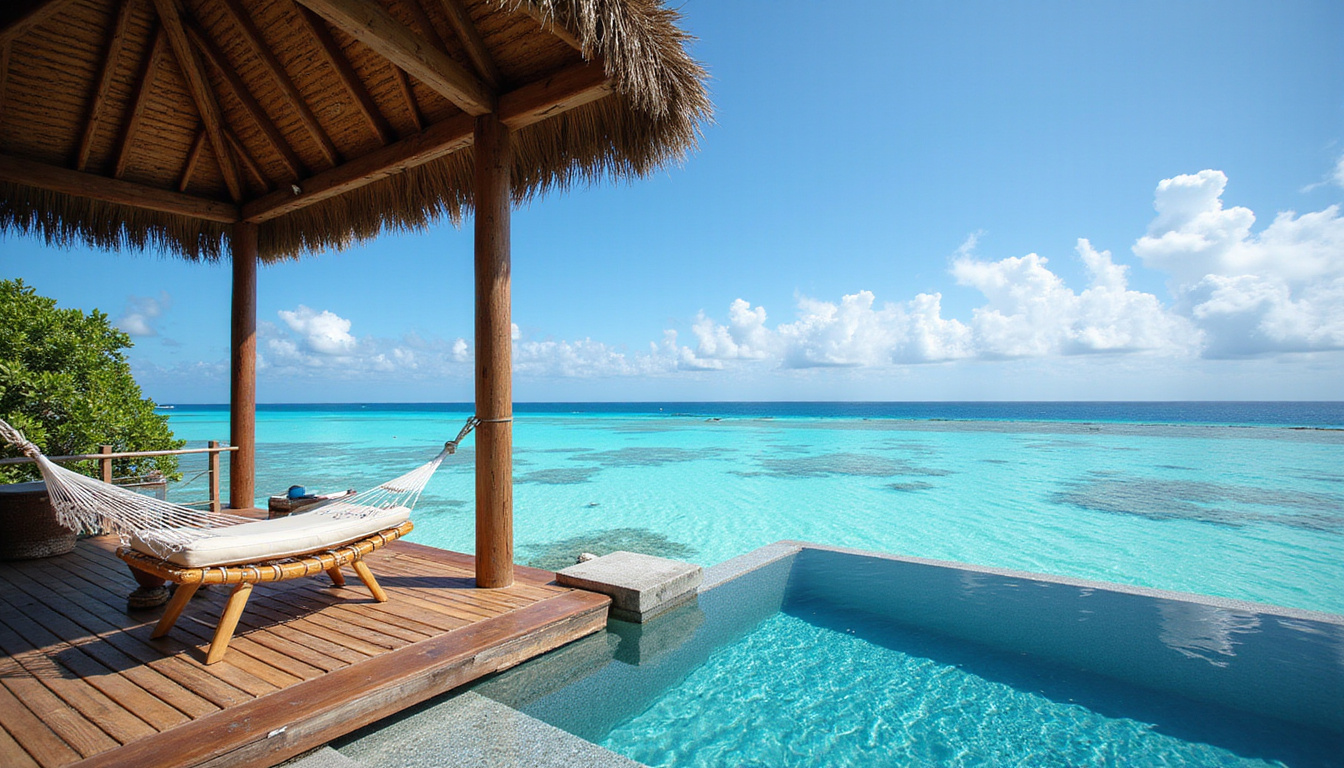
For a true blue view, look at bungalows on the lagoon side.
6. Compare Meal Plans and Dining Options
On a private island, you may eat all your meals on site. Food quality and price matter a lot.
Typical meal plan options
• Room-only – Pay for every meal by the menu; this may be a risk on an island.
• Breakfast only (B&B) – Good if you skip lunch or eat lightly during the day.
• Half-board – Breakfast and dinner come with the stay; pay for lunch and drinks.
• Full-board – All meals come with the stay; drinks are extra.
• All‑inclusive – Most food, drinks, and some trips come in one price.
Ask:
• Which meals are in your plan?
• Are high-end foods like steak or lobster part of the deal?
• Does the plan include room service?
• Are there nights with extra charges?
For long stays, several dining options help keep meals fun.
7. Choose Your Atmosphere: Honeymoon, Wellness, or Adventure?
Your choice depends on the kind of time you seek.
For romance and honeymoons
Pick resorts that:
• Welcome adults or couples only
• Provide private dining like island beach meals or breakfast on your deck
• Add touches like outdoor tubs and paired sinks
• Bring spa treatments right in the villa
For calm and wellness
Find resorts with:
• Spa and wellness talks
• Yoga or meditation sessions
• Healthy food choices and detox plans
• Peaceful lounges
For action and adventure
Check for:
• In‑house dive schools with proper tags
• Daily trips for snorkeling, island stops, or fishing
• Watersports such as kayaks or paddleboards
• Local trips to nearby islands or villages
Think of how much time you wish to relax versus be active. Pick the resort that fits your mix.
8. Logistics: Transfers, Time, and Travel Fatigue
Reaching your bungalow may need a transfer after your main flight.
Types of transfers
• Speedboat – Runs from close airports; fast and often cheaper.
• Seaplane – Offers great views but may depend on weather and cost more.
• Domestic flight + boat – Common in large island groups and can be tiring.
Ask:
• How often do transfers run?
• What if your flight is late?
• Do you pay for transfers with your stay or extra?
Simple transfers add ease to the trip and keep travel stress low.
9. Sustainability and Local Impact
Overwater bungalows sit on delicate seas. If care matters, learn how the resort runs its work.
Look for:
• Programs to help coral grow and track reef health
• Good waste and water care methods
• Steps to cut plastic use, like glass bottles and refillable items
• Local job creation and community ties
• Recognized eco-certificates
Resorts that care share their work on their sites and in guest guides. This care helps keep these spots bright for those who visit later.
10. How to Shortlist and Decide
There are many resorts and bungalows. A clear list makes picking easier.
Simple 7-point checklist
Rate each resort on a scale from 1 (little) to 5 (a lot) in these areas:
- How easy it is to get there (flights and transfer)
- Privacy and island feel
- Design and features of the bungalow
- Reef and water state
- Dining and meal plan choices
- The overall vibe (romance, calm, action)
- The true cost of your trip
Next, cut out options that score low on your top points. Read reviews from the past year to see real guest views. If two resorts seem alike, send both the same short list of questions. Their quick, clear replies will help you know which one is best.
FAQ About Overwater Bungalows and Private Island Resorts
Q1: Are overwater bungalows safe in storms?
Most bungalows on good islands are built strong for storms. Still, decks may get wet and slippery. Check with the resort and skip peak storm months if you worry.
Q2: Can families stay in overwater bungalows?
Some resorts welcome children while others keep bungalows for adults only. Check age rules, safety railings, and bed types. Some may suggest a beach villa if you travel with kids.
Q3: What is the difference between beach villas and overwater bungalows?
Beach villas sit on the shore. They come with sand and gardens, which suit families or walkers. Overwater bungalows hover above the water. They give full sea views and direct access. Some guests choose both for variety.
Pick the overwater bungalow that fits your dream time. Think of the seclusion, the reef, the fine food, or the active days you seek.
List your top three must-haves. Set your cost early. Choose a place that fits your wish. Then check the island space, bungalow design, reef, and food. With clear steps now, your overwater trip can be a memory that lasts long. Take the next step and start your shortlist of island resorts today.