
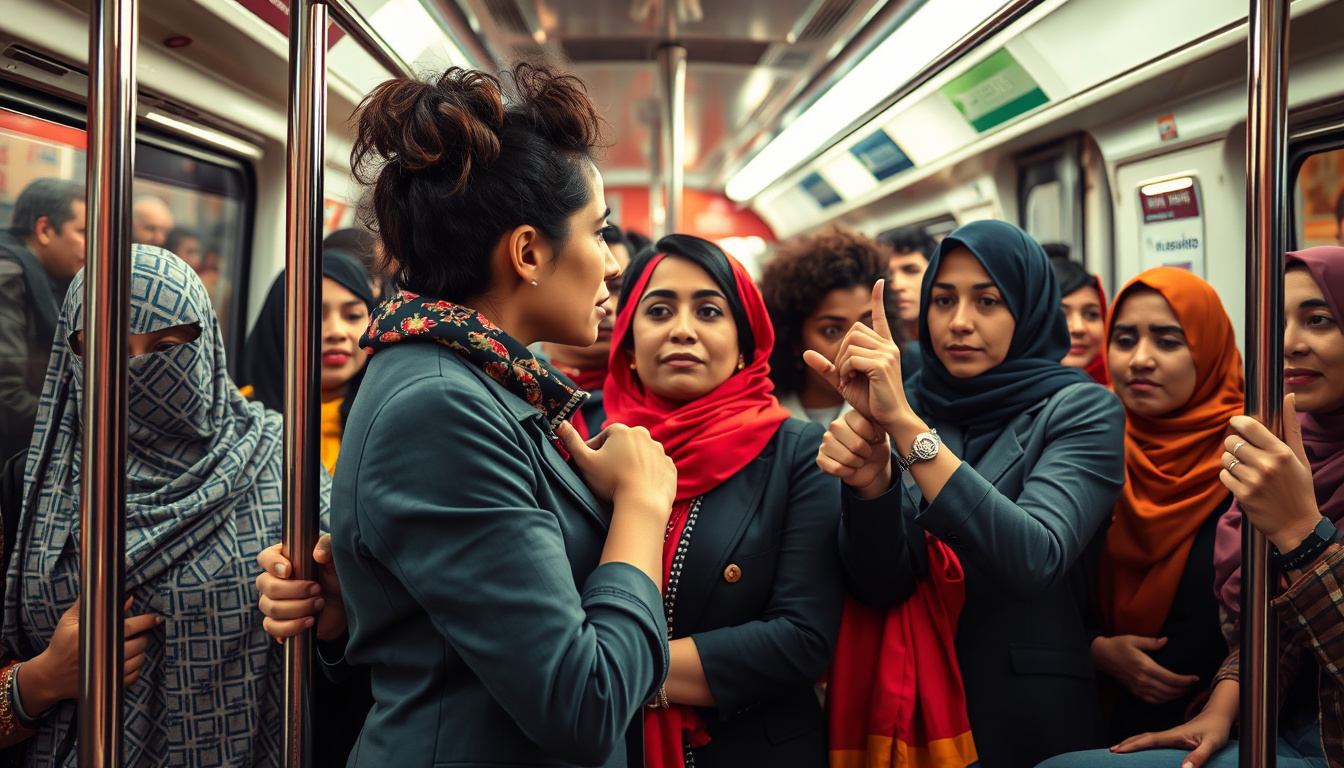
In the bustling heart of Cairo, the metro system serves not just as a means of transportation, but also as a stage highlighting the complex interplay of gender dynamics within Egyptian society.
A recent incident involving an elderly man and a young woman has sparked a heated debate online about societal expectations, personal behavior, and women’s rights in public spaces.
As the man chastised the woman for crossing her legs, claiming it was disrespectful in front of male passengers, the exchange turned into a microcosm of the broader struggles women face in Egypt.
This confrontation has raised important questions about how deeply embedded cultural norms can perpetuate inequality, even in the face of established legal protections against harassment.
On one hand, the law criminalizes harassment, aiming to safeguard women’s rights; on the other, societal behaviors and customs create an environment where women are constantly navigating the risks of public spaces.
This article delves into the implications of such incidents, examining the intersection of personal freedoms, social expectations, and the ongoing fight for gender equality in Egypt’s public life.

Key Takeaways
- The Cairo metro incident highlights the ongoing struggle between societal norms and women’s legal rights in Egypt.
- Women face significant challenges in public spaces, as their actions are often scrutinized based on outdated gender expectations.
- Viral incidents of harassment reveal the gap between formal protections for women and the realities of their treatment in society.
The Dynamics of Gender Interaction on Cairo Metro
The recent incident on the Cairo metro, where an elderly man confronted a young woman over her posture, starkly illustrates the complexities of gender interaction in Egypt.
As he raised his voice, admonishing her for crossing her legs in front of male passengers—a gesture deemed inappropriate by him—online reactions varied widely.
Some viewed the man’s actions as harassment rooted in an oppressive culture, while others defended his perspective, arguing that the woman’s posture was disrespectful in traditional contexts.
This confrontation brings to the forefront the conflicting dynamics of social expectations versus legal rights in public spaces, particularly regarding gender behavior.
While Egyptian law makes harassment illegal, it regrettably lacks clear regulations addressing personal behaviors such as posture or attire on public transport, creating a profound gap where societal customs often govern men’s perceptions of women’s conduct without needing legal backing.
This misalignment places women in a precarious position in public spheres, where adhering to rigid social conventions becomes a necessity to ward off potential harassment or violence.
Unfortunately, such conditions can severely limit women’s freedom of movement, educational endeavors, and career opportunities.
A study from 2025 revealed that the pervasive fear of harassment significantly influences how women navigate their daily lives, often restricting their ability to access public spaces comfortably.
The advent of technology, especially smartphones, has played a crucial role in bringing these issues into the public eye, allowing individual occurrences of harassment to spark widespread discussions on women’s rights and social justice across various platforms.
As these stories garner attention, they highlight the glaring discrepancy between women’s legal entitlements and their actual treatment in society.
The persistence of such incidents not only emphasizes the need for systemic change but provokes essential questions regarding the status of women’s rights within public life.
Unless these societal and legal disparities are adequately addressed, the cycle of inequity will likely endure, continuing to impact women’s experiences in Egypt and beyond.
Legal Protections vs. Societal Norms: A Clash in Public Spaces
In light of these complexities, it becomes imperative to foster a dialogue that acknowledges the cultural backgrounds while advocating for women’s rights.
Educational initiatives targeting both genders can play a pivotal role in redefining public behavior expectations.
By promoting awareness around the concept of consent and respect in public interactions, societal norms can begin to shift, creating an environment where women’s rights are upheld alongside their legal protections.
Furthermore, the involvement of community leaders and policymakers is crucial in bridging the gap between legal frameworks and social practices.
This collaborative approach can challenge stereotypical notions and encourage a more equitable public domain where women feel safe and respected, ultimately paving the way for a more inclusive society.