
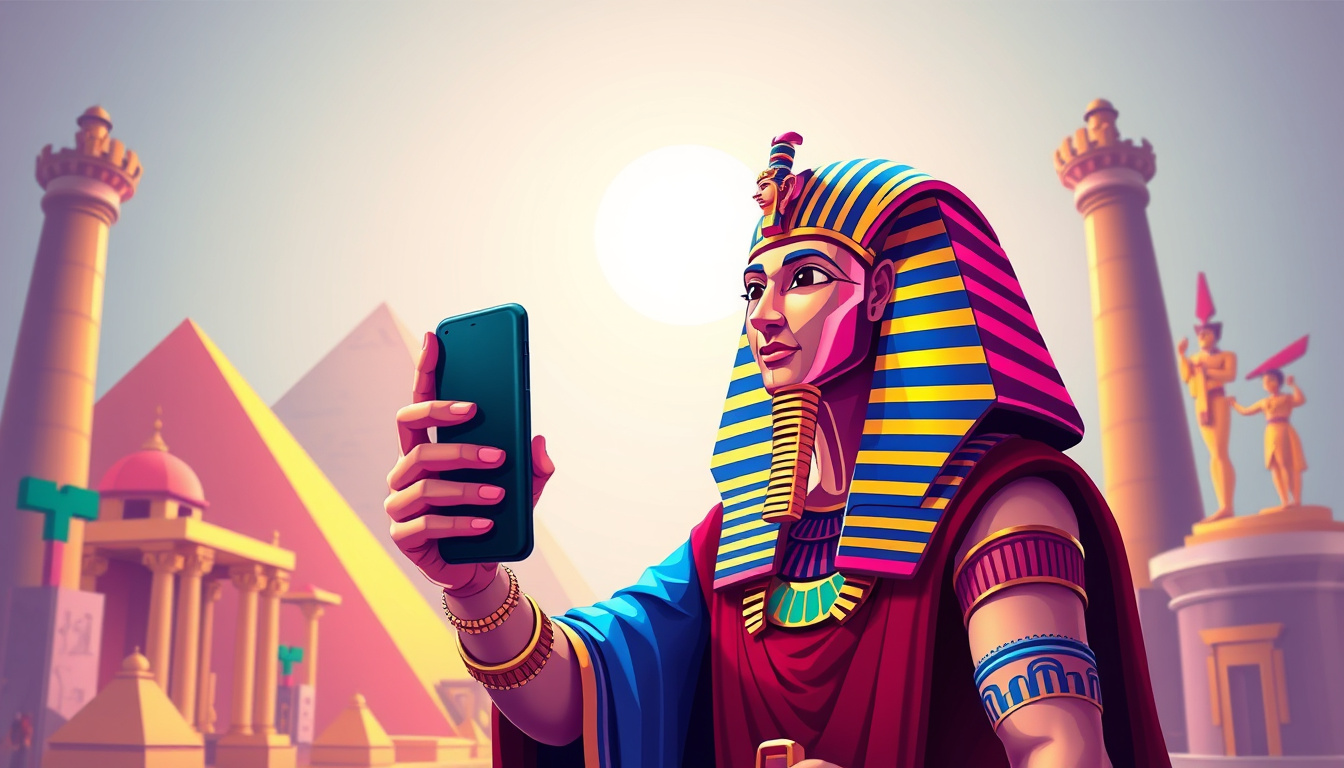
In an era brimming with selfies and curated feeds, it’s fascinating to envision historical figures navigating the landscape of modern social media.
Imagine if King Tutankhamun, the renowned boy king of ancient Egypt, had an Instagram account.
What stories would he share?
How would his enigmatic persona translate to digital platforms dominated by influencers and fleeting trends?
This article delves into the hypothetical scenario of King Tut employing Instagram, drawing parallels between his lasting historical significance and the often superficial nature of social media today.
Through this exploration, we reflect on the changing dynamics of how we seek meaning and connection in a digital world saturated with image-driven content.

Key Takeaways
- Imagining King Tut on Instagram highlights the contrast between enduring legacies and the superficiality of modern social media.
- The trend towards following historical figures over contemporary celebrities reflects a desire for depth and authenticity in online connections.
- Mindful engagement on social media can reshape our perceptions of history and identity, urging us to value meaningful legacies over mere attention.
King Tut in the Age of Social Media: A Hypothetical Account
In a world where social media prominently shapes our perceptions and interactions, imagining King Tutankhamun, the ancient Egyptian pharaoh, navigating this digital landscape offers a fascinating exploration of legacy and engagement.
If King Tut were to have an Instagram account, his golden mask—a symbol of both splendor and eternal youth—would serve as an eye-catching avatar, silently engaging millions while emanating an aura of mystery.
This juxtaposition reflects how we view historical figures: they are revered and followed for their grandeur, yet disconnected from the everyday conversations that populate our feeds.
Unlike today’s influencers, who often curate content that values superficial engagement over substance, figures like King Tut continue to resonate, reminding us of their profound historical and cultural significance.
Our motivations for following on social media often reveal a desire for meaningful connections rather than transient fame; the attention we afford to accounts embodies an invitation into curated lives, shaping our understanding of identity and legacy.
In a notable shift, younger generations gravitate towards historical figures and thinkers for authentic wisdom, arguably seeking depth in an increasingly superficial digital world.
Could King Tut’s posts consist of reflections on leadership, ancient wisdom, or cultural pride that awaken broader dialogues?
A hypothetical account might not just share images of ornate artifacts but also stories interlaced with human experience and insights on societal values.
This vision emphasizes the need for mindful digital engagement, prompting us to ask: what legacies are we choosing to follow, and how does this impact our historical consciousness?
As we scroll through feeds, let us consider not just what catches our eye but also the richness of narratives that shape our understanding of who we are today.
The Value of Legacy in a Superficial World
In this context, the allure of King Tutankhamun lies not merely in his opulent tomb or gold artifacts but in the narratives that surround his existence.
The historical context of his reign during a transformative period in Egyptian history serves as a backdrop for understanding how legacy functions in contemporary society.
Social media platforms, while driven by visual appeal, often dilute meaningful connections into fleeting moments of engagement.
Just as King Tut’s artifacts tell a story of a lavish yet short-lived dynasty, our social media interactions reveal the complexities of modern life.
Followers may appreciate the superficial aesthetics of a post, but they often yearn for deeper connections that resonate on a more personal or intellectual level.
This contrast opens a dialogue about cultural heritage versus transient fame, compelling us to reflect on whom we choose to honor in our digital interactions.
With this understanding, we can navigate social media with intention, emphasizing authentic legacies that enrich our lives rather than simply following the latest trends.