
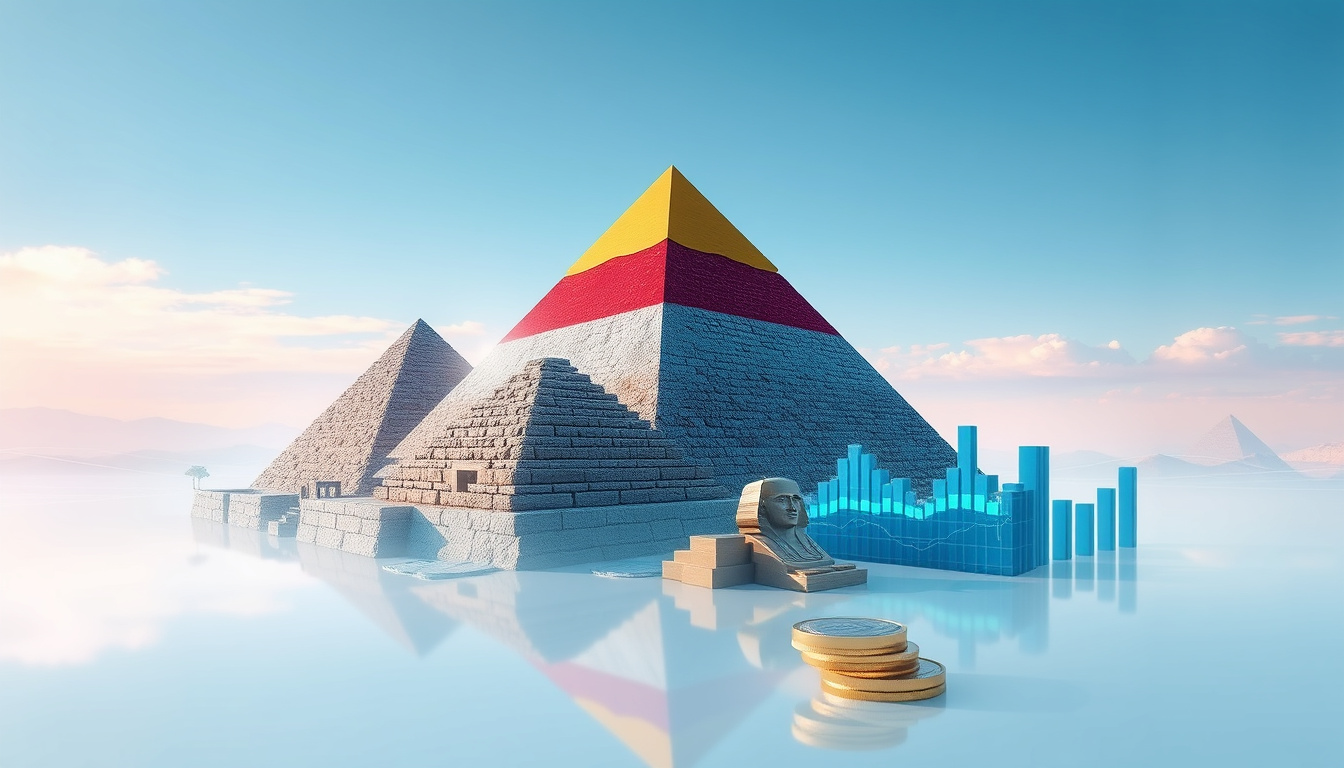
Egypt, a nation steeped in history and cultural heritage, plays a pivotal role in today’s global economy. Located at the crossroads of Africa, the Middle East, and Europe, its unique geography and rich human capital have shaped its economic trajectory. But beneath its historic grandeur lies a complex economy marked by rapid growth, structural challenges, and immense potential. This article dives deep into the forces driving Egypt’s economy, the hurdles it faces, and its significance as a vital player in the global marketplace.
The Strategic Geographical Advantage
Egypt’s geography is a defining factor in its economic importance. Situated largely in northeast Africa with a portion extending into the Middle East, it fronts both the Mediterranean Sea to the north and the Red Sea to the east. The Nile River, a lifeline for Egyptians, sustains 95% of its population living along its fertile banks. These population concentrations underscore the critical role agriculture has played historically, even as urban centers like Cairo and Alexandria continue to expand.
One of Egypt’s most significant geopolitical assets is the Suez Canal, completed in 1869. This man-made waterway links the Mediterranean to the Red Sea, enabling maritime traffic to bypass the long route around Africa. The canal handles approximately 12% of global trade, granting Egypt substantial economic benefits and international leverage. Control over the canal positions Egypt as a central hub in the trade between Europe, Asia, and Africa.
Economic Growth and Demographic Dynamics
Egypt’s economy is among the largest in Africa, ranking second only to South Africa by GDP. With a population soaring past 104 million, nearly 60% under the age of 30, the country boasts a dynamic young workforce preparing to enter the job market. Since the 1990s, Egypt has maintained an average annual GDP growth rate of 4.3%, outpacing Africa’s regional average and paralleling growth rates in the Middle East and North Africa.
However, although GDP per capita has risen moderately, underlying population doubling since 1985 has tempered individual wealth gains, resulting in slower per capita growth at around 2.3% annually since the 1990s. Rapid population increase places enormous pressure on infrastructure, services, and employment, complicating efforts to translate economic growth into broad-based prosperity.
Transition from a Centralized to a Market-Oriented Economy
Historically, Egypt’s economy was heavily centralized, with the government controlling production and key industries. But fiscal and monetary reforms beginning in the 2000s shifted the country toward a more market-oriented model, fostering privatization, reforming tax policies, and attracting foreign direct investment.
Manufacturing emerged as a vital economic pillar, now constituting roughly a quarter of Egypt’s GDP. The country leads Africa in manufacturing value added, increasing its continental market share from 7% in the 1970s to 22% between 2012 and 2022. Egyptian manufacturing mainly focuses on low- to medium-tech industries, although exports remain dominated by oil and mineral products.
The oil and gas sector represents a significant element of the economy. Egypt is Africa’s fifth-largest crude oil producer and boasts the continent’s highest refinery capacity. It is also the third-largest natural gas producer regionally, with hydrocarbons accounting for around 15% of GDP. A notable rise in the refined petroleum sector’s contribution reflects shifting industrial focus; today, petroleum products comprise 39% of manufacturing value added, a sharp contrast to only 5% in the 1980s.
Modernization and Digital Transformation
Despite reforms, Egypt has struggled to foster local innovation and deepen integration into global tech networks. Currently, digital transformation is a priority, spawning a burgeoning startup ecosystem and increasing venture capital inflows. From contributing only 1% of Africa’s venture capital deals in 2013-2015, Egypt skyrocketed to 10.5% between 2018 and 2022, becoming a key player in the continent’s emerging digital economy.
Yet, unlocking Egypt’s full innovative potential demands substantial investments in infrastructure, incentives, and industrial modernization. While broadband speeds have improved sixfold since 2018, challenges persist in upgrading the digital and industrial ecosystems to compete globally.
Infrastructure Development and Energy Expansion
Egypt’s recent pushes into infrastructure have been ambitious. Major projects include the construction of new administrative capitals, expansion of the Suez Canal zone industrial area, and millions invested in roads and bridges to alleviate chronic urban congestion.
Energy production has surged with large gas fields in the Mediterranean powering new gas-fired plants generating over 14 gigawatts of electricity. Concurrently, solar energy investments are ramping up to diversify Egypt’s energy mix. These developments have enhanced economic competitiveness and job creation, yet reliance on foreign debt to finance these initiatives raises sustainability concerns.
Economic Challenges and Setbacks
Despite its strengths, Egypt faces serious economic headwinds. The Egyptian pound has depreciated sharply in recent years, making it the worst-performing currency globally in 2023. Inflation remains high at around 33%, with food prices escalating, exacerbating living conditions for many Egyptians. Nearly one-third live on less than $2 a day, with an additional third vulnerable to falling into poverty.
Several external factors compound these struggles. The war in Ukraine has impeded wheat imports—vital for Egypt as the world’s largest wheat importer—driving up costs for subsidized staple bread. Conflicts in Gaza further destabilize key foreign currency sources including tourism revenues and Suez Canal traffic.
Tourism is a major employment sector, accounting for nearly 2.4 million jobs. While Egypt attracts the most international tourists in Africa, its earnings, averaging $8-9 billion annually, lag notably behind competitors like the UAE, which garners roughly $30 billion. Furthermore, security threats in the Red Sea have caused shipping companies to avoid key routes, negatively impacting canal revenues.
Additionally, Egypt’s government debt is dangerously high—close to 90% of GDP—with nearly half of revenue allocated to debt servicing. Foreign direct investment inflows remain modest at $11 billion in 2022, significantly lower than comparable middle-income economies like India or Brazil.
The Political Economy: Military Influence and Governance
A key factor shaping Egypt’s economic trajectory is the pervasive involvement of the military and security apparatus in business. Under President Abdel-Fattah al-Sisi, the armed forces have expanded control across diverse sectors including petrol stations, agriculture, car manufacturing, and media. This dominance stifles competition, deters private investment, and contributes to economic inefficiencies.
Moreover, economic reforms have largely been patchwork efforts rather than a coherent, long-term market-oriented strategy. Without a solid ideological commitment to economic liberalization, policy uncertainty hampers investor confidence and slows progress.
Future Prospects: Potential and Prerequisites for Reform
Egypt’s prospects remain mixed. Its vibrant youthful population, strategic location, expanding digital economy, and robust manufacturing base offer promise. Infrastructure advancements and commitments to diversify energy sources further lay the foundation for growth.
However, meaningful long-term change necessitates addressing underlying governance challenges, fostering competition, deepening economic reforms, and enhancing human capital development. Donors and international allies must encourage Egypt to uphold reform commitments and create an enabling environment for inclusive growth.
Frequently Asked Questions (FAQ)
1. Why is the Suez Canal important for Egypt’s economy?
The Suez Canal connects the Mediterranean Sea and the Red Sea, enabling faster maritime trade between Europe and Asia without circumnavigating Africa. It handles about 12% of global trade, providing Egypt with significant transit fees and strategic geopolitical influence.
2. What role does the military play in Egypt’s economy?
The Egyptian military controls numerous business sectors including petrol stations, agriculture, manufacturing, and media. Its dominance restricts competition and discourages private investment, impacting economic growth potential.
3. How has Egypt’s population growth affected its economy?
Egypt’s population has doubled since 1985, putting pressure on infrastructure, jobs, and social services. While the young demographic offers potential labor force advantages, it also necessitates substantial job creation and economic opportunities.
4. What are the main challenges facing Egypt’s economic development?
Key challenges include high inflation, currency depreciation, large government debt, political and policy uncertainties, limited private sector competition, reliance on external factors (e.g., wheat imports, regional conflicts), and inadequate innovation infrastructure.
5. How is Egypt addressing digital transformation?
Egypt is fostering a growing startup ecosystem with increasing venture capital investments. Improvements in broadband connectivity and government initiatives aim to modernize industries and spur innovation despite existing infrastructure needs.
Conclusion
Egypt stands at a crossroads of immense opportunity and significant challenges. Its strategic location, demographic dynamism, and expanding industrial base underscore its vital role in the global economy. However, entrenched structural issues, governance challenges, and external shocks have hindered its full economic promise. Unlocking Egypt’s economic secrets requires holistic reforms that embrace market principles, enhance competitiveness, and nurture innovation — paving the way for sustained, inclusive growth on the global stage. The future of Egypt’s economy is deeply intertwined with political will and effective policy design that can harness its vast potential for the benefit of all Egyptians and beyond.