
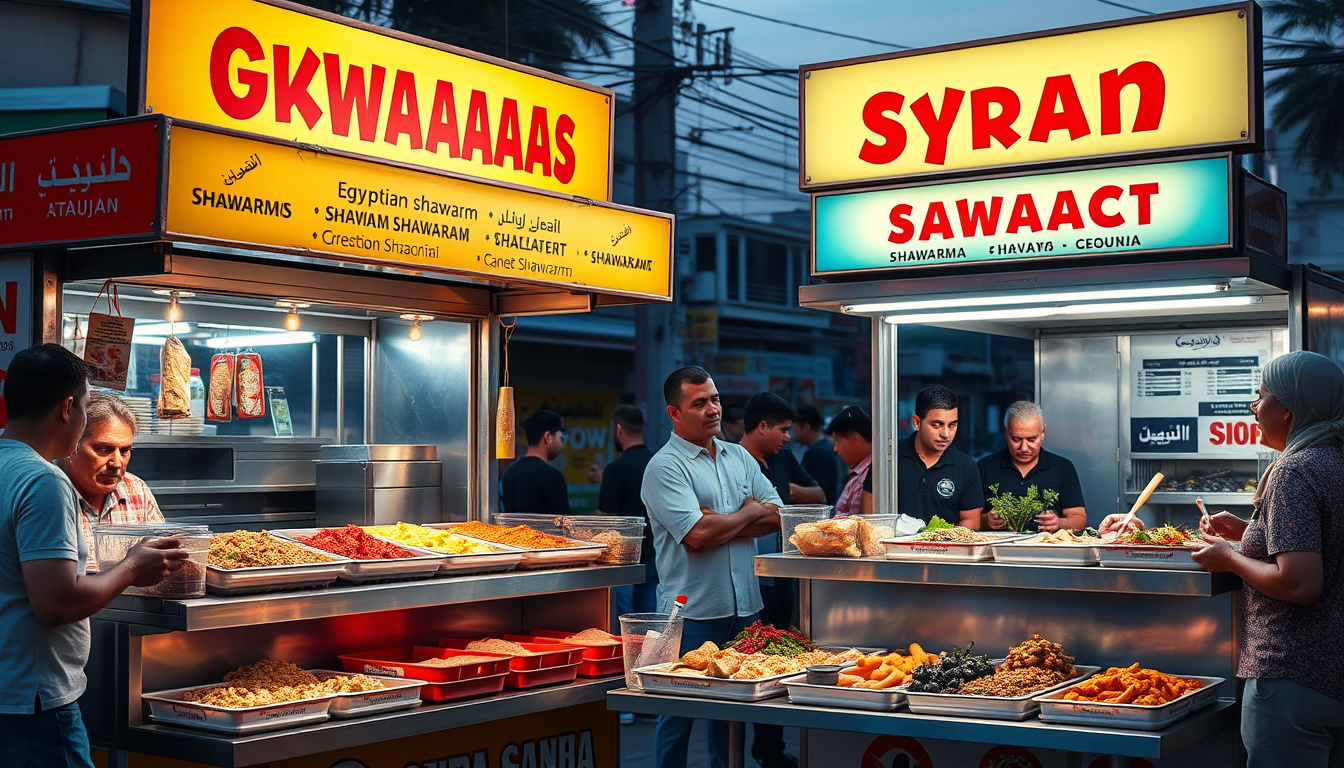
Shawarma is a beloved staple in Middle Eastern cuisine, drawing food enthusiasts from all walks of life into its flavorful embrace.
As this iconic dish travels across borders, it evolves and takes on unique characteristics, particularly in Egyptian and Syrian cuisines.
This article dives into the rich tapestry of flavors and presentation styles that distinguish Egyptian shawarma from its Syrian counterpart, while also exploring its growing economic significance in Egypt’s foodservice landscape.

Key Takeaways
- Egyptian shawarma is characterized by bold spices like cumin and coriander, served in a Kaiser Bun.
- Syrian shawarma features a sweeter flavor profile with spices such as cinnamon, typically wrapped in pita or saj bread.
- Shawarma plays a significant role in Egypt’s foodservice economy, with growing popularity and rising prices.
Distinct Flavors and Ingredients: Egyptian vs. Syrian Shawarma
# Distinct Flavors and Ingredients: Egyptian vs.
Syrian Shawarma
When it comes to the culinary delights of the Middle East, few dishes rival the popularity of shawarma.
However, those who delve into Egyptian and Syrian varieties will discover unique flavor profiles and ingredient differences that highlight the rich cultural tapestries from which they originate.
Egyptian shawarma is recognized for its bold and vibrant flavors, primarily achieved through a robust mix of spices such as cumin, coriander, and paprika.
This version typically features marinated beef or a harmonious blend of beef and lamb, which are slow-cooked to perfection.
Served in a Kaiser bun, Egyptian shawarma is often complemented by a drizzle of tahini sauce and an array of fresh vegetables, creating a satisfying sandwich experience.
Noteworthy establishments like Abou Haidar are celebrated for their exquisite beef shawarma, while Semsema is famed for its freshly baked bread that enhances the overall meal experience.
Conversely, Syrian shawarma stands out for its complex flavor profile, enriched with warmer spices like cinnamon and clove, imparting a subtle sweetness that differentiates it from its Egyptian counterpart.
This version can feature chicken, beef, or lamb, and is usually paired with toumeya (garlic sauce) and a medley of pickled vegetables, which add an extra punch of flavor.
Additionally, you might find fries cleverly stuffed into the wrap for added texture and heartiness.
Typically, Syrian shawarma is presented in tightly wrapped pita or saj bread, making it both portable and easy to enjoy on-the-go.
Beyond the appetizing flavors, shawarma holds significant economic importance in Egypt’s foodservice industry, as it is poised for impressive growth in the coming years.
The surge in urbanization, alongside increasing tourism and a shift in consumer preferences toward diverse dining experiences, has fueled the dish’s popularity.
Although shawarma has remained an affordable street food staple, current prices are on the rise, ranging from approximately EGP 75 to EGP 160 for a sandwich, starkly contrasting with the previous EGP 30-50 range.
Premium options are also available, particularly in larger dining establishments.
In conclusion, both Egyptian and Syrian shawarma not only tantalize taste buds but also reflect a broader narrative about the contributions of immigrant and small-scale food businesses to Egypt’s vibrant culinary landscape.
As shawarma continues to evolve and adapt to new trends, it remains a beloved fixture in the hearts and stomachs of food lovers across the region.
Economic Impact and Cultural Significance of Shawarma in Egypt
The cultural significance of shawarma extends beyond mere sustenance; it embodies a fusion of histories and culinary traditions that have been passed down through generations.
In Egypt, shawarma has become a culinary staple, reflecting the diverse influences of Arabic and Mediterranean cuisines.
This versatility allows it to be enjoyed by people from all walks of life, from street vendors catering to local patrons to upscale restaurants attracting tourists.
As shawarma continues to embrace new ingredients and flavors, it provides an opportunity for culinary innovation, ensuring that this beloved dish evolves while remaining rooted in its rich heritage.
Additionally, the growing interest in the dish contributes to the thriving street food scene in Egypt, where small food businesses often redefine traditional recipes, creating a dynamic atmosphere that champions both flavor and culture.