
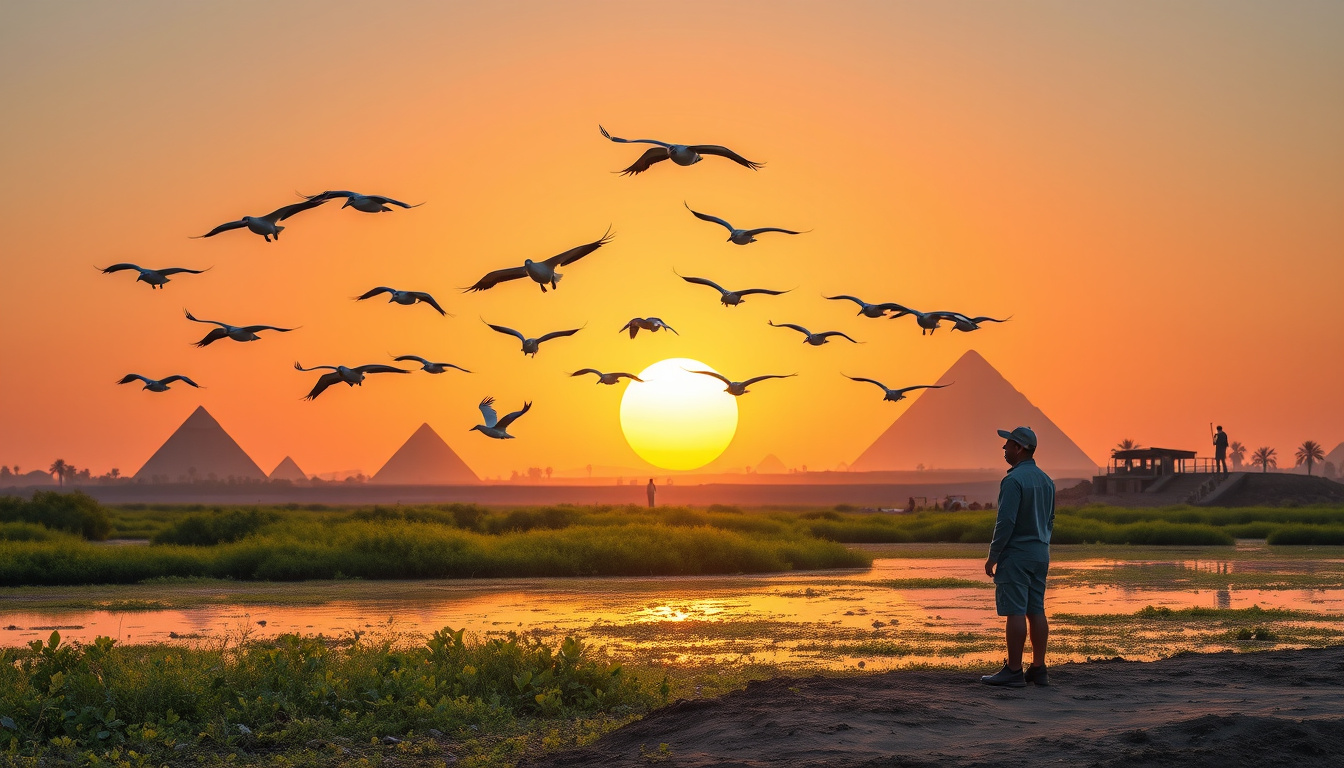
As the vibrant blue skies give way to the graceful silhouettes of Great White Pelicans during their migratory journey, a crisis is unfolding in Egypt.
In mid-November 2023, alarming reports surfaced concerning the illegal trapping of these majestic birds along Ain Sokhna road, where they were being captured and displayed outside fish shops.
This revelation has ignited a passionate response from conservationists and government officials alike.
Despite being categorized as ‘Least Concern’ by the International Union for Conservation of Nature (IUCN), these pelicans face numerous threats, primarily due to their critical dependence on wetland habitats.
As efforts ramp up to combat this illegal practice, it is crucial to understand the ecological significance of these birds as well as the measures being taken to protect them.

Key Takeaways
- The illegal trapping of Great White Pelicans in Egypt poses a significant threat to their migration and ecological role.
- Government officials are actively working to combat illegal wildlife trade and protect migratory bird species.
- Community involvement and enhanced law enforcement are crucial for conserving Egypt’s vital wetland habitats.
The Ecological Importance of Great White Pelicans
### The Ecological Importance of Great White Pelicans
In mid-November, the alarming discovery of migrating Great White Pelicans being captured and displayed outside fish shops along Ain Sokhna road in Egypt has sparked significant concern among conservationists.
While these magnificent birds are categorized as ‘Least Concern’ by the International Union for Conservation of Nature (IUCN), their reliance on wetland habitats during migration renders them particularly vulnerable.
Recognizing this, Egypt’s acting Environment Minister, Manal Awad, swiftly ordered the confiscation of the trapped pelicans and initiated investigations into the illegal trapping routes utilized by perpetrators.
This predicament emphasizes the crucial point that capturing and trading in protected species is illegal under Egyptian law, underscoring the need for heightened awareness and enforcement.
Pelicans serve as essential components of their ecosystems, primarily by maintaining the health of aquatic environments and regulating insect populations.
As they feed on fish and other aquatic organisms, they help in sustaining a balanced ecosystem where various species can thrive.
Egypt’s wetlands are not just a sanctuary for these pelicans; they are critical for over two million migratory birds that traverse the country each year, making it a key stopover point in their migratory routes.
In response to the turmoil surrounding Great White Pelicans, authorities have announced plans to bolster enforcement of wildlife laws aimed at curbing illegal bird trade.
This initiative includes increasing patrols and working closely with local communities to foster conservation efforts.
By prioritizing the protection of these magnificent birds and the ecosystems they inhabit, Egypt can ensure the preservation of its rich biodiversity and the natural heritage vital for future generations.
Government Actions and Community Involvement in Conservation Efforts
The recent incidents involving the illegal capture of Great White Pelicans have highlighted the pressing need for a collaborative approach to conservation.
Local communities play a pivotal role in wildlife conservation as they often serve as the first line of defense against illegal activities.
Engaging these communities is essential for the success of conservation initiatives.
In many cases, educating local populations about the ecological significance of species like the Great White Pelican can foster a sense of stewardship, encouraging them to protect their natural heritage.
Furthermore, community involvement can bolster law enforcement efforts, as local residents may provide valuable intelligence on illegal activities in their areas.
The Egyptian government’s commitment to enhancing collaboration with local stakeholders is a promising step towards safeguarding avian populations and their habitats, ensuring a sustainable coexistence between human activities and wildlife.