
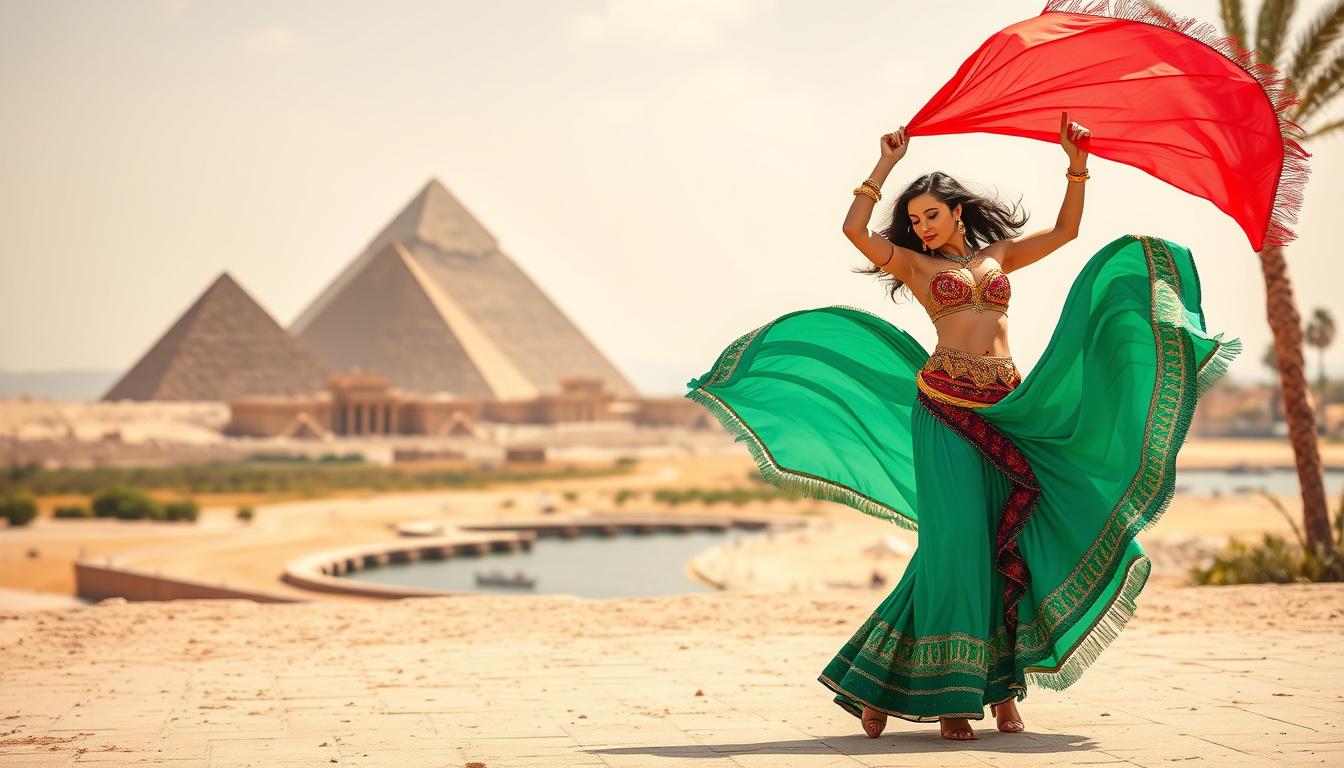
Belly dance in Egypt is more than just an alluring art form; it is a vibrant celebration of culture and history.
This captivating dance style, with roots that run deep into the ancient civilizations of the land of the Pharaohs, has transformed over the centuries and continues to enchant audiences around the world.
For travelers and enthusiasts looking to immerse themselves in the rich cultural tapestry of Egypt, exploring belly dance offers an unforgettable journey through movement and rhythm.
In this article, we will delve into the historical roots of belly dance in Egypt, its cultural significance, various styles, and the role of festivals in preserving this timeless tradition.
We’ll also explore how belly dance has evolved in modern Egypt, ensuring that this art form remains as relevant today as it was in ancient times.

Key Takeaways
- Belly dance in Egypt has deep historical roots that reflect the country’s rich cultural heritage.
- The dance symbolizes various aspects of femininity, empowerment, and celebration in Egyptian society.
- Various styles of belly dance thrive across Egypt, each showcasing unique regional characteristics and influences.
- Festivals and public performances play a crucial role in preserving and promoting the art of belly dance in contemporary Egypt.
- Modern belly dance has evolved, incorporating new influences while retaining its traditional essence and cultural significance.
The Historical Roots of Belly Dance in Egypt
Belly dance in Egypt, known locally as ‘Raqs Sharqi,’ has deep historical roots that stretch back thousands of years, showcasing the rich cultural tapestry of the nation.
This captivating art form is steeped in ancient traditions, with its origins believed to date back to the time of the Pharaohs.
Many scholars argue that the dance may have evolved from fertility rituals performed by women in ancient Egyptian society, emphasizing the connection between the art of dance and the divine feminine.
Throughout the centuries, Egyptian belly dance absorbed influences from the various civilizations that have traversed the land, including the Greeks, Romans, and Ottomans, each adding their own flair to the style.
The dance is characterized by intricate movements of the hips, torso, and arms, conveying emotion and storytelling through fluid motions.
In a modern context, belly dance has become an iconic symbol of Egyptian heritage, vividly showcased during celebrations such as weddings and festive gatherings.
Moreover, as you explore the bustling streets of Cairo or visit local venues, you’ll find that belly dance is not just a performance art but a communal experience, often enjoyed by both men and women.
Attending a belly dance show or taking lessons in Egypt can provide a unique insight into the cultural significance of this beautiful tradition, making your trip even more enriching.
As you delve deeper into the world of belly dance in Egypt, you’ll realize it represents a vital part of the country’s identity, connecting the past to the present.
Cultural Significance and Symbolism of Belly Dance
## Cultural Significance and Symbolism of Belly Dance in Egypt
Belly dance, known locally as ‘Raqs Sharqi,’ is an integral part of Egypt’s cultural heritage, resonating deeply with the nation’s artistic expression and social traditions.
Originating from various Middle Eastern traditions, belly dance in Egypt plays a significant role in celebrations, festivals, and family gatherings.
The dance forms a vibrant tapestry woven with influences from ancient Egypt, including the worship of goddesses, and continues to capture the world’s fascination.
Historically, belly dance was often performed to celebrate fertility and femininity, with movements that honor the female form and its connection to nature.
It embodies an array of cultural symbols, representing joy, celebration, and the unity of community.
Each movement tells a story, allowing dancers to express emotion and spirit, making it a powerful medium for cultural transmission.
In contemporary society, belly dance serves not just as entertainment but as a means of empowerment for many women.
It offers a unique platform for self-expression, breaking social barriers and promoting body positivity.
Festivals in Egypt draw international dancers, showcasing the dance’s evolution while preserving its roots.
For those traveling to Egypt, witnessing a live performance or taking a dance class can enhance your experience and appreciation for this beautiful art form.
Whether you’re exploring Cairo’s vibrant nightlife or attending a local wedding, belly dance remains a captivating way to understand Egypt’s rich cultural landscape.
‘Dance is the hidden language of the soul.’ – Martha Graham

Different Styles of Belly Dance Across Egypt
Belly dance in Egypt encompasses a rich tapestry of styles that vary from region to region, each with its own distinct flavor and cultural significance.
The most famous of these styles is Raqs Sharqi, often referred to as ‘Eastern Dance,’ which is characterized by its fluid movements and intricate footwork.
Dancers typically wear elaborate costumes adorned with sequins and beads, enhancing the visual spectacle of their performances.
In contrast, the Saidi style originates from Upper Egypt and is heavily influenced by local folklore.
This vigorous style often incorporates the use of a cane, showcasing both strength and grace.
It’s not uncommon to see Saidi dancers performing at weddings and traditional festivals, where they proudly display their cultural heritage.
Another captivating style is Ghawazi, which dates back to the 18th century and is traditionally performed by professional female dancers known for their charismatic and often provocative performances.
What sets Ghawazi apart is its lively rhythms and a focus on improvisation, making each performance unique to the dancer.
Modern practitioners of belly dance in Egypt have also integrated elements from Western dance forms, resulting in innovative styles that blend tradition with contemporary movements.
Exploring belly dance in Egypt offers not just a visual feast, but also an opportunity to connect with the rich history and cultural practices of the region.
Whether you’re attending a performance in Cairo or participating in a workshop, experiencing the different styles of belly dance will deepen your appreciation for this beautiful art form.
The Role of Festivals and Performances in Preserving the Art
## The Role of Festivals and Performances in Preserving the Art of Belly Dance in Egypt
Belly dance in Egypt is not just a form of entertainment; it’s a profound cultural expression deeply rooted in the country’s history and traditions.
Festivals and live performances play a vital role in preserving this art form, ensuring that both locals and tourists appreciate its nuances.
These vibrant celebrations often showcase the rich diversity of Egyptian belly dance styles, each reflecting the unique cultural influences of different regions in Egypt.
Festivals such as the Cairo International Dance Festival attract dancers and enthusiasts from all over the world, providing an opportunity for them to witness incredible performances and participate in workshops led by renowned artists.
Such events serve as a platform for emerging talent, allowing new dancers to learn from experienced professionals while also preserving traditional techniques.
Moreover, the emphasis on community involvement in these festivals strengthens the bond between generations, fostering a respect for Egypt’s heritage.
Through these performances, audiences gain insight into the stories and emotions conveyed by dancers, often inspired by themes of love, loss, and celebration that resonate with Egyptian society.
Additionally, these events help in sustaining the financial viability of belly dance, encouraging cultural tourism that showcases Egypt as a premiere destination for dance enthusiasts.
Whether you’re exploring Cairo or the picturesque shores of the Red Sea, experiencing live belly dance performances can be both an enlightening and entertaining aspect of your journey in Egypt.

Exploring the Modern Evolution of Belly Dance in Egypt
## Exploring the Modern Evolution of Belly Dance in Egypt
Belly dance in Egypt is not just a form of entertainment; it is a rich expression of culture and history that has evolved dramatically over the years.
Originating in the Middle East, this captivating dance form has found its unique place in Egyptian culture, where it has adapted to modern influences while still retaining its traditional roots.
Today, belly dance in Egypt can be experienced in a variety of settings, from intimate gatherings to grand performances in theatres and cabarets, making it a key highlight for travelers seeking authentic local experiences.
When considering an Egypt itinerary, understanding the evolution of belly dance is essential.
The art form, known locally as ‘Raqs Sharqi,’ which translates to ‘Eastern Dance,’ has been influenced by various cultural exchanges and societal changes.
The modern era has seen a fusion of traditional belly dance with contemporary styles, such as pop and hip-hop, creating a vibrant scene that attracts both local dancers and international performers.
Many travelers and expats directly engage in classes or workshops, offering a hands-on approach to learning this beautiful art form.
In recent years, there’s been a burgeoning interest in the health benefits linked to belly dancing, with many recognizing its ability to improve flexibility, core strength, and body confidence.
With health consciousness on the rise globally, belly dance classes in Egypt can appeal not only to those interested in cultural immersion but also to fitness enthusiasts looking for something unique.
Additionally, the portrayal of belly dance in media and movies has further glamorized its image, pushing it into the limelight.
High-profile performers like Dina and Fifi Abdou have achieved celebrity status, helping shape the modern perception of belly dance in Egypt.
Such visibility can be vital to understanding the art form’s current status and relevance in Egyptian society.
If you’re planning a trip to Egypt, don’t miss the opportunity to attend a live belly dance performance.
Whether it’s in the bustling streets of Cairo or by a tranquil Nile-side restaurant, these performances provide both a mesmerizing visual feast and a glimpse into the warming hospitality of Egyptian culture.
Participating in the local dance scene is an excellent way to connect with the rhythm and soul of Egypt while creating unforgettable memories during your travels.
Frequently Asked Questions
What are the historical roots of belly dance in Egypt?
Belly dance in Egypt has ancient origins, tracing back to the Pharaonic era where it was performed in temples and during celebrations.
It evolved through different periods, influenced by various cultures such as Greek, Roman, and Ottoman.
What is the cultural significance of belly dance in Egypt?
Belly dance holds significant cultural importance in Egypt, often symbolizing femininity, fertility, and celebration.
It serves both as an artistic expression and a means of social bonding, particularly during weddings and festivals.
Are there different styles of belly dance in Egypt?
Yes, there are several styles of belly dance in Egypt, including Raqs Sharqi, which is the classical form, and folkloric styles such as Saidi and Khaleegy, each reflecting distinct regional influences and cultural narratives.
How do festivals and performances contribute to the preservation of belly dance in Egypt?
Festivals and performances are vital for the preservation of belly dance in Egypt.
They provide platforms for dancers to showcase their skills, promote cultural heritage, and engage with diverse audiences, thus keeping the tradition alive.
How has belly dance evolved in modern Egypt?
In modern Egypt, belly dance has incorporated contemporary influences, blending traditional techniques with modern musical styles and choreography.
This evolution has led to increased popularity both locally and internationally, while also sparking discussions about cultural appropriation and authenticity.