
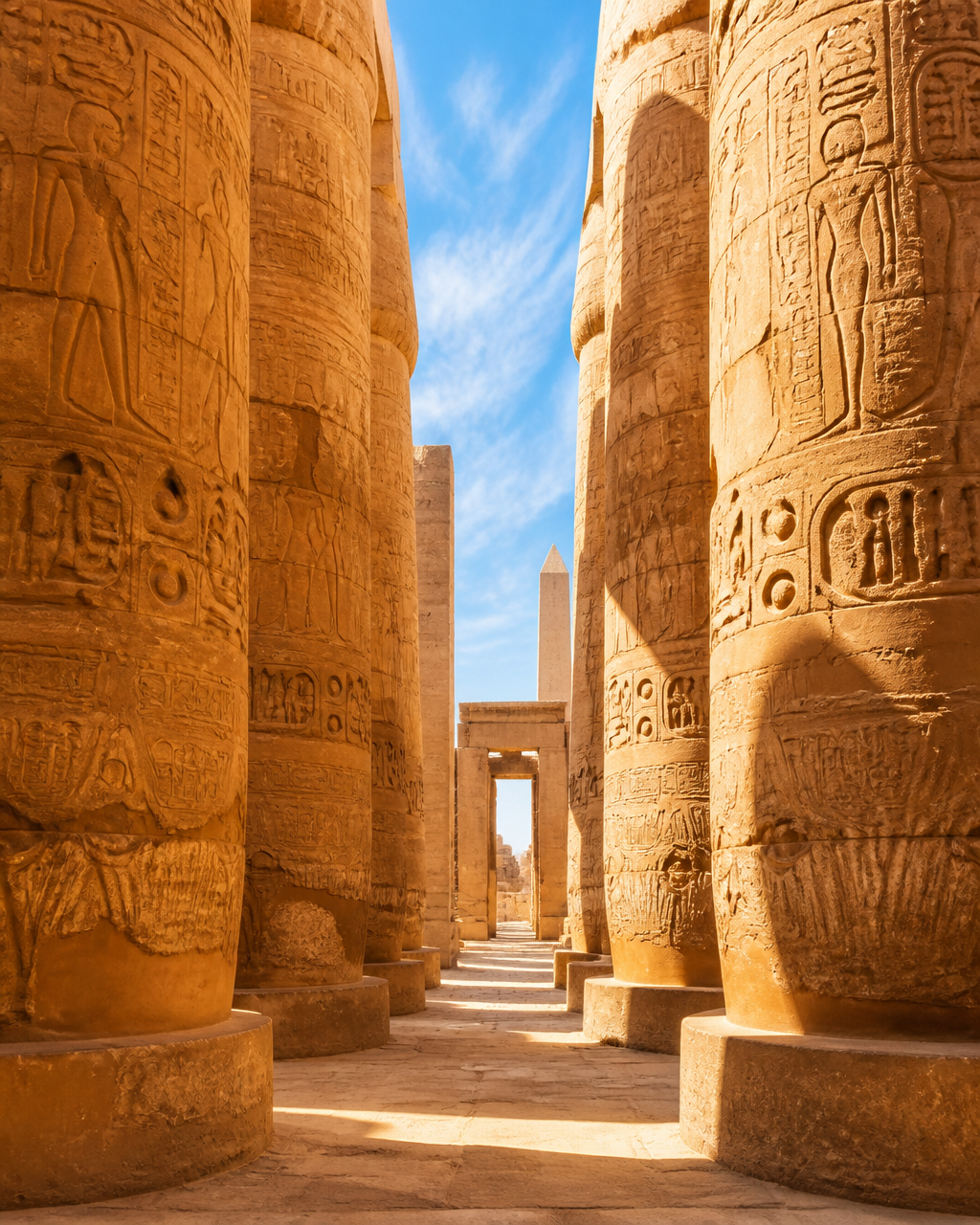
At Karnak, the first impression is often the height of the stone around you. Give yourself time to look at the columns from outside their rows before you go in among them. That simple pause makes the layout easier to read and is a useful starting point for a first visit.
Planning Your Visit to Karnak Temple
Choose a time you can use well
Check the current opening and last entry times before you set out. If you are sensitive to heat, look at the forecast and choose a suitable window. Do not assume that a particular hour will be quiet. Check what your ticket includes if you want to visit an adjoining area or a separate attraction.
Dress Code and Essentials
Lightweight, breathable clothing is advisable due to the heat, along with comfortable shoes for walking. Additionally, bring a hat, sunglasses, and sunscreen to protect yourself from the sun. Water is essential, so carry a refillable bottle to stay hydrated during your exploration.
Navigating the Temple Complex
A Brief Overview of Karnak Temple
Karnak Temple is not a single temple but a vast complex of temples, chapels, pylons, and other buildings constructed over 2,000 years. The main enclosure is associated with Amun; ask a guide or consult the site information if you want to distinguish it from the other precincts. The sheer size of the site can be intimidating, so understanding its layout will help you navigate more effectively.
Key Areas to Explore
- The Great Hypostyle Hall: One of the most iconic features of Karnak, this hall contains 134 massive columns, many standing over 10 meters tall. The intricate carvings and hieroglyphs tell stories of pharaohs and gods, making it a highlight of your visit.
- The Obelisks of Hatshepsut and Thutmose I: These towering monuments are a testament to the craftsmanship of ancient Egyptians and provide excellent photo opportunities.
- The Sacred Lake: Take a moment to pause here; the tranquility of the lake contrasts beautifully with the grandeur of the temples.
Suggested Route Through the Complex
To ensure you don't miss any significant details, consider following this recommended route:
- Enter through the First Pylon: This grand entrance sets the tone for your visit and gives you a reference point for the route.
- Explore the Great Hypostyle Hall: Step inside and take your time to admire the impressive columns. As you walk among them, consider their scale and the skill required to build such a structure.
- Visit the Obelisks: Spend time appreciating the craftsmanship and historical context of these monuments. Look for inscriptions that tell the stories of their construction.
- Stroll to the Temple of Amun: This central area is not only architecturally significant but also rich in history.
- Pause at the Sacred Lake: Rest here to reflect on your experience and enjoy the serene atmosphere.
- Decide whether to add another stop: Ask what is open and included before leaving the main route.
Taking Your Time: Appreciating the Details
The Columns: A Closer Look
As you walk through the temple, take a moment to step back and observe the columns from a distance. This perspective allows you to appreciate their grandeur and the overall architectural design. Each column is adorned with detailed carvings and hieroglyphs, which narrate significant events and offer insights into ancient beliefs. Consider pausing for a few minutes to take in the artistry and craftsmanship before moving closer.
Photography Tips
If you are keen on photography, early morning or late afternoon light provides the best conditions for capturing the temple's beauty. Avoid using a flash, as it can detract from the atmosphere and disturb other visitors. Focus on the details, such as the textures of the stone and the intricacies of the carvings, rather than just wide shots of the complex.
Guided Tours vs. Self-Guided Exploration
While guided tours can provide valuable insights, they often adhere to a strict schedule that doesn't allow for personal exploration. If you prefer a more leisurely visit, consider using a reputable guidebook to learn about the temple's history at your own pace. This approach allows you to linger at points of interest and absorb the atmosphere without feeling rushed.
Additional Considerations
Local Amenities
Karnak Temple is conveniently located near various amenities. If you need a break or wish to grab a bite, several cafes and shops are available nearby. However, it might be wise to pack some snacks and water for your visit to avoid unnecessary distractions.
Respecting the Site
As an important historical and cultural site, it's essential to be respectful during your visit. Avoid climbing on the structures, touching the carvings, or leaving litter behind. By showing respect for the site, you contribute to its preservation for future generations.
Conclusion
Karnak Temple is a magnificent testament to ancient Egyptian architecture and spirituality. By planning your visit thoughtfully and taking your time to appreciate the details, you can immerse yourself in its rich history and artistry. Remember to approach the site with respect and curiosity; the experience will be all the more rewarding.
FAQs
What is the best time to visit Karnak Temple?
Choose a window that fits the current opening hours, weather and the rest of your itinerary.
Are there guided tours available at Karnak Temple?
Yes, guided tours are available, but if you prefer to explore at your own pace, a guidebook can also be beneficial.
What should I wear when visiting Karnak Temple?
Dress modestly, wearing lightweight and breathable clothing, and ensure you have comfortable shoes for walking.
With these tips in mind, you can make the most of your visit to Karnak Temple and truly appreciate the wonders of this ancient site.
Look twice before moving on
When you reach a place where you can stop without blocking the route, look for a line that continues beyond the nearest columns. Then move to a second permitted viewpoint and see what the change does to the space. Take the same approach with the carvings: begin with the whole scene and only then choose one figure or inscription to examine closely.
If you are using a guide, ask for one example of how to read a carved scene. Point to something you can both see. Ask who is shown, what they are doing and how the guide can tell. You will take away a way of looking that helps elsewhere in Luxor. If there is a detail the guide cannot identify with confidence, simply note the question rather than treating the first explanation as settled.
Agree a finish time before adding another temple. If your group is still curious, you can use the remaining time at Karnak instead of spending it in a vehicle. If the heat or walking has taken more out of you than expected, leave the second visit for another day.