
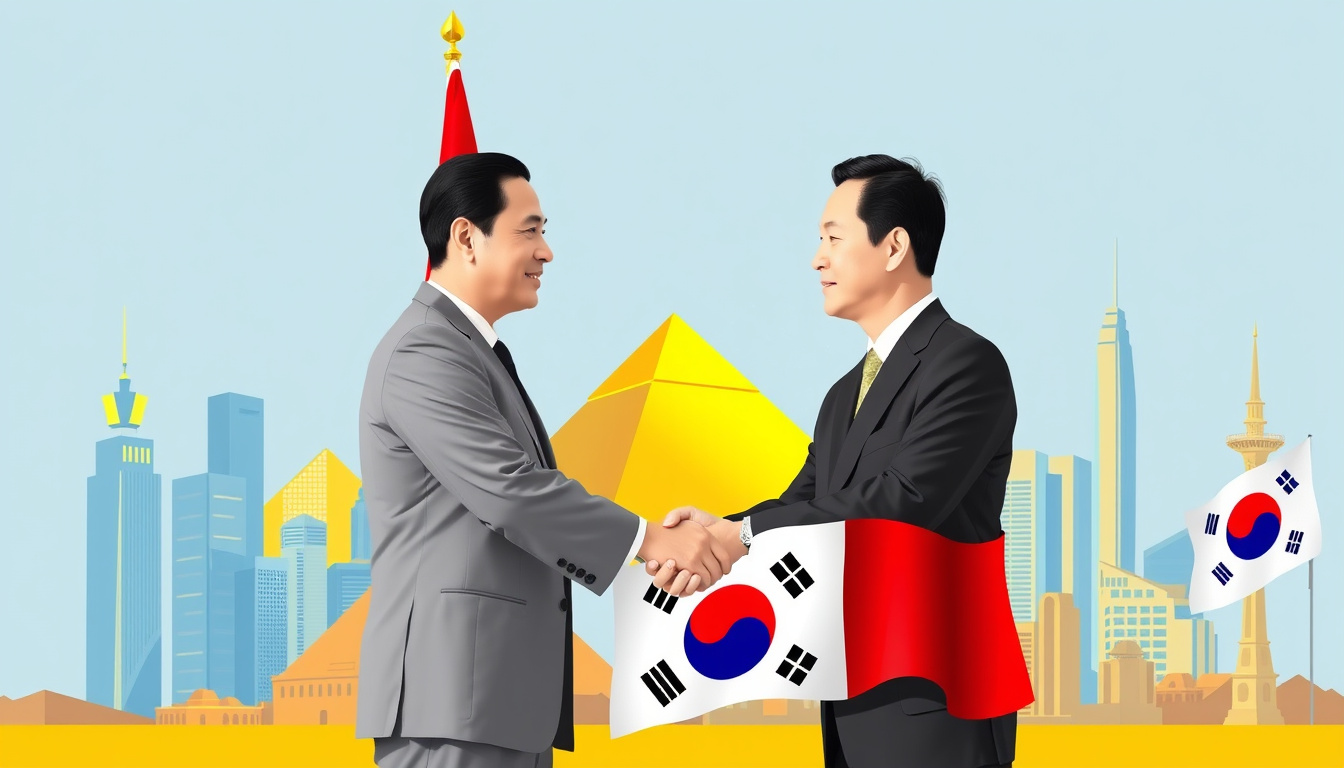
In a landmark move that signals a deepening of international relations, Egyptian President Abdel Fattah El-Sisi and South Korean President Lee Jae Myung convened on October 8, 2026, in Seoul to declare a strategic partnership between their nations.
This significant agreement is set to fortify political and economic cooperation, tapping into a wide array of sectors such as trade, investment, technology, energy, and infrastructure.
The culmination of this meeting saw the signing of 12 memoranda of understanding and the launch of negotiations for a Comprehensive Economic Partnership Agreement (CEPA), paving the way for a robust bilateral relationship that aims to yield mutual benefits and growth.
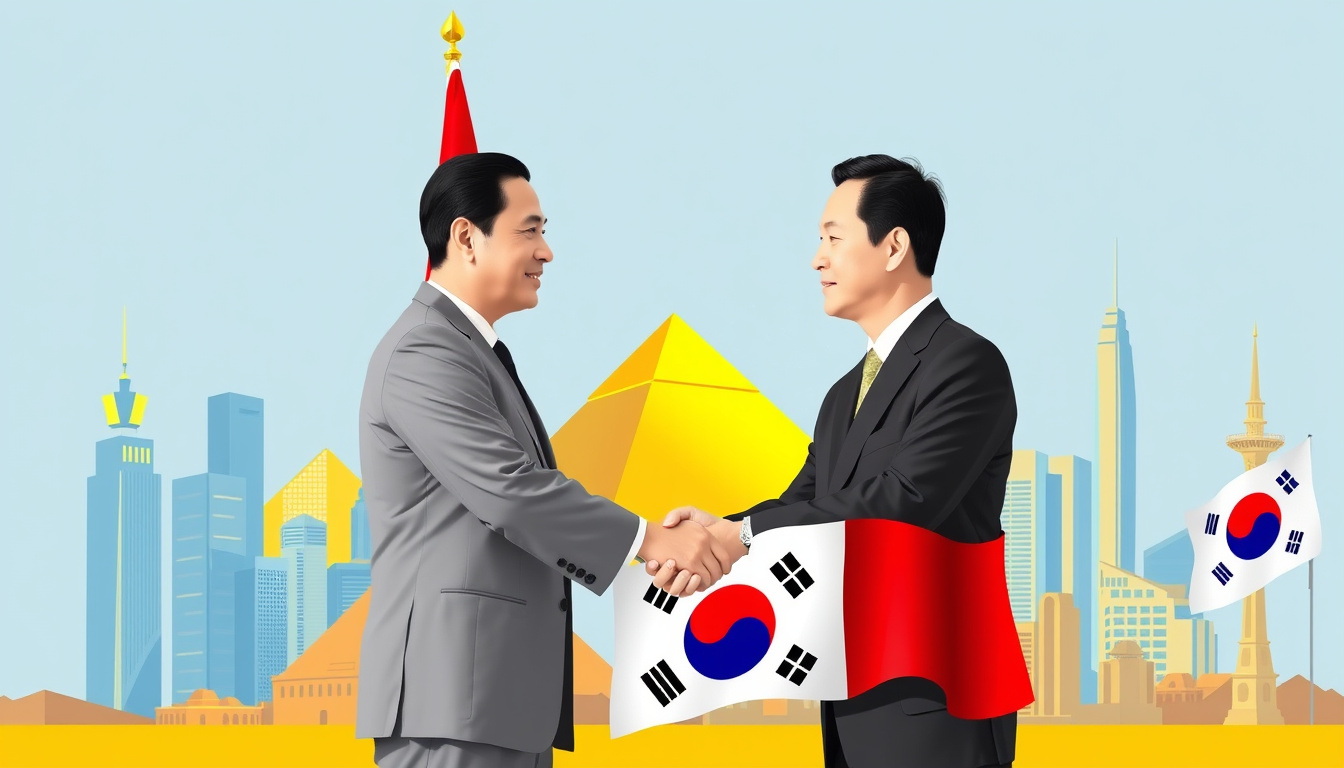
Key Takeaways
- Egypt and South Korea have upgraded their relations to a strategic partnership to boost political and economic collaboration.
- Significant projects include a sustainable transport initiative in Egypt and plans for a Comprehensive Economic Partnership Agreement.
- Cultural exchanges will be heightened in 2027, focusing on education and youth interaction between the two nations.
Overview of the Strategic Partnership
### Overview of the Strategic Partnership
On October 8, 2026, Egyptian President Abdel Fattah El-Sisi and South Korean President Lee Jae Myung convened in Seoul for a pivotal state visit aimed at strengthening the political and economic ties between Egypt and South Korea.
This historic meeting culminated in the elevation of their bilateral relationship to a strategic partnership.
Such an advancement is expected to open up fresh avenues for cooperation across multiple sectors, notably trade, investment, technology, energy, and infrastructure development.
During their discussions, the leaders signed 12 memoranda of understanding, signaling a commitment to forge deeper economic links, while also initiating negotiations for a Comprehensive Economic Partnership Agreement (CEPA).
Among the key projects that emerged from this dialogue is an exciting collaboration between Egypt’s National Authority for Tunnels and South Korean company Hyundai Rotem, which aims to explore the feasibility of deploying 44 hydrogen-powered tram trainsets for Egypt’s New Administrative Capital.
This initiative underscores a unique commitment to sustainable transport solutions in the region.
President El-Sisi’s call for increased investment from Korean companies, especially within manufacturing and advanced industries, reflects a strategic push toward establishing an integrated Korean industrial zone within the Suez Canal Economic Zone—an area poised to become a key logistical hub.
On the cultural front, the leaders also proclaimed 2027 as the Year of Cultural Exchanges, emphasizing the importance of fostering educational programs, scholarships, and youth exchange initiatives.
This culturally rich endeavor seeks to enhance mutual understanding and promote Korean-language education in Egypt, thus laying the groundwork for a robust bilateral relationship that encompasses both economic and cultural dimensions.
Key Initiatives and Future Prospects
The strategic partnership between Egypt and South Korea embodies a mutual commitment to shared goals and is set to pave the way for a new era of cooperation.
President El-Sisi and President Lee Jae Myung’s discussions reflect a comprehensive approach to strengthen ties, with particular focus on high-impact sectors such as technology and infrastructure.
The plans for hydrogen-powered tram trainsets not only position Egypt as a forward-thinking nation in public transport but also illustrate a practical response to global sustainability initiatives.
Moreover, enhancing economic collaboration through the establishment of an integrated Korean industrial zone in the Suez Canal Economic Zone signifies strategic foresight, as both nations look to capitalize on their geographical advantages to boost trade and investment flows.
As 2027 approaches, the focus on cultural exchanges promises to further deepen the people-to-people connections, fostering goodwill and understanding that complements the extensive economic initiatives underway.