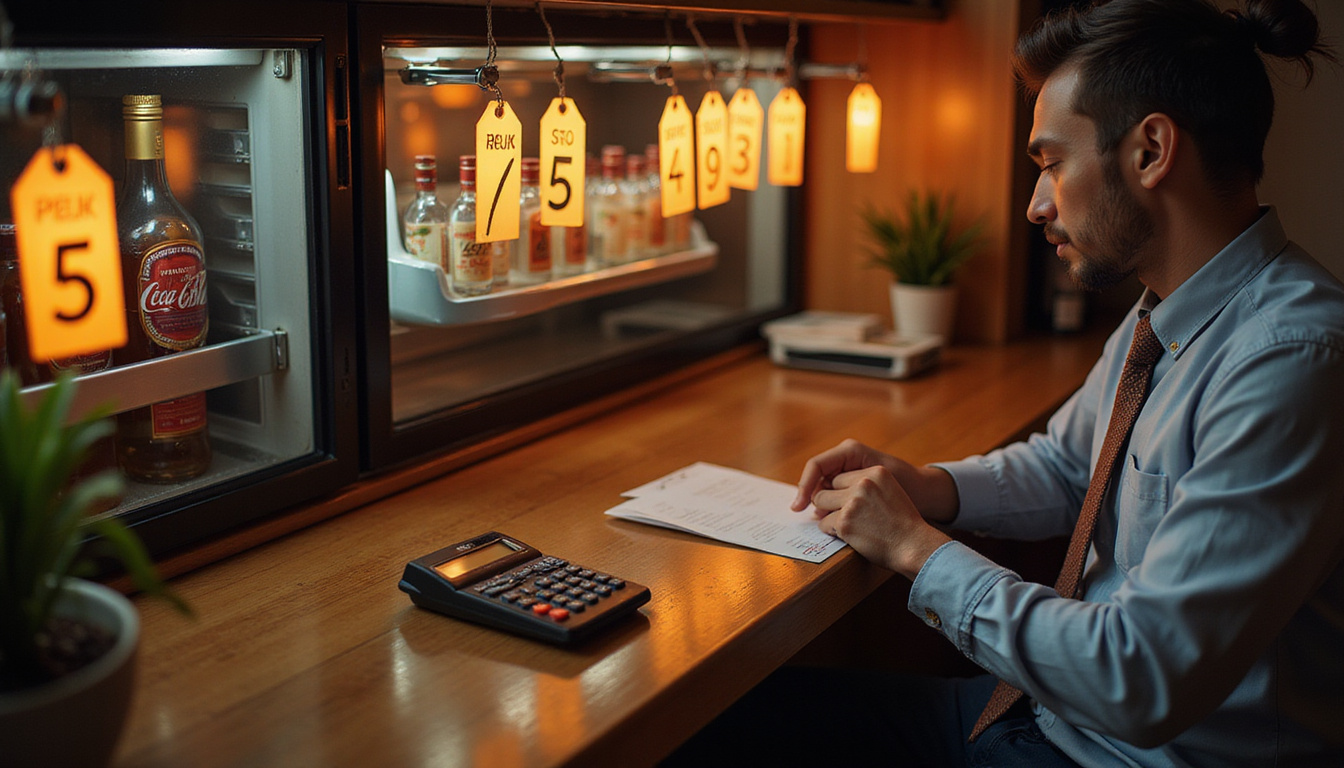
The in room minibar may serve as a fun perk or a surprise expense. Tiny bottles and snacks hide high costs. They can make you spend more than you expect. Knowing how the minibar works and what tricks the staff use helps you enjoy your stay and protect your budget.
Why Hotel Minibars Cost So Much
Minibars help hotels earn extra money. You pay for:
- Convenience – You stay in your room.
- Always available – The minibar is open 24/7.
- A high price – Hotels may ask 3–5 times the shop price.
Research shows that food and drink services in a hotel add much income (source: AHLA State of the Hotel Industry). Prices feel very high in luxury or airport hotels when you cannot leave the room.
How In Room Minibars Work Today
Not every minibar is the same. Here are the types you may see. Knowing the type can save you money.
1. Traditional Minibar (Manual Check)
This type uses a small fridge or cabinet filled with drinks and snacks.
- Staff check the items by hand.
- You pay for the missing items when you check out.
- Mistakes can happen when staff count wrongly.
Hotels use this type less often because it needs more work and can be error prone.
2. Sensor-Based Minibar (Automatic Billing)
This type can catch you off guard.
- Each item sits on a sensor that weighs or senses motion.
- Lifting or moving an item flags it as "consumed."
- You get charged even if you return the item quickly.
- Some hotels allow a short break before charging, while others do not.
If your minibar works with sensors, do not touch items you do not wish to pay for. Even moving items to store your own things can cause charges.
3. Smart / Connected Minibar
This type links directly to the hotel’s management system:
- Charges appear on your account immediately.
- Staff see room use in real time.
- Some show prices and deals on a small screen.
- Others lock until you use your key card or a PIN.
These systems help the staff avoid mistakes but increase the chance you are billed right away when an item moves.
Common Minibar Traps and Extra Charges
Hotels set up the minibar to add small charges, even if you do not intend to use it.
Moving Items for Your Own Food
In sensor-based systems, shifting items often counts as use. Even if you replace them, the sensor does not tell a difference.Items That Look Free But Cost Money
A water bottle near the TV, a chocolate bar on the desk, or nuts in a small jar may seem like a gift. In many hotels, these items cost a little extra.Shared Fridges That Work as Minibars
Some rooms mix a few hotel items with space for your own food. If you move anything in these fridges, you risk a charge. Often, the room labels the fridge as for minibar use only.Restocking Errors
Staff might forget to restock or miscount items. You might then be charged for something that another guest used. Check the minibar when you arrive.Late Charges After Checkout
In some cases, minibar charges show up after you leave. If you do not check your receipt or credit card, you might miss these extra fees.
How to Use the Minibar Without Extra Cost
You do not have to avoid the minibar entirely. A bit of care can help you use it when you want to pay.
Step 1: Check the Minibar After Check-In
Spend a few minutes to see:
- What items exist and how many there are.
- If a price list is present (often in a drawer or on a card by the minibar).
- If there is a sensor alert (stickers or notices on the fridge or door).
If things seem wrong, call the front desk so they write it down for you.
Step 2: Ask the Front Desk Simple Questions
Before you settle in, call reception and ask:
- “Is the minibar sensor-operated or checked by hand?”
- “May I use the minibar fridge for my own items?”
- “Can someone empty or lock the minibar for me?”
- “Are any items free?”
Clear answers now make it easier to fix issues later.
Step 3: Use It Only When You Plan to Pay
If you wish to enjoy the minibar:
- Read the price list so you know the cost.
- Use it when:
- Shops are closed at night.
- You stay in a remote place.
- Convenience matters more than saving money.
See the minibar as a backup, not your main source of snacks.

Smart Ways to Avoid High Minibar Charges
Try these steps to enjoy your trip without surprise fees.
1. Ask to Empty or Lock the Minibar
Many hotels will:
- Remove the minibar items on request, or
- Lock the minibar and mark your account as not using it.
This works well if:
- You travel with children.
- You decide not to pay high minibar rates.
- You want to use the fridge for your own food.
2. Bring Your Own Snacks and Drinks
When you arrive:
- Visit a nearby supermarket or store.
- Buy water, soft drinks, fruit, and simple snacks.
- Shops usually ask lower prices and tend to open late.
If your room does not have a fleshy fridge, bring snacks that do not need a cold place.
3. Use a Separate Cooler Bag
If you prefer not to use the minibar:
- Bring a small, foldable bag with insulation.
- Fill it with ice from the hotel’s ice machine.
- Keep your drinks cool without touching the minibar.
Check hotel rules about using the ice machine and storing food.
4. Examine Your Bill Before You Leave
On the day you leave:
- Ask for a printed copy of your bill.
- Read the “Minibar” section carefully.
- Tell staff about any charges you do not agree with right away.
It is easier to fix a bill in person than to wait and dispute later.
Money-Saving Alternatives to the In Room Minibar
For a mix of ease and low cost, try these ideas.
1. Choose Rooms with a Kitchenette or Full-Size Fridge
Some hotels and apartments have:
- A large refrigerator and sometimes a freezer.
- A microwave and basic cooking tools.
- Space to store groceries instead of mini bottles.
These rooms often work better for longer stays.
2. Use Public Areas in the Hotel
Many hotels also have:
- A water station in the lobby.
- Free coffee and tea in a common area.
- Evening events with snacks and drinks in business hotels.
Use these areas before you decide to use the minibar.
3. Join Loyalty Programs
Hotel loyalty plans (even free ones) may include:
- Free bottled water in your room.
- Discounts or credit for food and drinks.
- Occasional credit for minibar items as a perk.
Sign up before you travel and ask about these benefits when you arrive.
Quick Checklist: Minibar Do’s and Don’ts
Do:
- Check the minibar when you arrive.
- Take photos of what you see if anything seems off.
- Ask if the minibar can be emptied or turned off.
- Read the price list carefully.
- Check your final bill before leaving.
Don’t:
- Move items just to make room for your own food.
- Assume any water or snack is free.
- Ignore minibar charges on your bill. Report any mistakes quickly.
- Forget to check your credit card after you leave.
FAQ About Hotel Minibars and Charges
Can I store my own drinks in the minibar?
Many hotels allow you to store your own drinks. In sensor-based systems, moving items may cause charges. Ask the front desk first. Some hotels remove minibar items or offer a second fridge on request.What happens if I accidentally move something in the minibar?
In these systems, an item that moves may be marked as used. If this happens, speak with the front desk immediately. Explain that you did not take the item. They may remove the charge when they check the report.How do I dispute wrong minibar charges?
Check out in person and review your bill. If you see charges for items you did not use, explain clearly to the staff. Mention if the minibar was empty when you arrived. Visit the desk as soon as possible, or write an email later and contact your credit card provider if needed.
Enjoy Your Stay Without High Minibar Prices
The in room minibar can work without upsetting your budget. When you know how it works—especially with sensor and smart systems—you can avoid surprises on your bill. Spend a few minutes at check-in to ask questions and examine the fridge. Decide early if you will use it.
When booking your next room, pick hotels with clear rules on minibars, nearby shops, or even a kitchen area. This way, you can control how much you spend. Treat the minibar as a paid convenience, not a must-have. Then, you keep your travel costs low and enjoy your trip without billing shocks.