
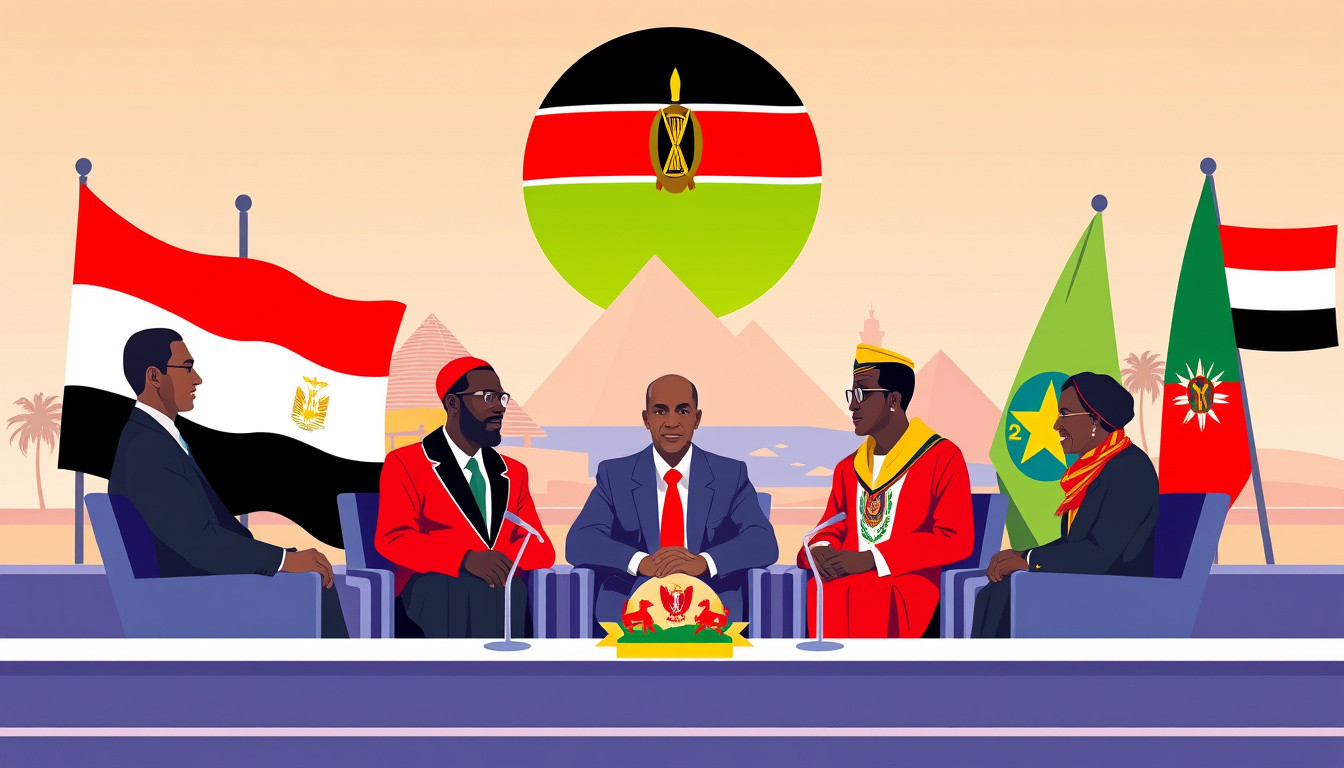
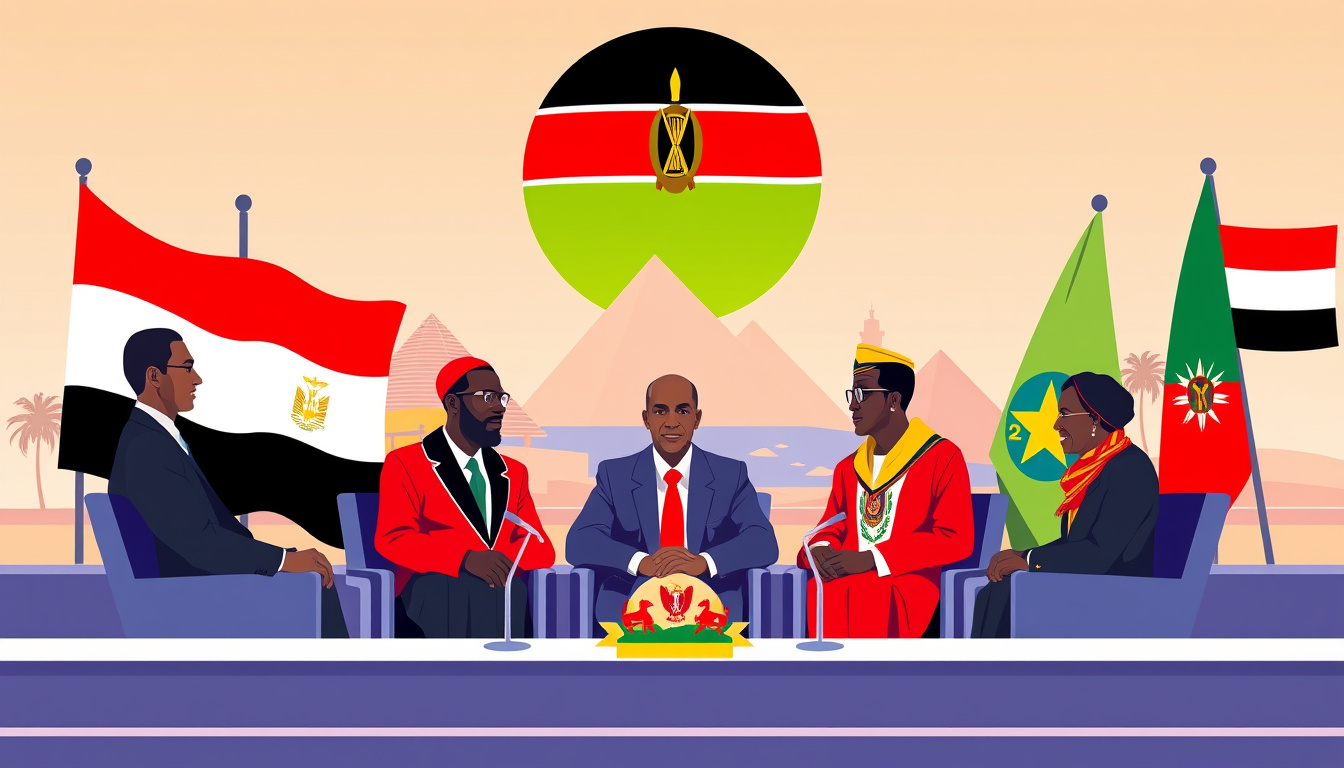
On October 4, 2026, the picturesque city of New Alamein, Egypt, served as the backdrop for a significant four-way summit aimed at enhancing regional cooperation among Egypt, Eritrea, Somalia, and Sudan.
Convened by President Abdel Fattah el-Sisi, this summit was a pivotal step towards strengthening diplomatic ties and fostering stability within the African continent and the vital Red Sea region.
The main focus of the summit was to reinforce collaboration among these nations, particularly in light of the complex regional developments that directly impact their sovereignty and security.
The discussions were marked by a commitment to peaceful coexistence, adherence to national institutions, and a collective stance against external interference that can lead to humanitarian crises.
Key Takeaways
- The four-way summit aimed to enhance regional collaboration among Egypt, Eritrea, Somalia, and Sudan.
- Leaders prioritized respect for state sovereignty and peaceful dispute resolution amid regional tensions.
- The discussions highlighted the importance of cooperation on transboundary water resources, particularly the Nile.
Objectives of the Four-Way Summit
The objectives of the four-way summit held on October 4, 2026, in New Alamein, Egypt, focused on fostering collaboration among Egypt, Eritrea, Somalia, and Sudan to address pressing regional issues in Africa and the Red Sea.
As President Abdel Fattah el-Sisi convened the leaders, the summit centered on several key areas including the respect for state sovereignty, the support of national institutions, and the peaceful resolution of disputes.
El-Sisi articulated Egypt’s commitment to achieving a ceasefire and sought comprehensive political solutions aimed at restoring stability in the region.
A significant part of the discussions highlighted the dangers of external interventions that exacerbate humanitarian crises, with leaders asserting their resolve to uphold territorial integrity and resist foreign interference in domestic matters.
In addition, the summit included critical dialogues regarding the management of transboundary water resources, notably the Nile, emphasizing adherence to international laws to prevent unilateral actions detrimental to downstream nations.
Leaders acknowledged Egypt’s historical connections with the participating countries and underscored the importance of regional security in the Red Sea, while voicing concerns over ongoing tensions with Ethiopia related to diplomatic and security issues.
Overall, the summit represented a pivotal step towards enhanced cooperation and stability in a region often challenged by complex interdependencies.
Key Outcomes and Future Cooperation
The summit concluded with a shared vision for future cooperation, emphasizing the importance of sustained dialogue among the four nations.
Leaders agreed to establish a framework for regular consultations to address emerging challenges and potential conflicts, particularly in the context of climate change and its impact on regional resources.
They recognized that collaborative approaches to tackle these issues would enhance resilience against economic and environmental pressures.
Moreover, the summit fostered a commitment to joint initiatives aimed at improving trade relations and fostering economic development, which are seen as vital components for long-term stability.
By reaffirming their collective interests and aspirations, the leaders set the stage for a more integrated response to the multifaceted threats facing the region.