
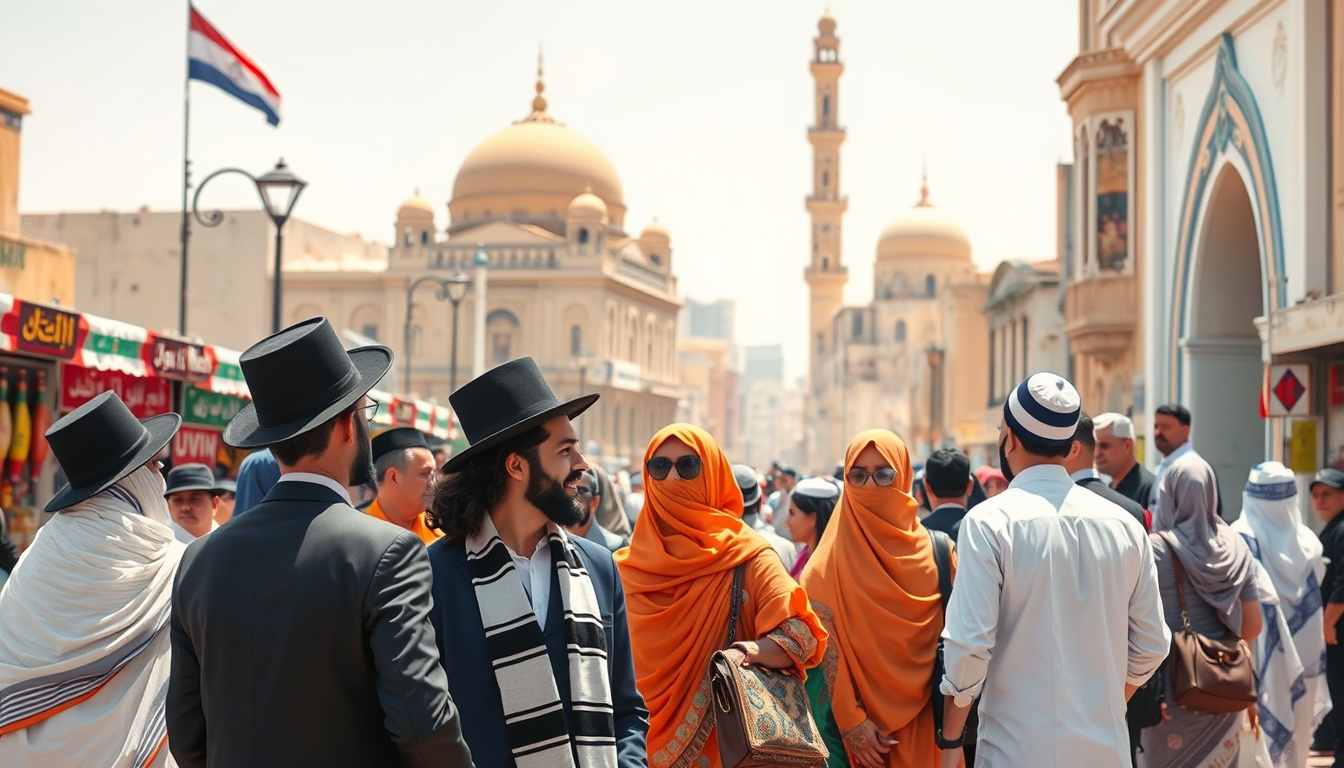
In a world often divided by differences, music has the unique ability to bridge cultural gaps and promote understanding among diverse communities.
Ilana Koppel, a talented musician and passionate advocate for interfaith dialogue, embodies this principle in her journey through Jewish heritage in Cairo.
Her experiences reflect a rich tapestry of traditions, underscoring the importance of unity amidst diversity.
This article explores Koppel’s profound connection to Cairo’s Jewish community, her artistic contributions to preserving a vanishing heritage, and her commitment to fostering dialogue among different faiths.
Join us as we delve into her inspiring journey through the lens of music, tradition, and resilience.
Key Takeaways
- Ilana Koppel’s journey illustrates the importance of preserving Jewish heritage in Cairo amidst political challenges.
- Through music and community events, Koppel fosters interfaith dialogue among Jews, Muslims, and Christians.
- The resilience of the Jewish community is highlighted through cultural events despite ongoing tensions surrounding the Israeli-Palestinian conflict.
Exploring Jewish Heritage in Cairo: Ilana Koppel’s Personal Journey
Exploring Jewish Heritage in Cairo through the eyes of Ilana Koppel offers a rich tapestry of cultural connection and personal reflection.
Koppel, a talented musician, takes us on a poignant journey as she delves into Jewish traditions within the vibrant city of Cairo.
Her story begins with a transformative visit to Sha’ar HaShamayim Synagogue during Rosh Hashanah in 2021, a moment that captures the heart of communal resilience.
Here, she witnesses the unique practice of attendees leading services in the absence of a rabbi, a testament to the enduring spirit of the Jewish community.
The echo of the shofar, coupled with the communal sharing of traditional foods, resonates with hope, ushering in the aspirations that come with a new year.
As she returns to the synagogue a year later, cello in hand, Koppel reflects on the powerful interconnections between Jews, Muslims, and Christians in Egypt.
She emphasizes the symbolism behind the phrase ‘eish wa-malḥ (bread and salt),’ representing a profound alliance forged through shared meals and mutual respect.
This cultural interplay is beautifully encapsulated in her involvement with the Drop of Milk Association, which is dedicated to safeguarding Egyptian Jewish heritage and fostering interfaith dialogue amid the country’s complex socio-political landscape.
Throughout 2022 and 2023, Koppel engages in a series of meaningful events organized by the association, from lectures to community celebrations.
A landmark moment arises when she performs at the al-Korba synagogue for a Rosh Hashanah event that had been dormant for 70 years, reviving a sense of history and continuity.
Additionally, her presence at an International Holocaust Remembrance Day gathering with Holocaust survivor Ruth Cohen highlights the importance of remembrance and resilience within the Jewish narrative.
However, Koppel does not shy away from addressing the challenges that confront the Jewish community in Cairo, particularly in light of ongoing political tensions, notably the Israeli-Palestinian conflict.
She speaks candidly about the difficulties posed by the conflation of Judaism with Zionism, reminding us that there exists a significant anti-Zionist Jewish community advocating for a more nuanced understanding of identity.
Her studies at the Center for Arabic Studies Abroad further broaden her perspective, helping her appreciate Egypt’s diverse cultural heritage.
Ilana Koppel’s journey through Cairo’s Jewish heritage illuminates not only the vibrant history of a resilient community but also the critical role of interfaith relationships in preserving cultural legacies amid the challenges wrought by political discord.
Promoting Interfaith Dialogue Through Music and Community Engagement
Koppel’s musical journey serves as a bridge between diverse faiths and communities, showcasing the power of art in fostering understanding.
By integrating music into interfaith interactions, she actively participates in a dialogue that transcends historical divisions.
Her performances at significant religious sites not only celebrate Jewish traditions but also invite individuals from varying backgrounds to engage in shared experiences.
For instance, her collaboration with the Drop of Milk Association positions her as a catalyst for dialogue, enabling deeper reflections on cultural identity and community resilience.
As she navigates the nuanced relationships between Judaism, Islam, and Christianity in Egypt, Koppel’s work becomes emblematic of a larger movement aimed at nurturing coexistence and harmony, reminding us that cultural heritage can flourish even amidst adversity.