

Understanding price per sqft is one of the simplest yet most powerful ways to spot underpriced homes—whether you’re buying in Egypt, the wider MENA region, or any global market. Used correctly, this single metric can help you quickly compare listings, identify hidden gems, and negotiate with confidence. Used blindly, it can also mislead you badly.
This guide walks you through how price per square foot really works, why it’s often misunderstood, and how to use it like an expert to find homes that are genuinely undervalued.
What “price per sqft” Really Means (and Why It Matters)
At its core, price per sqft is:
Price per square foot = Total property price ÷ Total livable square footage
If a home costs $300,000 and has 1,500 sq ft of livable space, the price per sqft is:
$300,000 ÷ 1,500 = $200 per sqft
This metric matters because:
- It lets you compare very different properties quickly.
- It reveals whether a specific home is cheap or expensive relative to its local market.
- It helps you understand how much you’re paying for space, not just for a headline price.
But experts never stop at the number alone. They always ask: “Price per square foot compared to what, and adjusted for what?”
Step 1: Get the Right Baseline for Price per Sqft
Before you can call a home “underpriced,” you need to know what’s normal in that micro-market.
Compare Like for Like
Always compare a home’s price per sqft to:
- The same neighborhood or compound
- Similar property type (apartment vs villa vs townhouse)
- Similar age and quality (new build vs older stock)
- Similar size range (a 2,000 sqft home vs 10,000 sqft mansion is not a fair comparison)
If typical apartments in a New Cairo compound sell for 40,000 EGP/sqm, and you find a similar one at 32,000 EGP/sqm (with no obvious defect), your underpriced-home radar should turn on.
Use Real, Recent Data
Don’t rely only on asking prices; look for recent sold prices when possible. In many markets, you can find these through:
- Local public records or land registries
- Major property portals with “sold” or “transaction history” data
- Professional market reports (e.g., from global agencies like JLL or CBRE) (source: JLL MENA Research)
Aim to build a quick mental range:
“In this area, price per sqft for modern apartments is usually between X and Y.”
Anything significantly below X (after proper adjustments) may be underpriced.
Step 2: Understand What Distorts Price per Sqft
Experts know that raw price per sqft is never the full story. Certain factors justify a higher or lower number—and if the seller or agent hasn’t priced correctly for those factors, that’s where opportunity lies.
1. Size Premiums and Discounts
Price per sqft is often higher for smaller units and lower for larger ones.
- A 600 sqft studio with a great location might be $350/sqft.
- A 3,000 sqft villa in the same area might be $200/sqft.
Why? Because the market for small, affordable units is deeper and more liquid. So if you see a large unit priced per sqft similar to small units nearby, that can signal a bargain.
2. Floor, View, and Orientation
In many Egyptian and Mediterranean cities, certain traits command a big premium:
- High floor + view (Nile, sea, green belt, landmarks)
- Good natural light and ventilation
- Preferred orientation (e.g., not west-facing in very hot climates)
If a high-floor, view apartment shares the same approximate price per sqft as lower-floor, dark units in the same building, it’s likely underpriced for its advantages.
3. Layout Efficiency
Two homes with identical square footage can feel completely different. Efficient layouts (minimal hallways, smart room sizes, logical flow) are worth more per sqft than chopped-up or awkward layouts.
Red flag (and opportunity):
A well-laid-out 1,600 sqft apartment priced in line with poorly laid-out 1,600 sqft units in the same block could be a hidden gem.
4. Age and Condition of the Property
Renovation level and property age should always be factored in:
- New or newly renovated units usually justify a higher price per sqft.
- Older, tired units should sell for less per sqft unless they have unique features (heritage architecture, prime plot, etc.).
If a recently renovated property is priced per sqft below older, unrenovated stock, the seller may be underestimating the value of the work done.
5. Land Value vs Building Value
For villas and standalone homes, a big chunk of the value is in the land, not the structure. Price per sqft can mislead if you only look at built area.
A villa on a large plot in a prime gated compound may have a lower price per sqft than smaller townhouses but still be fair value—or even cheap once land is accounted for. Experts look at:
- Price per sqft of land
- Price per sqft of built-up area (BUA)
If the land component alone could justify today’s price, you may have found undervaluation.
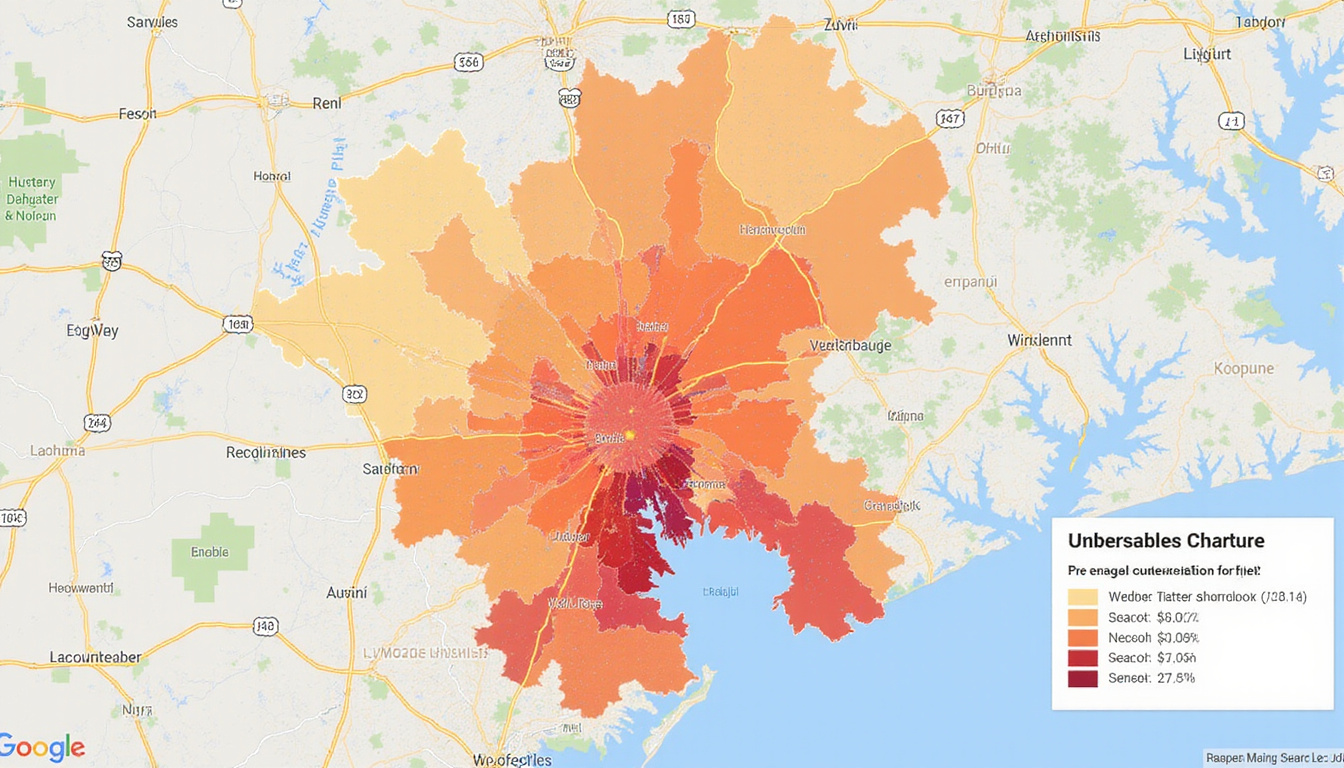
Step 3: Adjust Price per Sqft Like a Pro
To truly spot underpriced homes, don’t just compare raw price per sqft numbers—adjust them mentally for key factors.
Here’s a simple system you can use when evaluating a property against the market average in its area:
- Start with the local average price per sqft for similar homes.
- Adjust up for:
- Newer building / high-end finishing
- Better view, floor, orientation
- Premium amenities (pool, concierge, high-end security)
- Adjust down for:
- Poor state of repair, obvious maintenance issues
- Functional problems in layout
- No parking in an area where it’s essential
- Noise, pollution, or major upcoming construction next door
If, after reasonable adjustments, the home still sits significantly below your estimate of fair price per sqft, you’re likely looking at an underpriced property.
Step 4: Use Price per Sqft to Filter and Then Deep-Dive
Professionals don’t fall in love with photos first. They use numbers to filter, then inspect.
How to Work Through Listings Efficiently
Shortlist by price per sqft
- Pull 20–30 comparable listings in your target area.
- Calculate or note the advertised price per sqft.
- Sort from lowest to highest.
Eliminate obvious problem cases
- Poor locations vs the rest of the neighborhood.
- Basement or ground-floor units in noise-heavy areas.
- “Too good to be true” listings with incomplete or unclear details.
Focus on the surprising standouts
Especially those with:- Below-average price per sqft
- Good photos
- Decent floor plans
- Clear, honest descriptions
Visit and verify on site
Online, a low price per sqft looks exciting. On site, you may discover:- Structural issues
- Unacceptable noise or smell
- Legal or title complications
The homes that pass this filter-and-verify process are the real underpriced candidates.
Step 5: Understand Why a Property Might Be Underpriced
When a home’s price per sqft looks attractive even after adjustments, ask why.
Legitimate reasons that benefit you:
- Owner needs a quick sale (relocating, liquidity needs).
- Seller mispriced due to old data and hasn’t caught up to the latest market.
- Off-market or lightly marketed listing that hasn’t attracted much attention.
- Seller priced by total ticket price, not realizing price per sqft is lower than peers.
Concerning reasons you’ll want to investigate:
- Title or documentation issues
- Upcoming infrastructure changes that might reduce desirability (e.g., new road, industrial project)
- Hidden structural or water damage
- Disputes within the building or compound
Experts always look for the story behind the number.
Key Signs You’ve Found a Genuinely Underpriced Home
Use this quick checklist when you think a property is a bargain:
- Price per sqft is 10–20% below similar homes in the same micro-location.
- After adjusting for age, floor, view, layout, and condition, it’s still cheaper.
- The home has no major legal red flags (titles, permits, usage).
- The property’s rental potential supports a strong yield relative to peers.
- Demand in that area is growing or stable, not collapsing.
If you can tick most of these boxes, it’s likely underpriced—at least relative to today’s market.
Common Mistakes Buyers Make with Price per Sqft
Even smart buyers fall into these traps:
- Comparing across very different neighborhoods: A good rate in central Cairo will not match a new suburb, and vice versa.
- Ignoring maintenance fees and running costs: A low price per sqft can be offset by extremely high service charges or poor building maintenance.
- Not validating square footage: Advertised sizes can be inflated. Always confirm actual usable area from plans, measurements, or an engineer.
- Focusing only on “cheap”: The cheapest price per sqft is not always the best investment if demand is weak or quality is poor.
A Realistic Look at Costs Beyond Price per Sqft
Especially for international buyers or expats looking at Egypt, the purchase price is only one piece of the puzzle. You should also factor in:
- Transaction and registration costs
- Taxes (where applicable)
- Furnishing and renovation
- Ongoing building fees and utilities
- Cost of living in the area (food, transport, schooling)
For a grounded feel of living costs beyond pure real estate, this breakdown helps:
**[The Real Cost of Living In Egypt 2025](
When you combine true cost of ownership with an expert read on price per sqft, you get a far more complete picture of value.
Simple Checklist: How to Use Price per Sqft Like an Expert
Use this as a quick reference when assessing any property:
- Collect comps in the same micro-location and type.
- Calculate average price per sqft from recent deals or serious listings.
- Adjust for quality: age, renovation, amenities, view, floor, layout.
- Identify outliers that are 10–20% below your adjusted range.
- Visit in person and look for hidden issues or deal-breakers.
- Check documentation: title, permits, building regulations.
- Run rental and resale numbers: does the yield look stronger than area norms?
- Confirm true size to avoid overpaying on inflated square footage.
Follow this repeatedly and you’ll start seeing patterns just like a professional investor or agent.
FAQ: Price per Sqft and Finding Value
1. Is price per sqft the best way to value a home?
Price per sqft is a powerful starting point, but not a complete valuation on its own. You should always combine it with comparisons of location, condition, layout, and future demand. Think of it as a filter and reference, not the final verdict.
2. What is a good price per sqft for apartments?
A “good” price per sqft depends entirely on the micro-market—city, neighborhood, building, and even floor. Research recent deals in the specific area and look for units that are fairly similar but cheaper per sqft after factoring in age, finish, and view.
3. How can I know if the price per sqft is fair for an off-plan project?
Compare the developer’s price per sqft to completed nearby projects of similar quality and brand. Then discount for construction risk and waiting time. If the off-plan price per sqft is already at or above established prime properties, it may not be a bargain.
Turn Numbers into Negotiating Power
When you master price per sqft, you stop guessing and start negotiating from a position of strength. You can walk into a viewing knowing not just the asking price, but exactly how that home stacks up against its neighbors, what its true strengths and weaknesses are, and where a fair deal really lies.
If you’re ready to move from browsing listings to finding genuine value, start building your own local price per sqft database today. Track, compare, adjust, and revisit the numbers weekly. The more you work with this metric, the more underpriced opportunities you’ll begin to see—often long before the rest of the market notices.
And when you spot that next underpriced home that ticks all the boxes, move decisively. In every market, the best deals go first to those who understand value better than the crowd.