
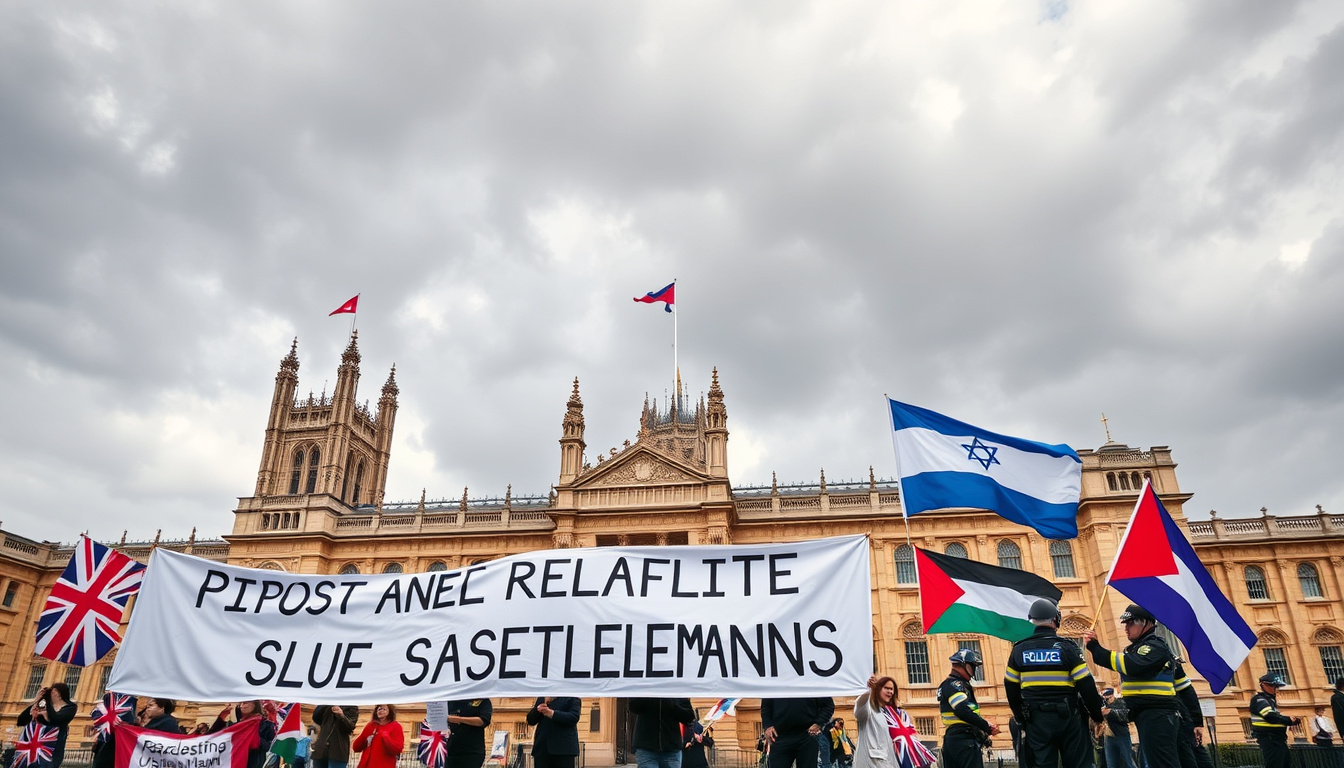
On September 8, 2026, the United Kingdom made headlines with its announcement of an import ban on goods produced in Israeli settlements located in the occupied West Bank.
This bold move from British Foreign Secretary Ed Miliband marks a significant shift in UK policy, signaling a more pointed stance against the contentious issue of Israeli settlements.
As the UK implements comprehensive sanctions aimed directly at settlement activities, the implications of these measures are vast, affecting not only the economy of the settlements but also the broader geopolitical landscape in the region.
This article will delve deeper into the details of the UK’s new measures, their implications, and the response from the international community.
Key Takeaways
- The UK has announced an import ban on goods produced in Israeli settlements in the occupied West Bank.
- Sanctions will target individuals and companies involved in the expansion of these settlements, specifically within construction and real estate.
- This policy shift aims to address concerns over ongoing settlement expansion while maintaining broader trade relations with Israel.
Overview of UK’s New Measures Against Israeli Settlements
On September 8, 2026, the United Kingdom unveiled a series of strong new measures aimed at addressing the contentious issue of Israeli settlements in the occupied West Bank.
These measures, articulated by British Foreign Secretary Ed Miliband, signify a pivotal development in UK foreign policy and include a ban on the importation of goods manufactured in Israeli settlements.
Importantly, the UK is focusing on holding accountable individuals and companies that facilitate the expansion of these settlements.
Miliband made it clear that the sanctions are specifically targeting settlement activities and are not intended to disrupt broader trade relations with Israel.
The forthcoming import ban, set to start in six to nine months, will hit various sectors deeply associated with the settlements, such as construction, infrastructure, financing, real estate, and advertising.
Furthermore, advertising promoting these settlements will be prohibited, alongside immediate sanctions against extremist settlers accused of instigating violence against Palestinian communities.
This significant step comes in the backdrop of serious allegations regarding ethnic cleansing in the region, where settlers have been accused of forcibly displacing Palestinians from their lands.
The urgency behind these UK measures is heightened by concerns over continuous settlement expansion, especially the controversial E1 settlement project.
Critics suggest that such expansion threatens to further isolate Palestinian territories, making a viable two-state solution increasingly elusive.
The UK’s decisive action follows similar measures from France and Canada, as well as a joint statement by the foreign ministers from twelve nations, all of whom are calling for an immediate halt to settlement expansion.
This collective stance reflects an evolving international consensus aimed at advocating for Palestinian rights and promoting peace initiatives.
By adopting this focused strategy against Israeli settlements, the UK is clearly redefining its approach while drawing a line against unlawful occupation without imposing sweeping trade sanctions on Israel itself.
This nuanced policy shift underscores the UK’s commitment to supporting a balanced resolution to one of the most intractable conflicts in modern history.
Implications of the Import Ban and Sanctions
The implications of the UK’s import ban and sanctions against Israeli settlements are multifaceted and carry significant weight in international relations.
By directly targeting goods produced in the settlements, the UK is taking a bold stance that differentiates between the Israeli state and the actions of settlements deemed illegal under international law.
This move is likely to influence other countries to reconsider their trade dynamics concerning Israel, further isolating settlement activities both economically and diplomatically.
The legal framework surrounding these actions could set important precedents, potentially leading to more extensive discussions on human rights and international law as they relate to territorial disputes.
Moreover, such measures may invigorate Palestinian advocates and human rights organizations in their appeals for greater recognition and support on the global stage, thereby reshaping the conversation around the Israeli-Palestinian conflict.