
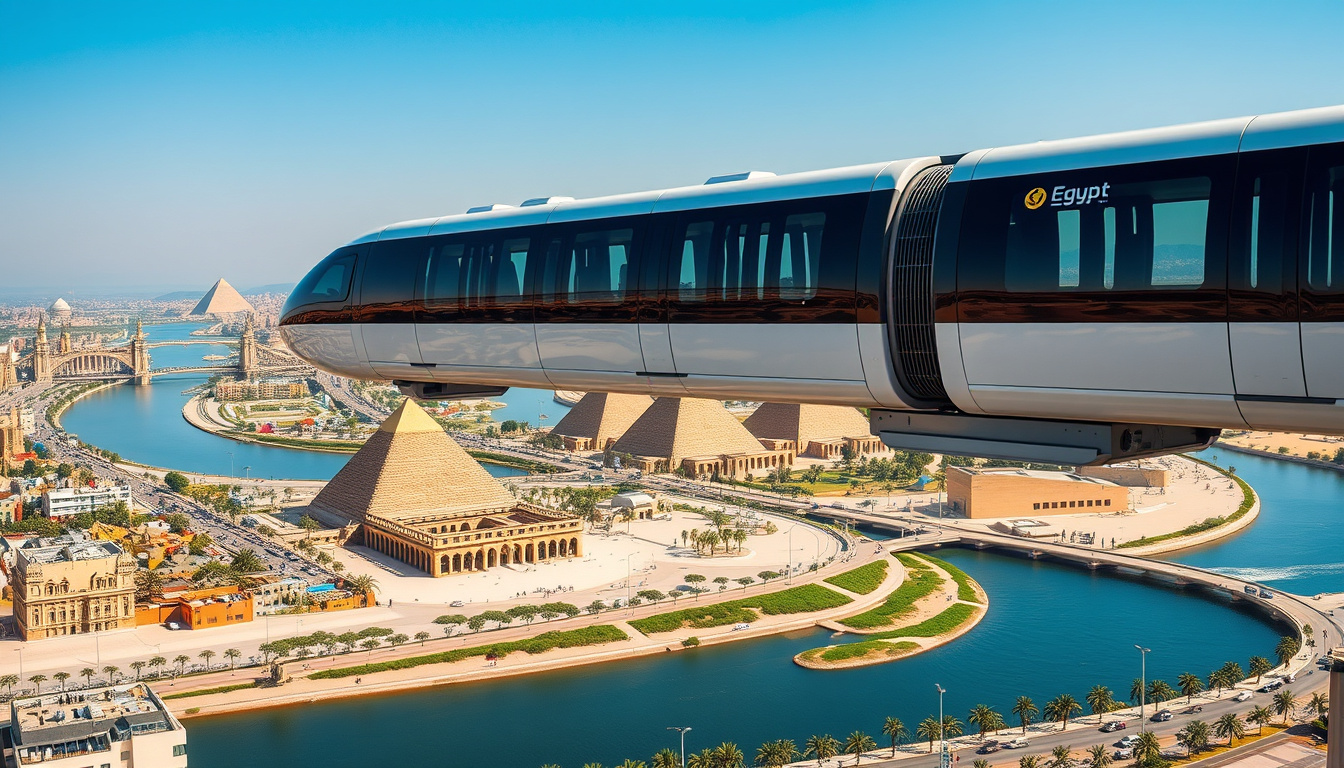
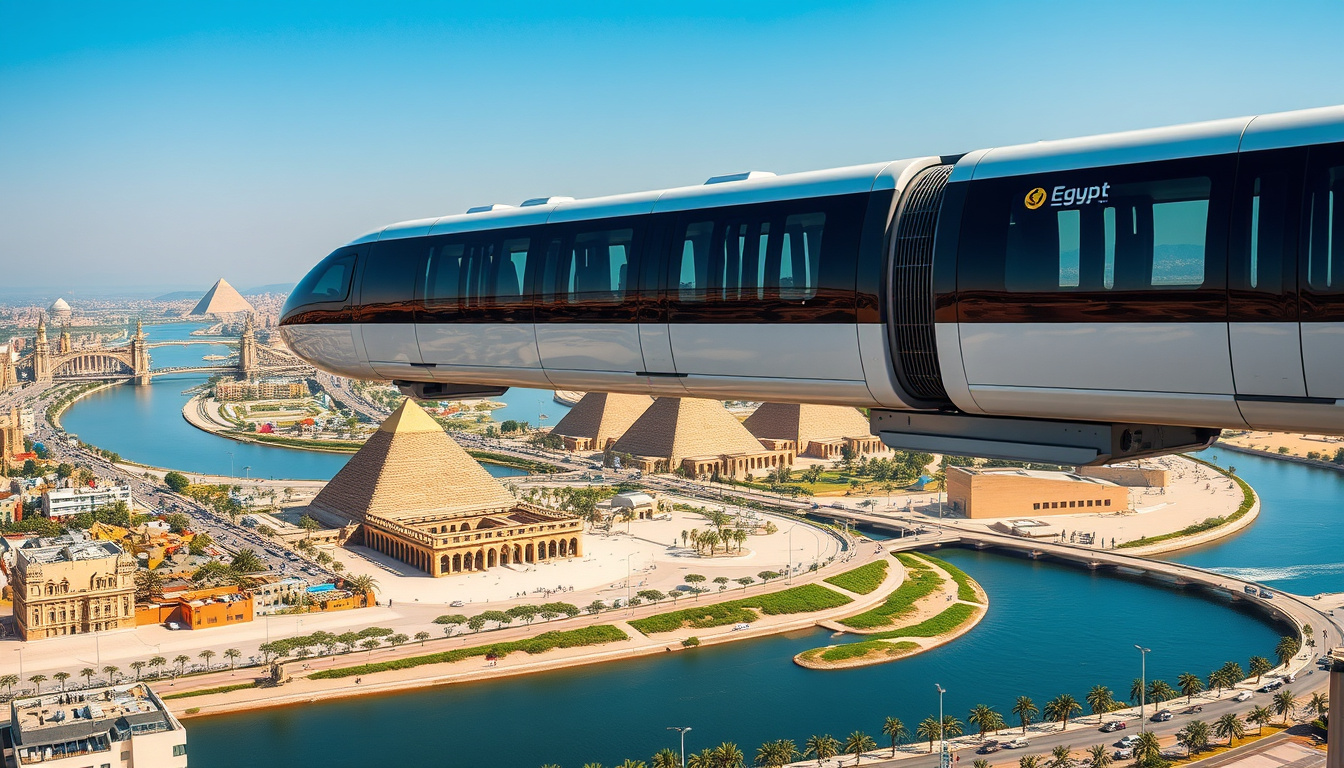
In a groundbreaking move aimed at enhancing urban mobility, Egypt has officially launched the first phase of the East Nile Monorail system, ushering in a new era of connectivity for residents of New Cairo and the capital city.
This state-of-the-art transit line, which commenced operations on Wednesday, May 6, operates daily from 6 a.m.
to 6 p.m., connecting vital regions of Cairo with unparalleled efficiency.
With an ambitious vision to improve transportation, the East Nile Monorail not only pledges to make commutes smoother but also underlines Egypt’s commitment to sustainable and accessible public transit solutions.
Key Takeaways
- The East Nile Monorail enhances connectivity between New Cairo and the capital, operating daily from 6 a.m. to 6 p.m.
- Phase one includes 16 accessible stations designed with features for all passengers, including those with disabilities.
- Future expansions will integrate the monorail with existing transport options, improving overall transit in the area.
Overview of the East Nile Monorail Service
### Overview of the East Nile Monorail Service
In a significant advancement for modern transportation in Egypt, the Ministry of Transport has proudly inaugurated the first phase of the East Nile Monorail, which began operations on May 6th, offering a reliable transit solution for daily commuters from 6 a.m.
to 6 p.m.
This innovative monorail line establishes a crucial link between El-Moshir Tantawi Station in Nasr City and Justice City Station in the New Administrative Capital, enhancing mobility for residents and government employees alike in navigating between New Cairo and the heart of the capital.
The initial phase boasts 16 strategically located stations that cater to a diverse set of users, ensuring enhanced accessibility.
The stations are: El-Moshir Tantawi, One Ninety, Air Force Hospital, Al-Narges, Al-Mustathmereen, Lotus, Golden Square, Beit Al-Watan, Al Fattah Al Alim Mosque, R1 District, R2 District, Finance and Business, the City of Arts and Culture, Government District, Misr Mosque, and finally Justice City.
Looking ahead, the East Nile Monorail is set to further improve its connectivity with plans for integration with existing transport modalities.
This includes a crucial connection to the Light Rail Transit (LRT) at the City of Arts and Culture Station, as well as a future link to Metro Line 6 at Al-Narges Station, making the monorail a pivotal part of the city’s transit network.
Accessibility is a core design principle of the East Nile Monorail stations, which feature staircases, escalators, and multiple elevators, ensuring that passengers with disabilities can navigate the system with ease.
Moreover, the monorail carriages are equipped with air-conditioning, surveillance cameras for passenger safety, and electronic displays that provide real-time journey information.
Notably, the monorail contributes positively to the environment by minimizing noise pollution and reducing carbon emissions, thanks to its electric-powered operation.
The transit system has been intelligently designed to facilitate access to key urban destinations, including conference centers, healthcare facilities, hotels, shopping areas, educational institutions, corporate offices, and sports amenities.
This initiative not only represents a milestone in urban transport in Egypt but also reaffirms the commitment to sustainable urban development.
Future Plans and Accessibility Features
The East Nile Monorail not only enhances connectivity but also emphasizes sustainability through its electric operation, which significantly reduces noise and carbon emissions.
Designed with modern urban mobility in mind, it strategically connects vital urban locations, making it an essential transit solution for both residents and visitors of New Cairo and the New Administrative Capital.
This innovation is poised to transform transportation dynamics, with the envisioned subsequent phases anticipating further integration with other transport systems, ensuring seamless travel across the city.
Additionally, the comprehensive accessibility features reflect a commitment to inclusivity, aiming to accommodate everyone from families to individuals with disabilities, ultimately fostering a more connected and accessible urban environment in Egypt.