
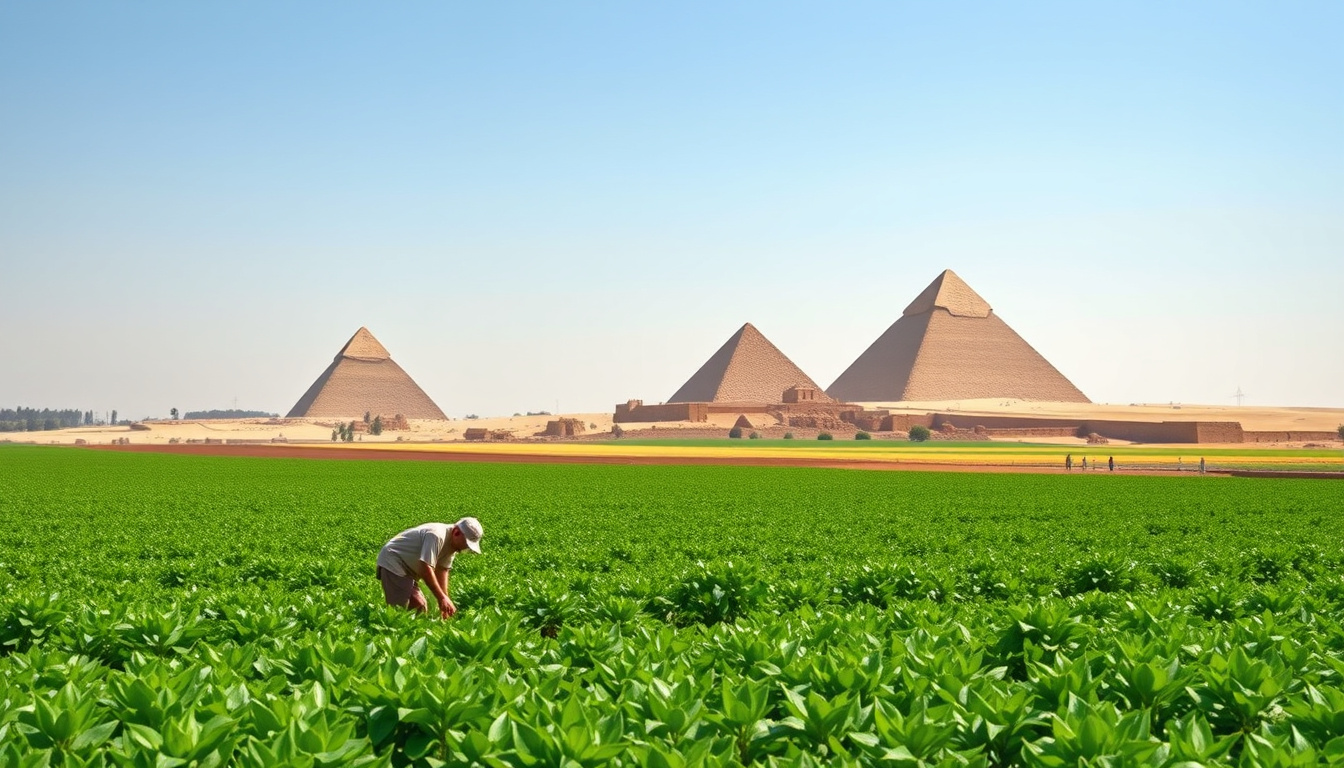
Agriculture has long been the backbone of economies around the world, but in Egypt, it occupies an especially critical role.
This article delves into the significant contributions of agriculture to Egypt’s economy—highlighting its impact on GDP, employment, and food security—while also addressing the pressing challenges the sector faces in the modern era.
As we explore the intricate relationship between agriculture and economic vitality, we aim to provide a comprehensive understanding of why safeguarding this sector is vital for Egypt’s future.
Key Takeaways
- Agriculture contributes approximately 12 to 15 percent to Egypt’s GDP, highlighting its economic significance.
- Despite urbanization, agriculture remains crucial for employment, providing jobs for 25 to 30 percent of the workforce.
- Food security in Egypt is threatened by reliance on imports and water scarcity, necessitating a focus on agricultural sustainability.
The Economic Impact of Agriculture on Egypt’s GDP
## The Economic Impact of Agriculture on Egypt’s GDP
Agriculture plays a critical role in Egypt’s economy, contributing approximately 12 to 15 percent to the Gross Domestic Product (GDP), with expectations of 13 to 14 percent in the 2023–2024 period.
This significance is underlined by the fact that agriculture outperforms the global average, where the sector typically accounts for less than 10 percent of GDP.
Back in the 1960s and 1970s, agriculture’s share of GDP was nearly 30 percent, but it has since declined as other sectors expanded rapidly.
The projected agricultural GDP is set to exceed EGP
1.3 trillion (around USD 24 billion) by 2024/2025, reflecting both increased production capabilities and price effects.
Notably, around 25 to 30 percent of the Egyptian workforce is employed in this sector, showcasing its importance for livelihoods, particularly in rural areas such as Upper Egypt and the Nile Delta.
Agriculture not only directly provides jobs but also sustains numerous jobs throughout the supply chain, including in food processing, transportation, and trade.
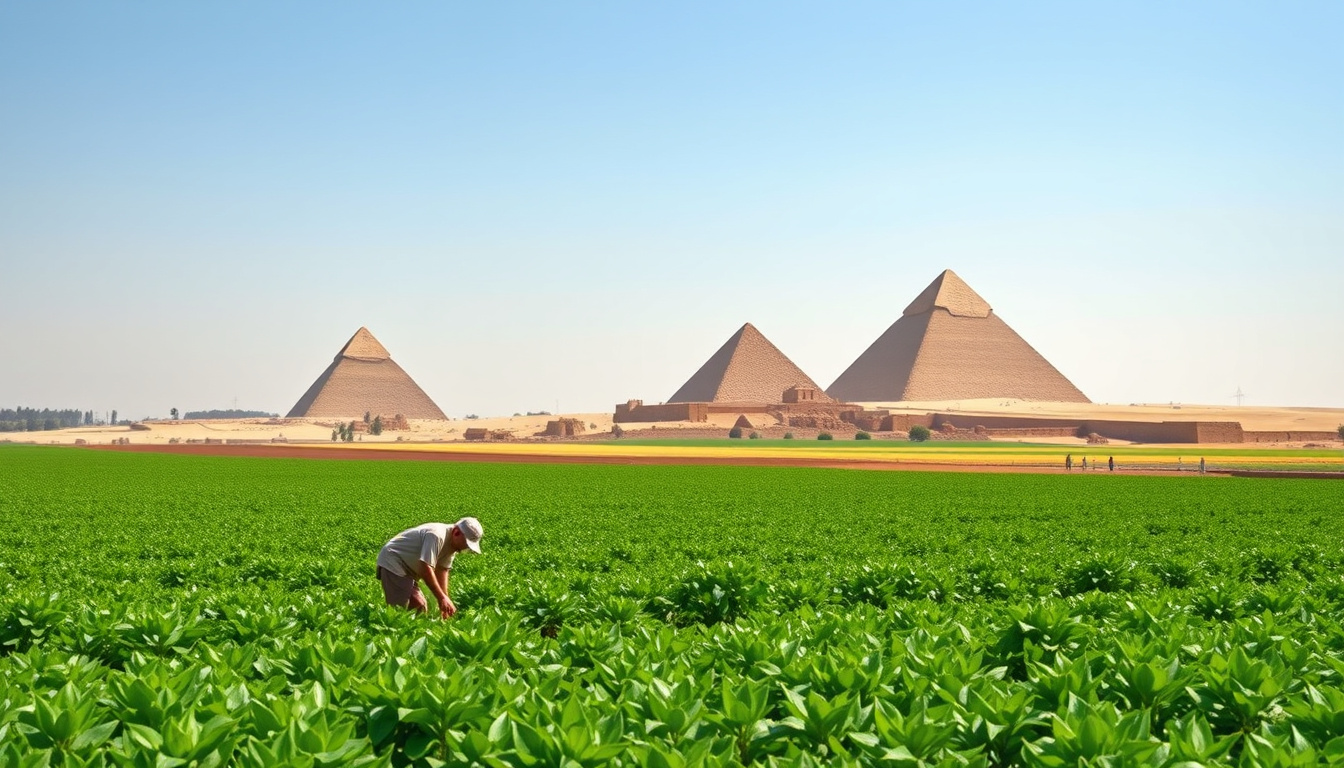
Geographically, agricultural activities are heavily concentrated along the Nile River and the Delta, which occupy a mere 5 percent of the country’s land yet support a significant portion of its population.
However, the country faces daunting challenges regarding food security, as it produces only 40–50 percent of its wheat needs, relying heavily on imports.
Coupled with severe water scarcity—approximately 500 cubic meters of water is available per capita annually—the current agricultural practices face serious limitations.
Moreover, the agricultural sector plays a vital role in poverty alleviation and income distribution, providing accessible employment for lower-skilled workers.
Given that the poverty rate in rural areas is significantly higher than in urban regions, agriculture acts as a crucial safety net for vulnerable communities.
Research has demonstrated that agricultural growth is particularly effective at reducing poverty levels, directly increasing rural incomes while potentially lowering food prices.
As Egypt’s population continues to grow rapidly, surpassing 100 million, stabilizing the agricultural sector becomes essential for ensuring food security and mitigating the effects of global price fluctuations.
In conclusion, agriculture’s crucial contributions to GDP, job creation, rural livelihoods, and overall food security emphasize its continued significance in Egypt’s economic landscape.
Challenges to Food Security and Agricultural Productivity in Egypt
The challenges besieging Egypt’s food security and agricultural productivity are multifaceted and complex.
One of the most pressing issues is the country’s reliance on wheat imports, which make up a significant portion of its food supply.
With domestic production falling short, Egypt finds itself vulnerable to global market fluctuations that can impact food availability and pricing.
Additionally, climate change exacerbates existing challenges such as water scarcity and arable land degradation.
The nation is confronted with a declining water supply from the Nile due to factors such as upstream dam construction and increased evaporation rates, which further threaten agricultural outputs.
Moreover, outdated farming practices and limited access to modern technology hinder the sector’s potential to maximize yield and efficiency.
Addressing these challenges requires a coordinated approach that includes improved irrigation techniques, investment in agricultural technology, and policies aimed at enhancing local production capabilities, ensuring that agriculture can meet the demands of an ever-increasing population while securing food for future generations.