
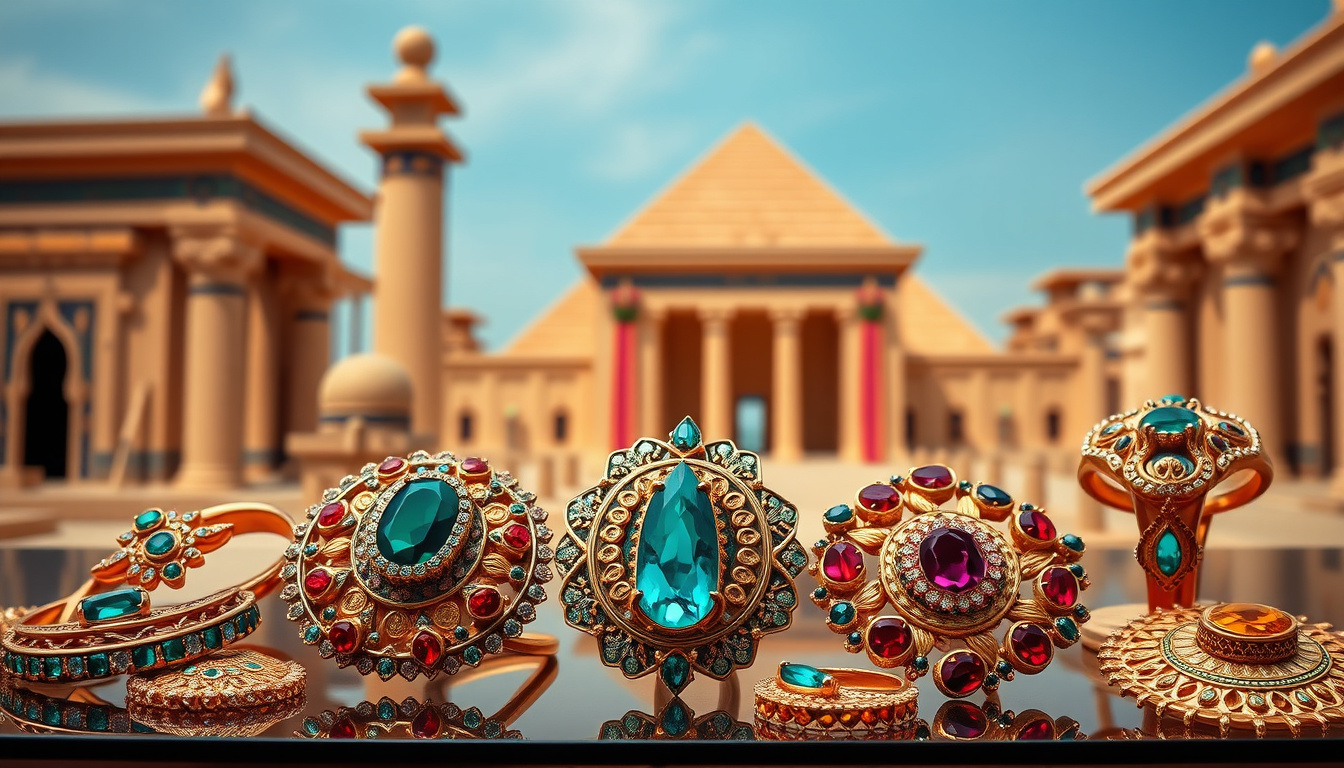
Jewelry has always held a significant place in history, serving not only as adornment but also as a reflection of culture and heritage.
Nakhla Jewelry, a brand founded over four decades ago by Laila and Ikram Nakhla, stands as a testament to this tradition, intertwining the rich tapestry of Egypt’s artistic legacy with modern craftsmanship.
In the article titled ‘Egypt Taught the World Jewelry’: Nakhla Jewelry as a Keeper of History, we explore how this remarkable brand embodies the essence of Egyptian culture and history, while also addressing the challenges that artisans across the region face.
Delving into Laila Nakhla’s story, we uncover her passion for preserving Egypt’s artistic roots and the myriad influences that shape her work.
From ancient civilizations to contemporary designs, Nakhla Jewelry serves as a bridge connecting the past with the present, ensuring that the stories of Egypt’s rich history are told through every handcrafted piece.

Key Takeaways
- Nakhla Jewelry serves as a custodian of Egyptian cultural heritage through its timeless craftsmanship.
- Laila Nakhla’s passion for handmade jewelry reflects the resilience and spirit of Egypt amidst historical challenges.
- The brand uniquely incorporates diverse historical influences into modern designs, preserving stories of the past.
The Art of Jewelry Making: A Bridge to Egypt’s History
Jewelry has always held a significant place in human history, serving not only as adornment but also as a testament to culture and identity.
In her compelling narrative, Laila Nakhla, co-founder of Nakhla Jewelry, encapsulates this sentiment by intertwining the legacy of jewelry making with Egypt’s rich historical tapestry.
Nakhla Jewelry, established over forty years ago, is not simply a jewelry brand; it’s a celebration of Egyptian heritage designed to resonate through generations.
Laila’s passion for her homeland shines through as she emphasizes the artistry involved in handmade jewelry, linking it to the resilience and beauty that has characterized Egypt’s narrative through times of hardship.
Reflecting on her upbringing in a politically charged environment, Laila attributes her artistic direction to influential family members, particularly women, who instilled in her a profound appreciation for art, history, and cultural storytelling.
Each piece crafted by Nakhla Jewelry weaves together elements from various historical influences, including Greco-Roman and Pharaonic designs, transforming them into contemporary artworks that honor the past while appealing to modern sensibilities.
Despite the political and economic challenges that threatened artisan crafts in Egypt, Laila and her husband Ikram remain steadfast in their mission to preserve the legacy of Egyptian jewelry.
In doing so, they ensure that the stories, struggles, and triumphs of the Egyptian people are told through the intricate designs of their jewelry, making Nakhla Jewelry a true custodian of cultural history.
Challenges and Triumphs: Preserving Craftsmanship in Modern Egypt
The journey of Nakhla Jewelry is emblematic of the broader theme of preserving craftsmanship in a rapidly changing world.
Laila Nakhla’s commitment to handmade artistry not only reflects a passion for jewelry design but also acts as a bridge connecting Egypt’s storied past with its present.
As artisans grapple with the pressures of modernity and mass production, Laila and her team work tirelessly to emphasize the importance of traditional techniques that have been passed down through generations.
This adherence to craftsmanship is not easy, particularly when faced with economic volatility that has historically impacted the artisan community in Egypt.
Yet, Laila finds strength in her deep connection to her roots and the community, advocating for a return to valuing handmade pieces that carry unique stories instead of simply opting for generic alternatives.
By fostering workshops and educating budding artisans, Nakhla Jewelry is not just preserving a craft; it is revitalizing an entire culture, ensuring that the artistry survives and continues to flourish in modern Egypt.