
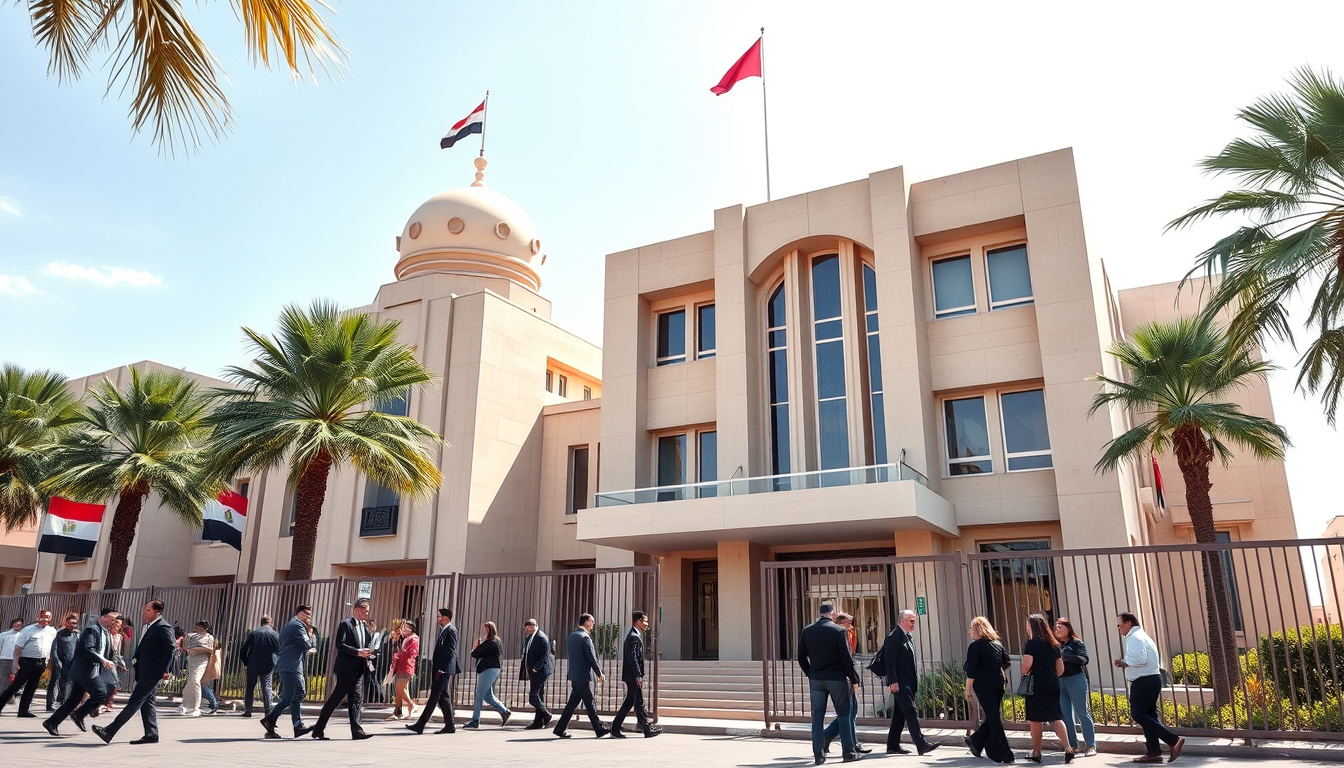
In a significant policy shift, the Egyptian government has announced plans to remove security barriers surrounding foreign embassies in Cairo, a decision poised to enhance public accessibility and foster better diplomatic relations.
After nearly two decades of imposing restrictions on access to streets and walkways around these vital diplomatic spaces, this development marks a notable change in approach.
The announcement made by Egyptian Foreign Minister Badr Abdelatty during a session at the National Media Authority has sparked widespread discussion about its implications for international relations and local public sentiment.
As the government faces rising scrutiny and demands for diplomatic reciprocity, the prospect of easing security measures has become a focal point of interest not only for citizens of Egypt but also for the nations whose embassies are situated within its borders.
With ongoing tensions surrounding foreign relations, particularly concerning recent activities involving the British embassy, understanding the historical context of security barriers as well as the anticipated effects of their removal is crucial for analyzing the broader implications of this decision.

Key Takeaways
- Egypt plans to remove security barriers around embassies to enhance public accessibility after two decades of restrictions.
- The decision aims to address public criticism of perceived preferential treatment of the British embassy compared to other diplomatic facilities.
- This move reflects broader diplomatic tensions and emphasizes Egypt’s call for reciprocal security measures from European nations.
Historical Context of Security Barriers Around Embassies
The historical context of security barriers surrounding embassies reveals a complex interplay between national security, diplomatic relations, and public access.
For over two decades, these barriers have been a prominent feature in major cities around the world, particularly in politically sensitive regions like Egypt.
The decision by the Egyptian government to consider the removal of these barriers is particularly significant, as announced by Foreign Minister Badr Abdelatty.
It marks a potential shift towards fostering stronger community engagement and public access to embassies, which have often been viewed as fortresses.
This re-evaluation is triggered amid rising scrutiny of existing diplomatic practices, especially highlighted by criticisms from local media personalities and political groups calling for parity in treatment among foreign diplomatic missions.
The backdrop of regional tensions, including accusations against Egypt concerning aid to Gaza and the reciprocal nature of diplomatic protection, underscores the delicate balance the country seeks to maintain between security and accessibility.
By addressing these barriers, Egypt aims to not only alleviate public frustrations but also send a message regarding its commitment to improve diplomatic relations on a global scale.
Implications of the Decision for Diplomatic Relations
The removal of security barriers surrounding foreign embassies in Egypt signifies a notable shift in the government’s approach to diplomacy and public relations.
This decision has the potential to reshape the way Egyptian citizens interact with their diplomatic missions, fostering a climate of openness and collaboration.
Foreign Minister Badr Abdelatty’s announcement has sparked discussions about the broader implications for Egypt’s standing in international relations, particularly as the country continues to navigate complex geopolitical landscapes.
With the rise of digital diplomacy and demands for transparency, this move may be perceived as an effort to modernize Egypt’s diplomatic engagement while addressing domestic and international critiques.
Moreover, the push for equal treatment of embassies reflects a growing awareness among Egyptian political factions of the need for cohesion in how foreign entities are treated, which could enhance Egypt’s diplomatic leverage on the global stage.
As issues such as regional security and humanitarian aid remain central to diplomatic discourse, Egypt’s willingness to re-evaluate its practices may serve to bolster its reputation as a nation committed to fostering cooperative international relationships.