
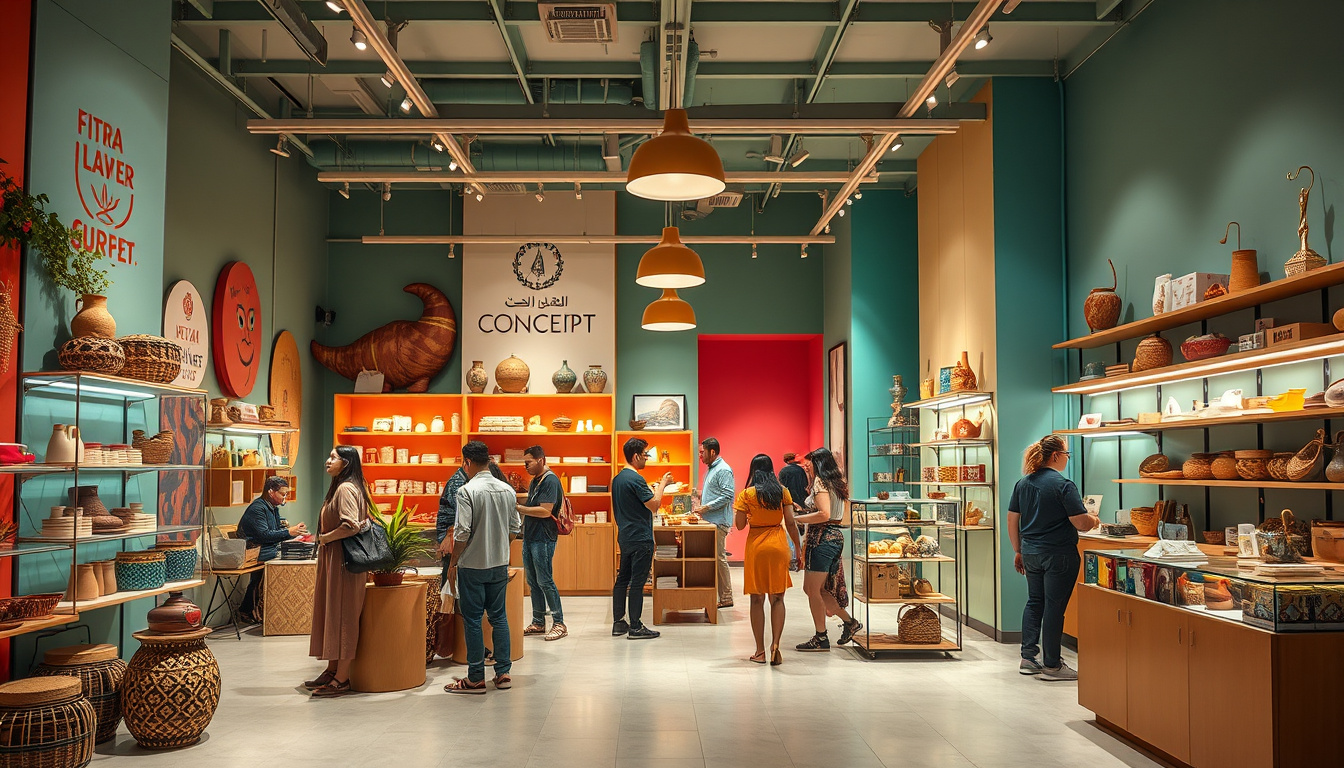
Cairo, a city steeped in history and vibrant culture, is witnessing a contemporary evolution with the opening of the new concept store 6901 in Downtown Cairo.
Created by the visionary behind Maison 69, this store seeks to merge local culture with commercial ambition, offering a unique selection of Egyptian food, vinyl records, and fashion pieces for the modern consumer.
However, the transformation of this formerly neglected space into a lively retail venue has ignited important discussions about gentrification and cultural commodification.
In this article, we delve into the duality of 6901’s mission—celebrating the rich heritage of Cairo while navigating the complex terrain of socioeconomic inequalities.

Key Takeaways
- The opening of concept store 6901 in Downtown Cairo blends local culture with commerce, raising concerns about cultural commodification.
- Critics argue that while 6901 celebrates local culture, it risks alienating the working-class communities it draws inspiration from.
- The article emphasizes the need for responsible cultural appreciation that respects and involves marginalized voices in the conversation.
The Cultural Dimensions of Concept Store 6901
### The Cultural Dimensions of Concept Store 6901
The recent opening of concept store 6901 in Downtown Cairo, initiated by the visionary behind Maison 69, presents a compelling fusion of local culture and commercialism.
This innovative retail space showcases an array of Egyptian food, vinyl records, and curated fashion for both men and women, encapsulating the essence of the neighborhood.
The transformation of a once-neglected area into a vibrant venue not only enhances the historical richness of Downtown Cairo but also ignites conversations surrounding cultural representation.
While 6901 seeks to celebrate the city’s heritage, critics raise concerns about the potential commodification of Cairo’s working-class culture, arguing that the store may cater primarily to affluent demographics rather than serving the local community.
Referencing the 2021 publication ‘Aesthetics of Gentrification,’ the article illustrates how initiatives like 6901 can often romanticize and commercialize working-class aesthetics, leading to the displacement of the very populations these projects aim to honor.
Supporters of 6901, however, advocate for the store’s commitment to community engagement, noting efforts such as sourcing bread from local artisans and employing the original makwagy of the space.
Despite these positive initiatives, the article underscores that these gestures alone cannot resolve the deeper inequalities that gentrification can exacerbate.
It poses crucial questions about appropriation versus appreciation of culture, highlighting the risks of elevating certain voices while marginalizing others in burgeoning creative spaces.
Ultimately, the dynamics of aesthetic gentrification reveal how the labor and lives of working-class individuals can be transformed into mere visual tokens for consumption, all while their struggles remain unaddressed.
The piece calls for a mindful celebration of cultural heritage—one that genuinely uplifts and includes the narratives of those who contribute to it.
Navigating the Gentrification Debate in Downtown Cairo
In the contemporary urban landscape, the conversation surrounding gentrification often intertwines with debates over cultural authenticity and economic parity.
The opening of 6901 in Downtown Cairo exemplifies this complex dynamic, as it not only seeks to revitalize a historic area but also raises pertinent issues about whose culture is being represented and commercialized.
Many proponents suggest that such spaces can foster a sense of community by allowing local artisans to showcase their work and by providing employment opportunities.
However, critics argue that without genuine inclusivity, these efforts may perpetuate a cycle of exploitation, where the original stakeholders remain marginalized.
To navigate this landscape effectively, it is imperative for new establishments within these gentrifying areas to engage meaningfully with local communities, ensuring that their contributions are not merely aesthetic but also economically beneficial to those traditionally involved in the culture being celebrated.
This calls for a delicate balance between the allure of revitalization and the need to uphold social justice, compelling stakeholders to prioritize equitable practices in our evolving urban narratives.