
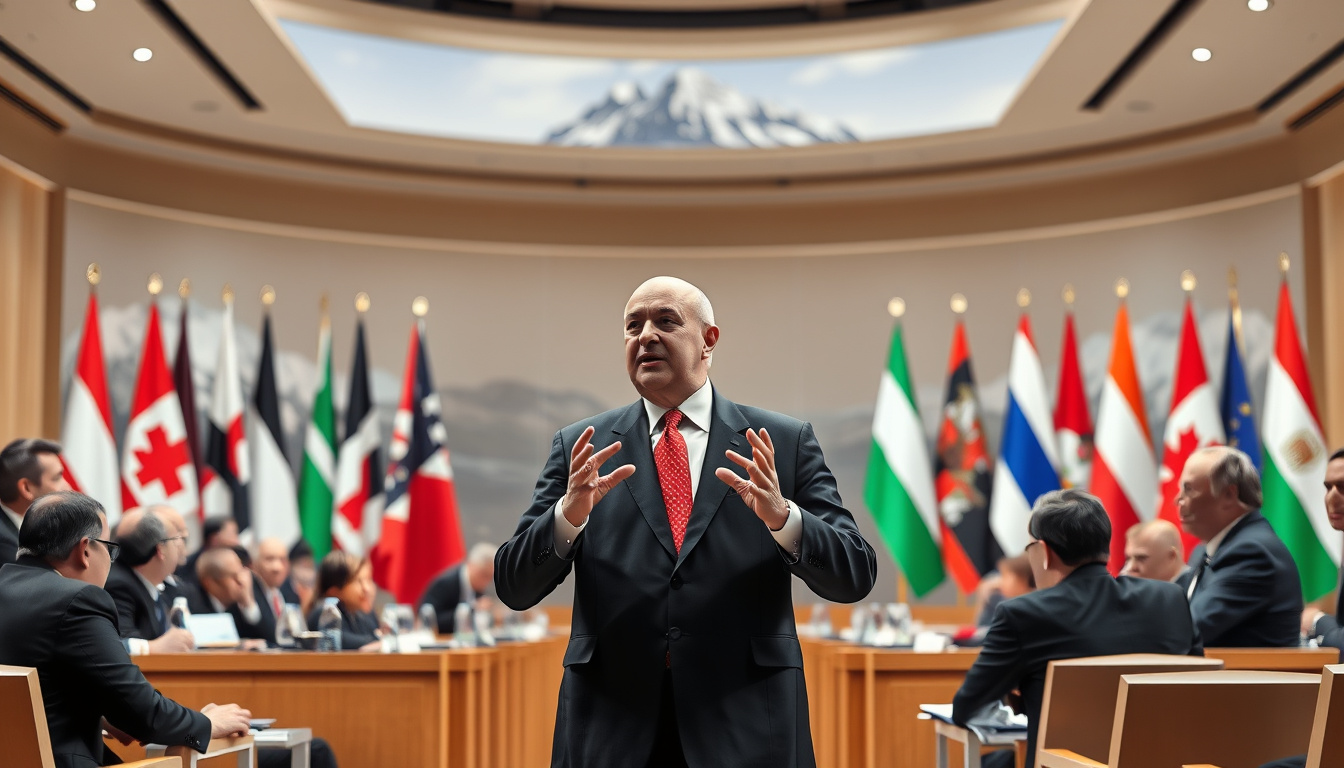
In the midst of the 2024 World Economic Forum in Davos, former U.S.
President Donald Trump and Egyptian President Abdel Fattah El-Sisi met to discuss pressing issues in the Middle East.
Trump’s commendation of El-Sisi as a ‘great leader’ not only highlights the strengthening ties between the two nations but also reflects ongoing efforts to navigate regional tensions and pursue peace in a historically volatile area.
This article delves into the implications of Trump’s support for El-Sisi, explores the complexities of the Middle East peace process, and addresses the critical concerns surrounding the Grand Ethiopian Renaissance Dam (GERD) dispute.

Key Takeaways
- Trump’s endorsement of El-Sisi highlights U.S. support for strongman leaders in the region.
- The meeting addressed crucial topics, including the Gaza conflict and regional stability.
- Concerns over the GERD dispute indicate ongoing tensions affecting Egypt’s relations in the region.
Trump’s Support for El-Sisi and Its Implications
Former President Donald Trump’s endorsement of Egyptian President Abdel Fattah El-Sisi during a recent meeting in Davos highlights a significant diplomatic relationship that bears implications for regional stability and U.S.
foreign policy.
Trump characterized El-Sisi as a ‘great leader,’ illustrating his administration’s support for Egypt amidst critical issues, notably the ongoing situation in Gaza, the quest for peace in the Middle East, and the complex dispute surrounding the Grand Ethiopian Renaissance Dam (GERD).
This camaraderie suggests a strategic alignment, as both leaders navigate their respective national interests while addressing broader geopolitical challenges.
By prioritizing discussions on the GERD, a contentious point between Egypt and Ethiopia that threatens Egypt’s water supply, and the pressing need for dialogue regarding Gaza, Trump’s engagement underscores the importance of Egypt as a key player in fostering regional cooperation.
The ramifications of this support extend beyond diplomacy, impacting economic ties and security collaboration in the region.
Observers are left to ponder how this relationship will evolve and what it signifies for future U.S.
involvement in Middle Eastern affairs.
Middle East Peace Efforts and Regional Concerns
In the complex tapestry of Middle Eastern geopolitics, Egypt emerges as a pivotal nation, especially in light of President El-Sisi’s recent discussions at Davos with former President Trump.
Their dialogue underscored urgent issues such as the humanitarian crisis in Gaza, where the ongoing conflict necessitates a concerted effort for peace and stability.
El-Sisi’s government has been actively involved in mediating between conflicting parties while advocating for humanitarian aid and long-term solutions.
This reflects Egypt’s longstanding role as a mediator in Palestinian affairs, seeking to curb violence and promote dialogue.
Moreover, Egypt’s anxieties regarding the Grand Ethiopian Renaissance Dam (GERD) cannot be overlooked; the dam’s construction has sparked fears about diminishing Nile water supplies, which are vital for Egypt’s agriculture and overall water security.
The convergence of these discussions highlights the intricate balance Egypt must maintain between regional diplomacy and domestic concerns, making it crucial for international actors to support collaborative efforts that aim for comprehensive peace in the region.