
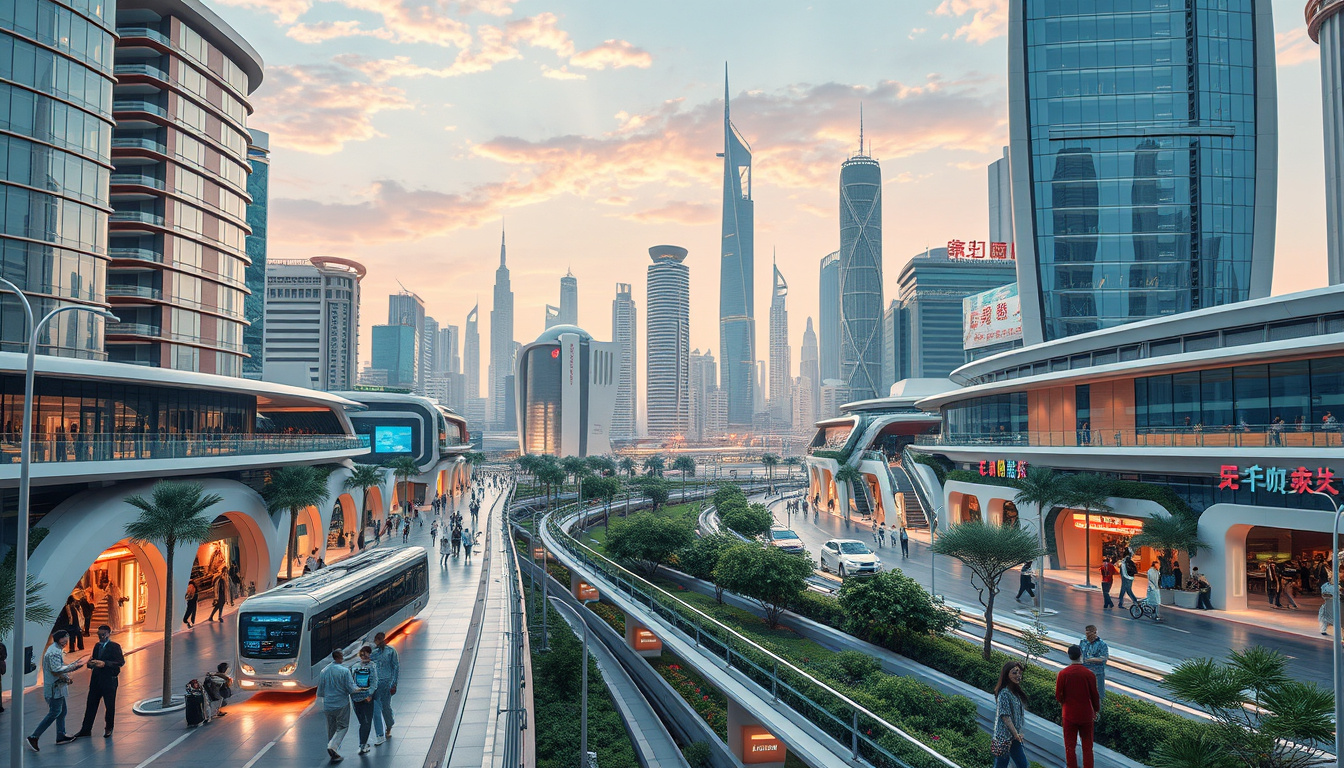
In an era where urban landscapes are rapidly evolving, the need for innovation in city planning and infrastructure has never been more crucial.
Enter Ahmed Zulficar, a visionary Egyptian investor, who is pioneering an initiative that aims to revolutionize urban living through a groundbreaking collaboration between Gulf nations and China.
Underpinned by the support of a renowned Saudi venture capital firm, Zulficar’s initiative is set to reshape urban environments using cutting-edge artificial intelligence (AI) and smart city technologies.
This article delves into the key components of the AI and Smart City Integration Program, exploring its potential impact on urban development in the Gulf region and beyond.

Key Takeaways
- The collaboration aims to revolutionize urban technology through AI and smart city initiatives between Gulf nations and China.
- Establishing Innovation Labs will facilitate real-time experimentation in urban planning and technology development.
- Pilot projects starting in 2026 will enhance public safety and efficiency in cities through advanced AI applications.
Overview of the AI and Smart City Integration Program
The AI and Smart City Integration Program, spearheaded by Egyptian investor Ahmed Zulficar, is a transformative initiative designed to bridge the gap between Gulf nations and China in the rapidly evolving realms of artificial intelligence and urban innovation.
Supported by a prominent Saudi venture capital firm, this collaboration seeks to revolutionize urban technologies, refine data infrastructures, and advance digital platforms in the respective regions.
At the heart of this initiative lies a commitment to enhance city operations through advanced analytics tools that will bolster public safety and facilitate urban modernization via cloud computing solutions.
To turn this vision into reality, the program plans to establish Innovation Labs in Riyadh and Shenzhen, which will serve as hubs for real-time experimentation with cutting-edge technologies, including digital twins that can shape urban planning and AI-driven automation across multiple sectors.
This ambitious collaboration also aims to launch a joint investment program targeting early-stage ventures in flourishing domains such as smart mobility and green technology, recognizing the critical role of innovation in fostering sustainable urban environments.
Looking ahead, pilot projects are set to roll out in Gulf cities by 2026, showcasing AI-based traffic management systems, autonomous delivery networks, and enhanced energy efficiency in industrial zones.
Zulficar’s forward-thinking approach underlines the essential integration of design and technology in urban development.
If these efforts prove successful, they hold the potential not only to catalyze the Gulf region’s shift towards smarter urban centers but also to elevate the quality of digital services available to residents, paving the way for a more interconnected and efficient urban future.
Impact on Urban Development in Gulf Nations and China
As urbanization accelerates globally, the impact of initiatives like the AI and Smart City Integration Program becomes increasingly significant.
By fostering collaboration between Gulf nations and China, the program promises not just technological advancement, but also an innovative framework for sustainable urban growth.
The establishment of Innovation Labs in Riyadh and Shenzhen is particularly noteworthy, as these centers will facilitate a dynamic exchange of ideas and solutions tailored to the unique challenges faced by urban environments.
Furthermore, they will enable the development of technologies such as digital twins, which offer invaluable insights for urban planners by simulating real-world conditions.
This integration of advanced analytics in city management can effectively enhance resource allocation, public safety measures, and overall quality of life for urban residents.
As pilot projects commence in 2026, focusing on AI-powered traffic systems and energy-efficient solutions, the groundwork laid today is poised to redefine urban living in the Gulf and beyond.