
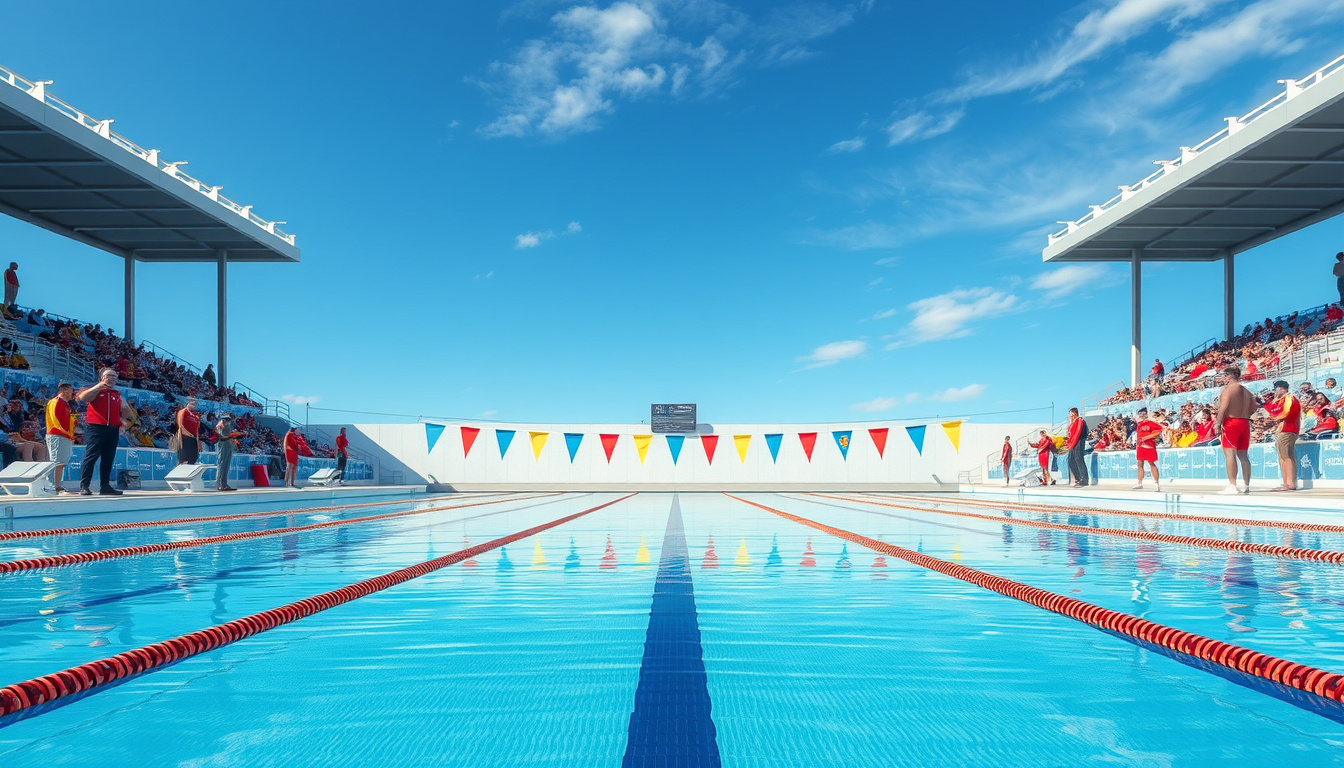
The heartbreaking incident at the Under-12 National Swimming Championship has raised urgent questions about safety protocols in competitive sports.
The tragic death of 12-year-old swimmer Youssef Mohamed Abdel Malek has exposed significant negligence on the part of championship organizers, lifeguards, and referees, prompting an investigation by Egypt’s Public Prosecution.
This article delves into the events leading to this tragedy, the ongoing investigations, and the pressing need for reform in safety measures at sporting events.

Key Takeaways
- A 12-year-old swimmer died due to negligence by championship organizers and lack of safety measures.
- Eyewitness accounts revealed significant delays in rescue efforts due to absent lifeguards and equipment.
- The investigation has uncovered regulatory breaches by the Egyptian Swimming Federation and related parties, leading to accountability efforts.
Negligence and Safety Failures at the Championship
In a heartbreaking incident at the Under-12 National Swimming Championship on December 3, a young swimmer, Youssef Mohamed Abdel Malek, tragically lost his life due to what authorities have classified as negligence on the part of championship organizers, lifeguards, and referees.
Eyewitness accounts paint a chilling picture; after completing a 50-meter backstroke, young Abdel Malek reportedly fainted and sank to the bottom of the pool, unnoticed for over three critical minutes.
The alarming lack of lifeguards and the absence of vital medical equipment, such as a defibrillator, significantly hampered rescue efforts.
In response, Egypt’s Public Prosecution launched an investigation, rapidly assessing the circumstances surrounding this tragic event.
Inspectors discovered the absence of operational surveillance cameras at the venue, and important medical records, including Abdel Malek’s medical history, were seized for scrutiny.
An autopsy is underway to determine the official cause of death and evaluate adherence to medical protocols.
As interviews with family members and staff continue, the investigation has revealed clear lapses in safety measures enforced by referees and lifeguards alike.
Additionally, a committee from the Ministry of Youth and Sports has highlighted that both the Egyptian Swimming Federation and Al-Zohour Sporting Club failed to comply with essential sports regulations, notably neglecting to conduct mandatory medical checks prior to the competition.
With officials from both organizations now summoned, the inquiry aims to ensure accountability and prevent future tragedies in the world of sports.
Ongoing Investigations and Consequences for Organizers
The ongoing investigations have drawn significant attention, not only due to the tragic loss of young Youssef Mohamed Abdel Malek but also because they uncover systemic issues related to athlete safety in sports events.
As authorities delve deeper, the focus is also shifting towards establishing clearer safety protocols and responsibilities for event organizers.
Eyewitness testimonies have underscored the dire need for proper training among lifeguards and referees, as well as the necessity of fully equipped medical facilities at competitions.
The revelations regarding the lack of surveillance cameras and essential life-saving equipment at the Cairo International Stadium put into question the overall safety measures that should be standard practice in competitive sports.
Consequently, this incident has sparked a wider dialogue about the moral and legal obligations of sport federations and clubs to safeguard their athletes, particularly vulnerable young competitors.
As investigations progress, the public is eager to see meaningful changes that will ensure such a tragedy never occurs again.