
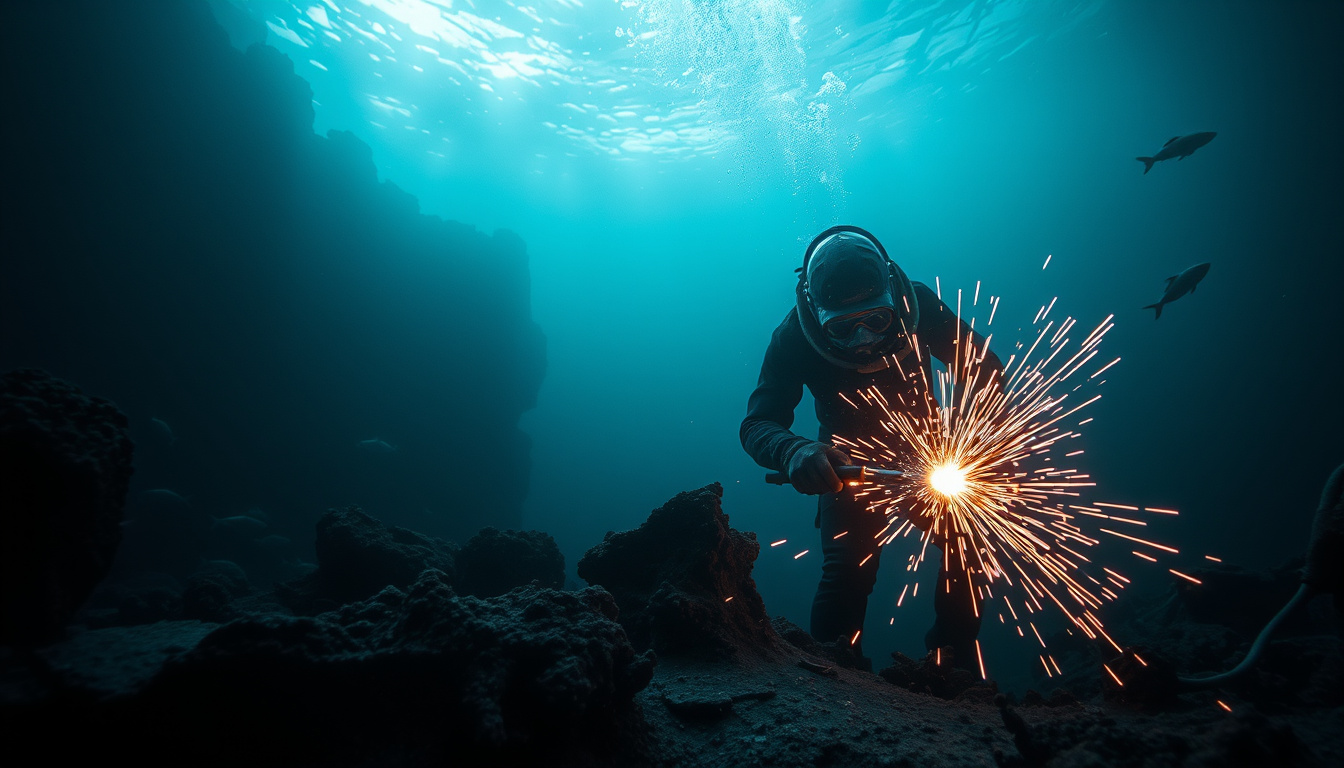
Underwater welding is a unique and harrowing profession, combining the technical skills of welding with the challenges of working in an aquatic environment. Across the globe, but especially in emerging industrial hubs like Indonesia, this profession is simultaneously vital for infrastructural maintenance and fraught with imminent dangers. Diving deep beneath the waves to repair or construct underwater structures comes with a risk profile that far exceeds many other jobs. This article delves into the life of underwater welders, the risks they face, the significance of their work, and the broader context framing their hazardous labor.
Why Underwater Welding is Crucial
Underwater welders ensure the integrity and longevity of critical infrastructure that cannot be addressed from the surface. They work on bridges, oil pipelines, massive ships, and other submerged metal structures. One key task often involved is the installation of sacrificial anodes — devices made of reactive metals such as zinc or aluminum that protect main metal structures from corrosion. These anodes are strategically welded onto pillars and must be replaced periodically, functioning as a shield to safeguard vital infrastructure.
For example, near the industrial coastline of Cilegon, Indonesia, underwater welding crews maintain hundreds of pillars supporting a new pier designed to connect crude oil transport ships to petrochemical plants. Their work protects a $39 billion industrial investment that will sustain the petrochemical industry, a sector growing rapidly worldwide.
The Extreme Dangers of the Job
Welding underwater requires specialized equipment but still involves life-threatening hazards. Welders use tools that carry electricity similar in power to a household power line. Any misstep—whether a loose grip or sudden movement—can lead to fatal electrocution instantly. The surrounding water increases the risk exponentially, as it conducts electricity and can turn a small electric fault into a deadly shock.
The lack of extensive protective gear compounds the risk. While welders in the United States might have access to more advanced safety equipment, in many places like Indonesia, the standard protective wear consists mainly of standard wetsuits and a couple of gloves. They breathe through an umbilical tube connected to the boat instead of a conventional oxygen tank, restricting mobility but necessary for safety protocols under water.
Moreover, divers face physiological dangers associated with pressure changes. At depth, pressures can be double what is experienced at the surface, and rapid ascents can cause nitrogen bubbles to form in the bloodstream—known as decompression sickness or “the bends”—which can block blood flow to critical organs. Divers often require decompression chamber treatment, adding medical risks to already hazardous working conditions.
Rangga Ahmad Maulana, a young underwater welder, has experienced electric shocks before but survived. These incidents underline how every day on the job poses a potential life-or-death scenario.
Economic Pressures and Incentives
Despite these risks, underwater welding is one of the highest-paying jobs in many regions. In Indonesia, welders can earn up to $15,000 in a single week, an astronomical sum compared to average local incomes. The lucrative pay is a major motivating factor for workers, especially in a country where millions live under the poverty line and economic opportunities are scarce.
The Indonesian government actively supports training certified divers to fulfill the soaring demand for underwater welders. This demand is driven largely by the nation’s aggressive industrial expansion, particularly in the petrochemical sector. The government has incentivized industry players with significant tax reductions to erect dozens of new petrochemical plants by the mid-2020s. Such growth reflects a global trend—petrochemicals are projected to constitute about half of the increase in oil demand by 2050. In such an economic landscape, the immediate benefits of job creation and income often outweigh concerns about workplace safety or long-term environmental sustainability for many workers and their families. Suhendra, an experienced underwater welder and father of four, embodies this dilemma as he contemplates the risks versus rewards in his hazardous profession.
Environmental and Health Concerns
While underwater welding supports vital infrastructure, the applications it serves are not without controversy. Petrochemical plants, which the welding work supports, have drawn significant criticism worldwide for their environmental footprints. These facilities emit potent toxic chemicals, some recognized as carcinogens, contributing to pollution and human health hazards.
Indonesia is currently grappling with severe environmental challenges. It ranks as the fourth-most-polluted country globally, with most of its population living in areas where air quality falls below World Health Organization (WHO) safety standards. Waste management issues, such as overfilled landfills and plastic pollution, exacerbate the problem. Petrochemical plants release tiny plastic pellets called nurdles, which contaminate waterways and harm aquatic life.
Despite environmental laws enacted to limit pollution and greenhouse gas emissions, enforcement remains weak. Experts warn that expanding petrochemical infrastructure may further aggravate pollution, and undermine public health—issues often overshadowed by economic and developmental priorities.
The Human Side of Underwater Welding
Underwater welders like Suhendra face complex emotional and familial challenges. Long assignments—often lasting several months—require time away from their families. Building a secure future for their children through high-paying but risky jobs requires balancing personal safety with economic necessity.
Suhendra’s hope that his son might follow in his footsteps also reflects the generational dimension of this work. Yet, he worries whether increasing marine pollution will render such aspirations unsafe or impractical.
Safety Measures and Industry Outlook
Globally, underwater welding is recognized as the deadliest trade, with mortality rates up to 40 times higher than the average for other occupations. As such, industries and governments increasingly emphasize safety training, certifications, and better protective gear.
Modern techniques include the use of upgraded welding suits, advanced breathing apparatus, and rigorous monitoring of divers’ vitals before, during, and after dives. Nonetheless, economic pressures and resource constraints often mean that standards vary widely across different countries and companies.
As the petrochemical industry continues to expand internationally, the need for underwater welders remains robust. However, there is a growing call for enhanced attention to occupational health and safety, as well as environmental stewardship, to ensure that the profession’s future does not come at the cost of human lives and the natural world.
Frequently Asked Questions (FAQ)
Q1: What makes underwater welding more dangerous than regular welding?
A1: Underwater welding is more dangerous due to the combination of working with high-voltage tools in a water environment, the risk of electric shock, reduced mobility, pressure-related health issues, and the potential for drowning. Water conducts electricity, increasing the risk of lethal shocks.
Q2: How do underwater welders breathe while working?
A2: Instead of carrying oxygen tanks on their backs, underwater welders breathe through an "umbilical," a hose connected to the surface that supplies air or oxygen. This tube also supplies power and communication lines in some setups.
Q3: Why is underwater welding in Indonesia so high-paying?
A3: The high pay compensates for the extreme risks involved and the scarcity of skilled labor. Additionally, Indonesia’s economic expansion in petrochemicals and infrastructure development demands large numbers of welders, driving wages up significantly.
Q4: What safety measures do underwater welders use to protect themselves?
A4: Safety measures include specialized wetsuits and gloves, constant monitoring of vitals, slow decompression procedures, and sometimes using makeshift protective gear depending on the country. In developed countries, more advanced suits and equipment are standardized.
Q5: How does underwater welding contribute to environmental pollution?
A5: The profession itself doesn’t pollute directly, but it supports industries like petrochemicals that have significant environmental impacts, including toxic emissions and plastic pollution. Maintaining underwater infrastructure is crucial but linked to environmentally contentious sectors.
Q6: What health risks do underwater welders face besides electric shock?
A6: Besides electric shock, welders face decompression sickness from pressure changes, lung issues due to exposure to welding fumes, physical strain from cold water and heavy equipment, and potential long-term risks from hazardous materials.
Q7: Is underwater welding sustainable for workers and the environment in the long term?
A7: Currently, the high risks to workers and the environmental concerns of supported industries raise sustainability questions. Improving safety protocols and investing in cleaner technologies are critical for making the profession and its economic ecosystem more sustainable.
Conclusion
Underwater welding is undeniably one of the most dangerous professions globally, demanding extraordinary skill and courage from those who undertake it. Its importance remains undisputed in maintaining vital infrastructure that underpins industries central to modern economies, such as petrochemicals. However, the profession’s inherent risks—from electric shocks to pressure-related ailments—make it perilous, with mortality rates significantly exceeding average occupational hazards. In countries like Indonesia, the economic benefits often outweigh safety concerns for workers and families.
Moreover, the broader environmental implications associated with the industries underwater welding supports introduce complex challenges for sustainable development. Balancing the safety and welfare of welders, economic growth, and environmental protection must be priorities as this essential profession evolves. Understanding these dynamics is crucial in appreciating the profound perils and significance of underwater welding in today’s world.